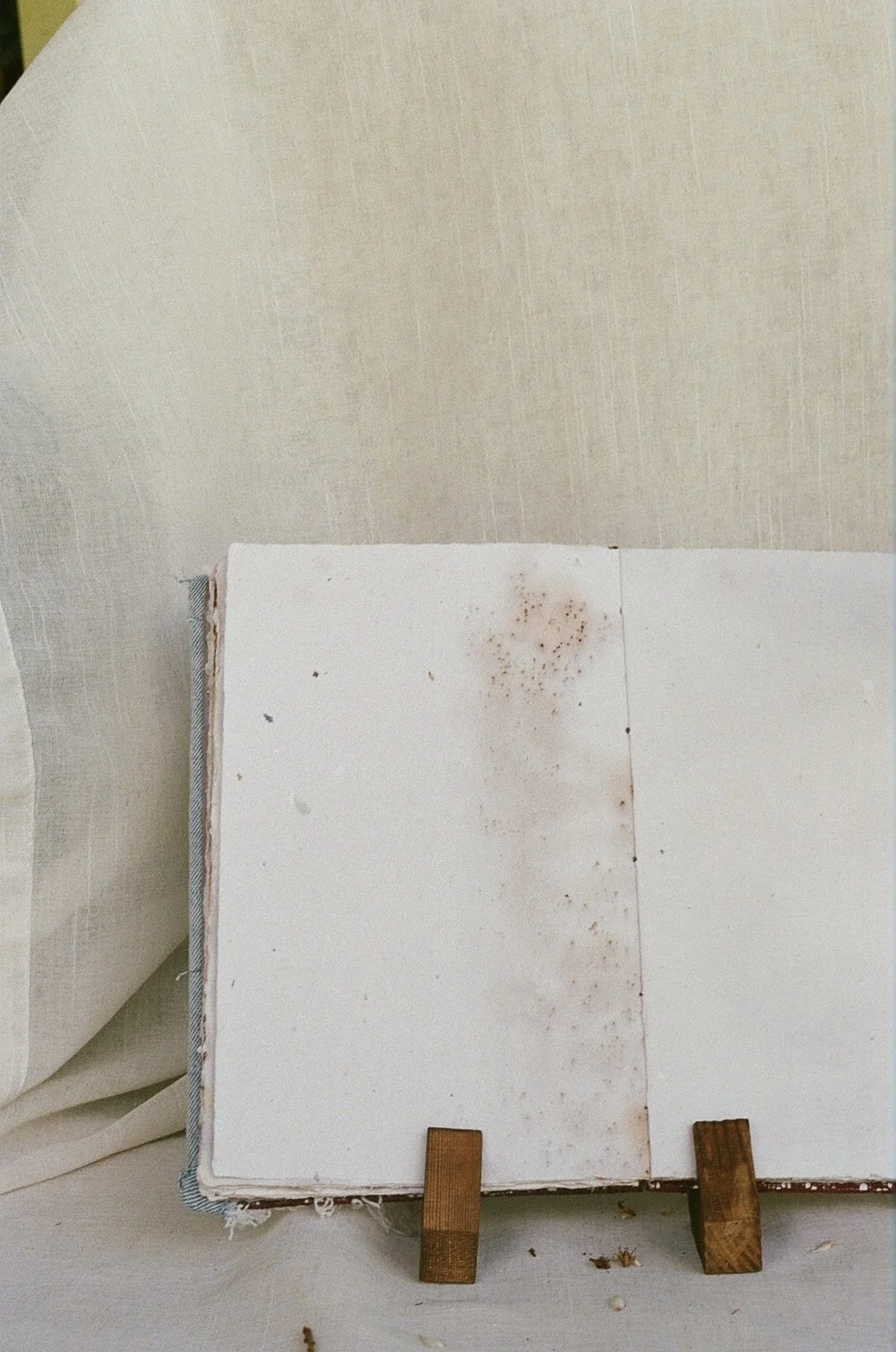
Dreamlander
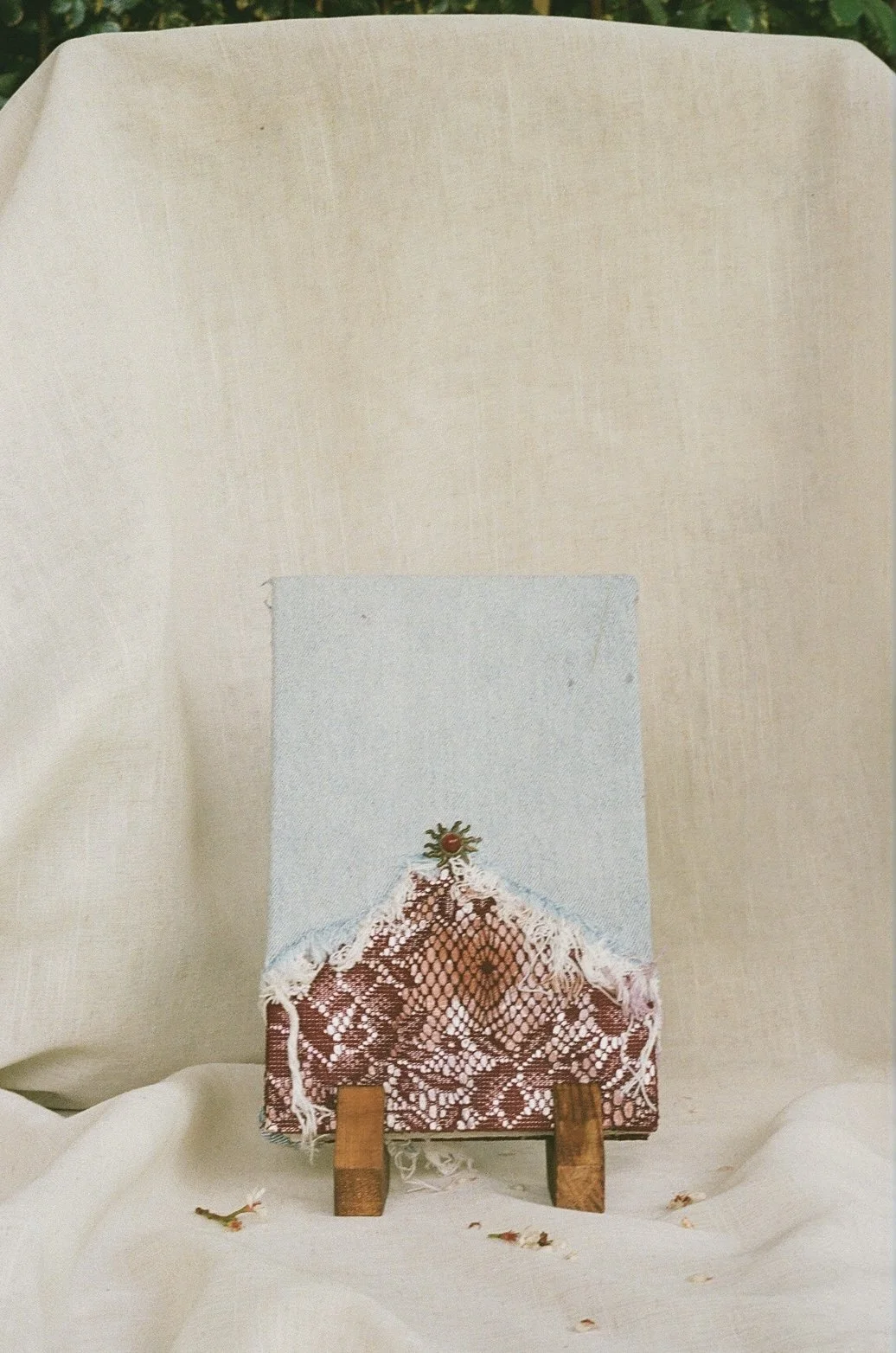
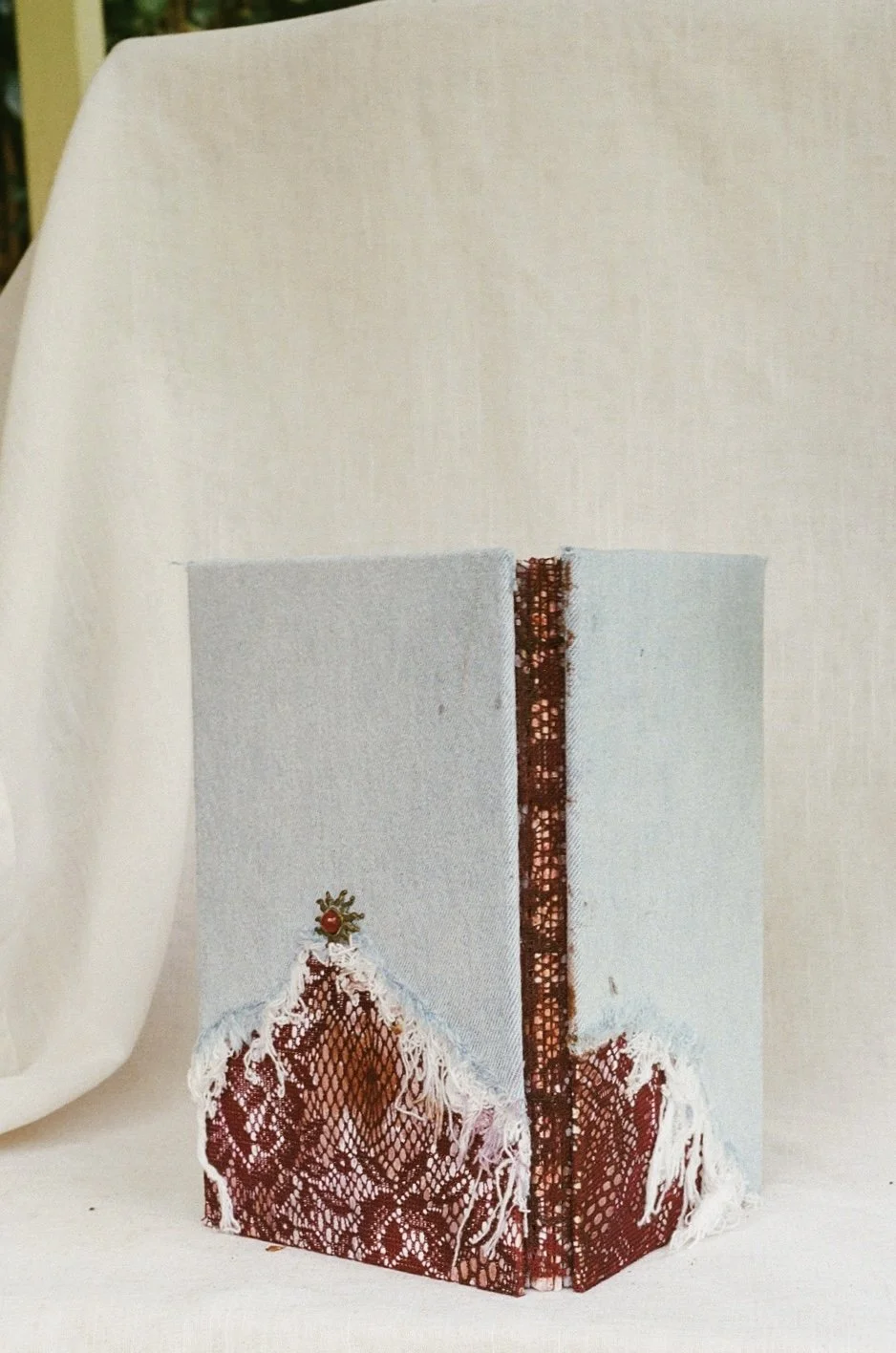
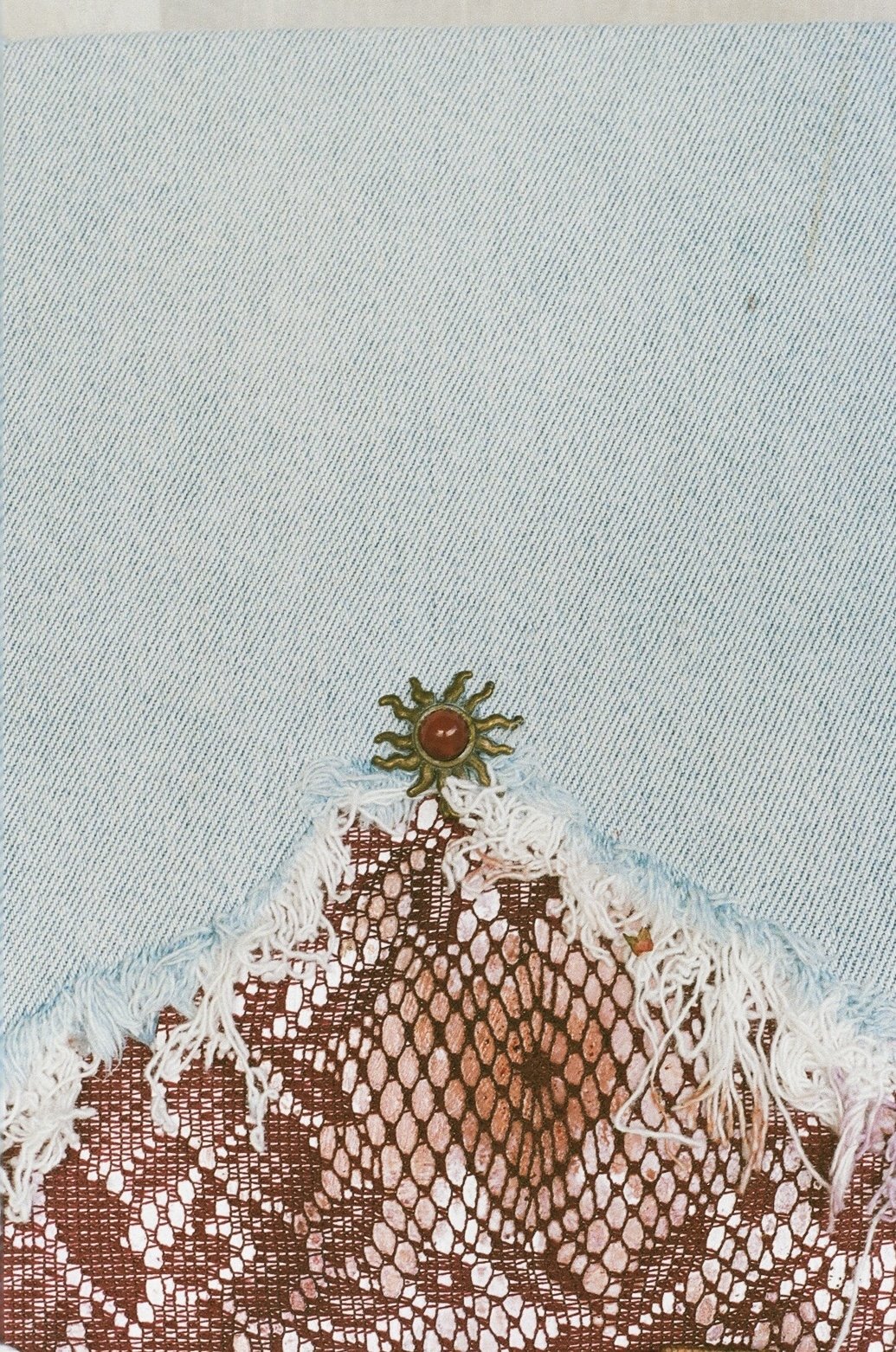
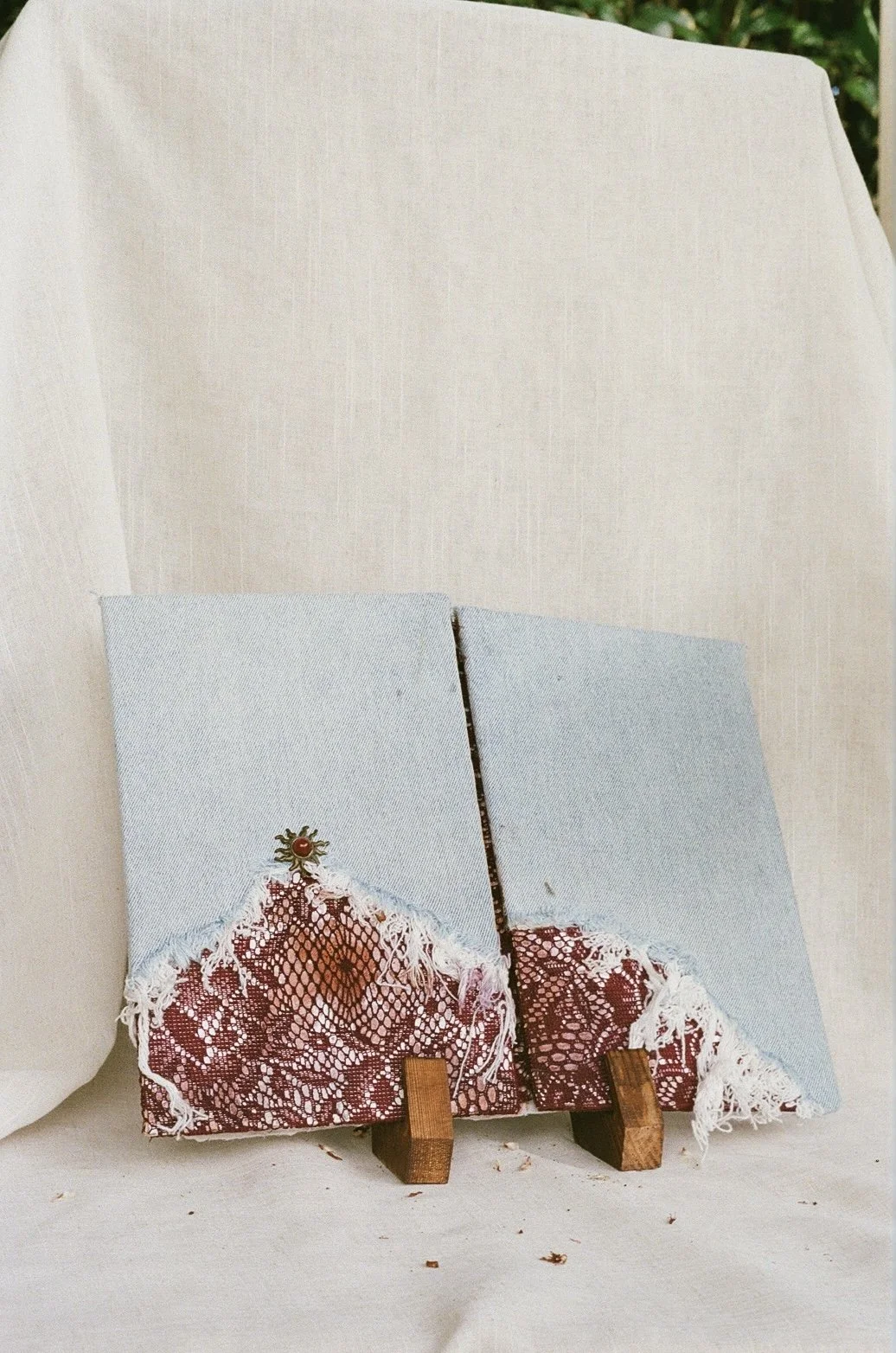
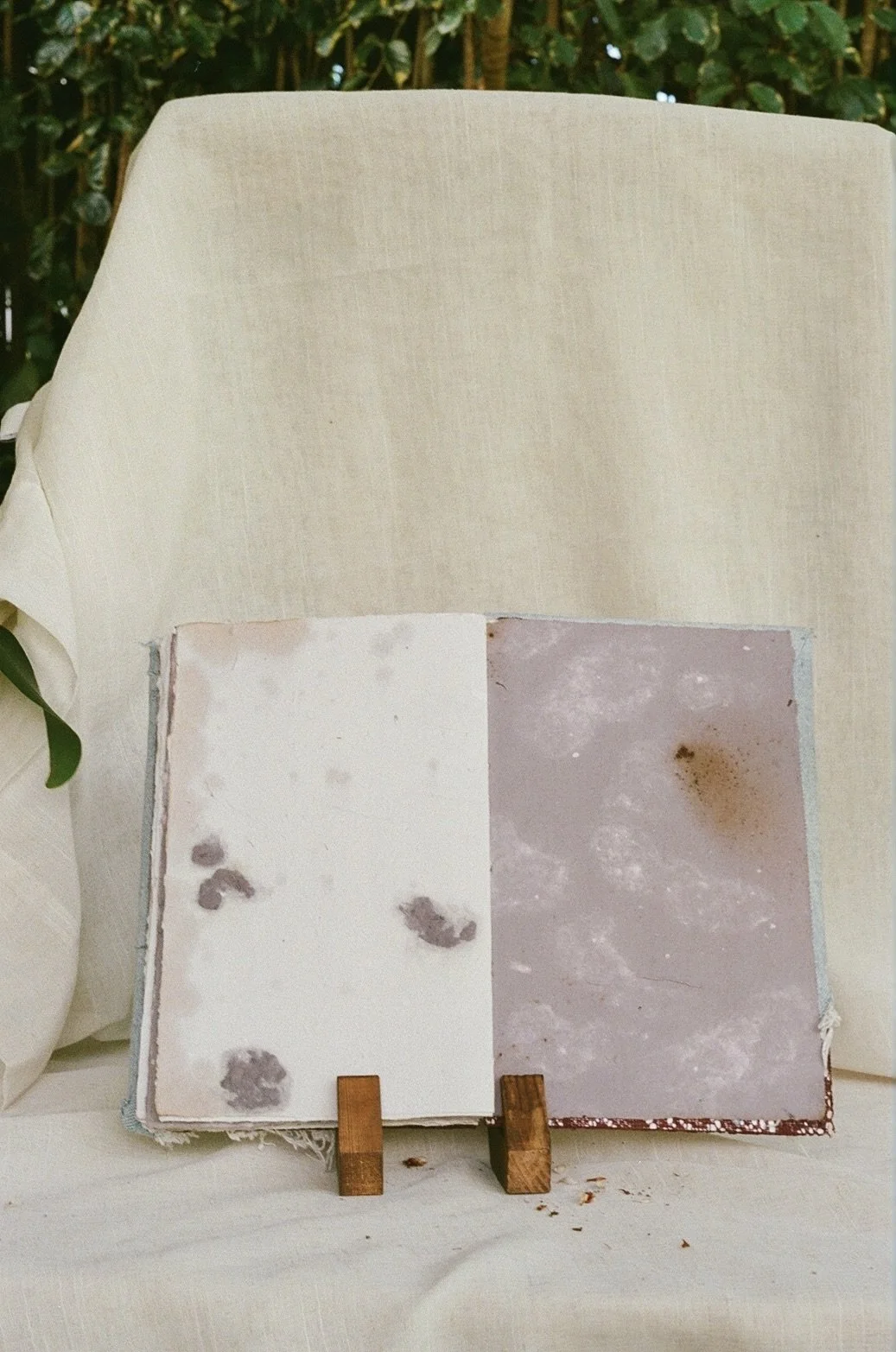
The Dreamlander is a book that took me to the realm between realms. The pages show a softness that pulls me in and hugs me, letting me know its time to walk the dream world. Id like to think the star on the cover is lifting the blanket, letting me into a world that I’ve never seen before.
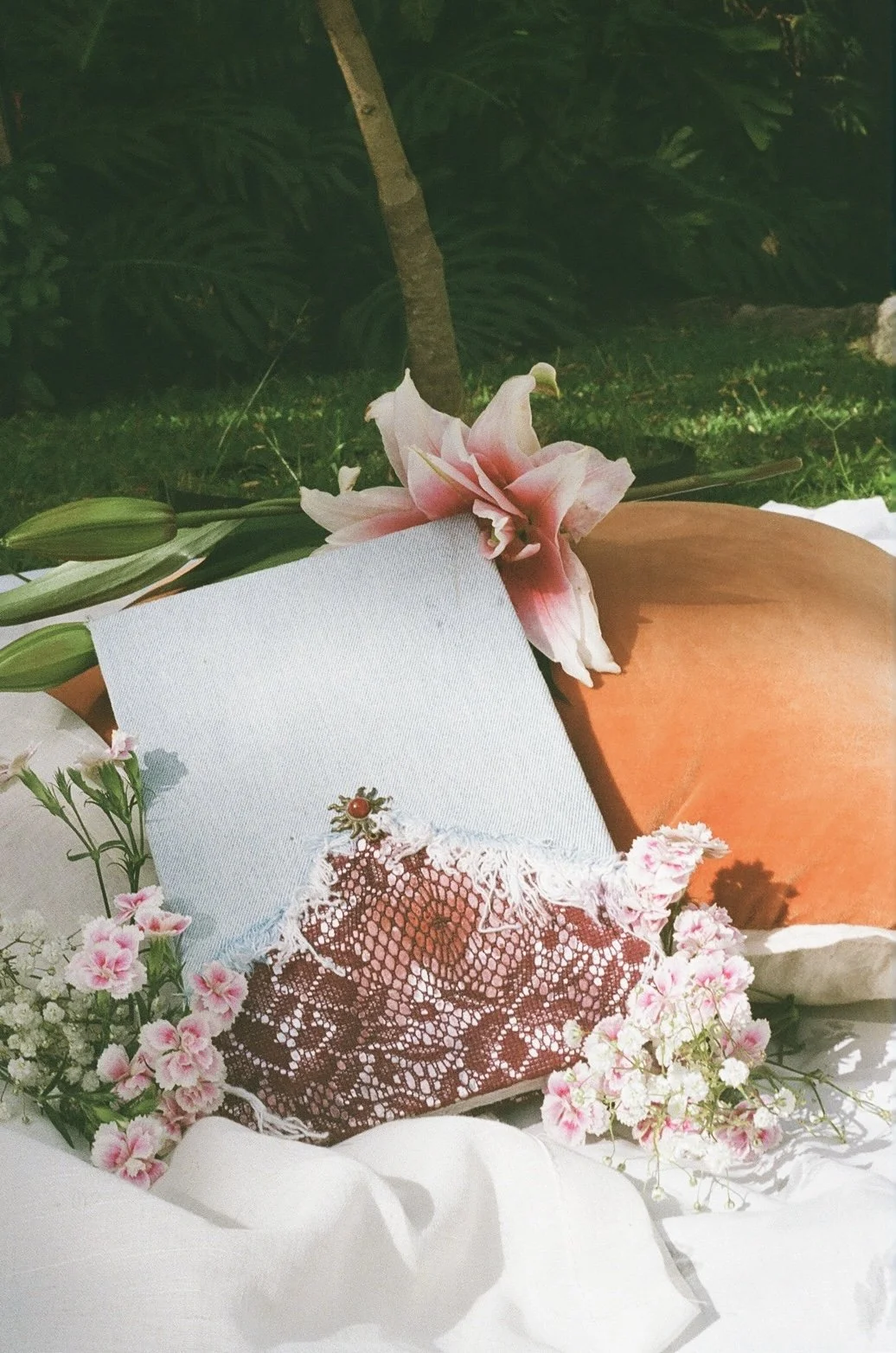
Ingredients
Cotton Fiber (Bleached and Dyed)
Abaca Fiber
Logwood Extract
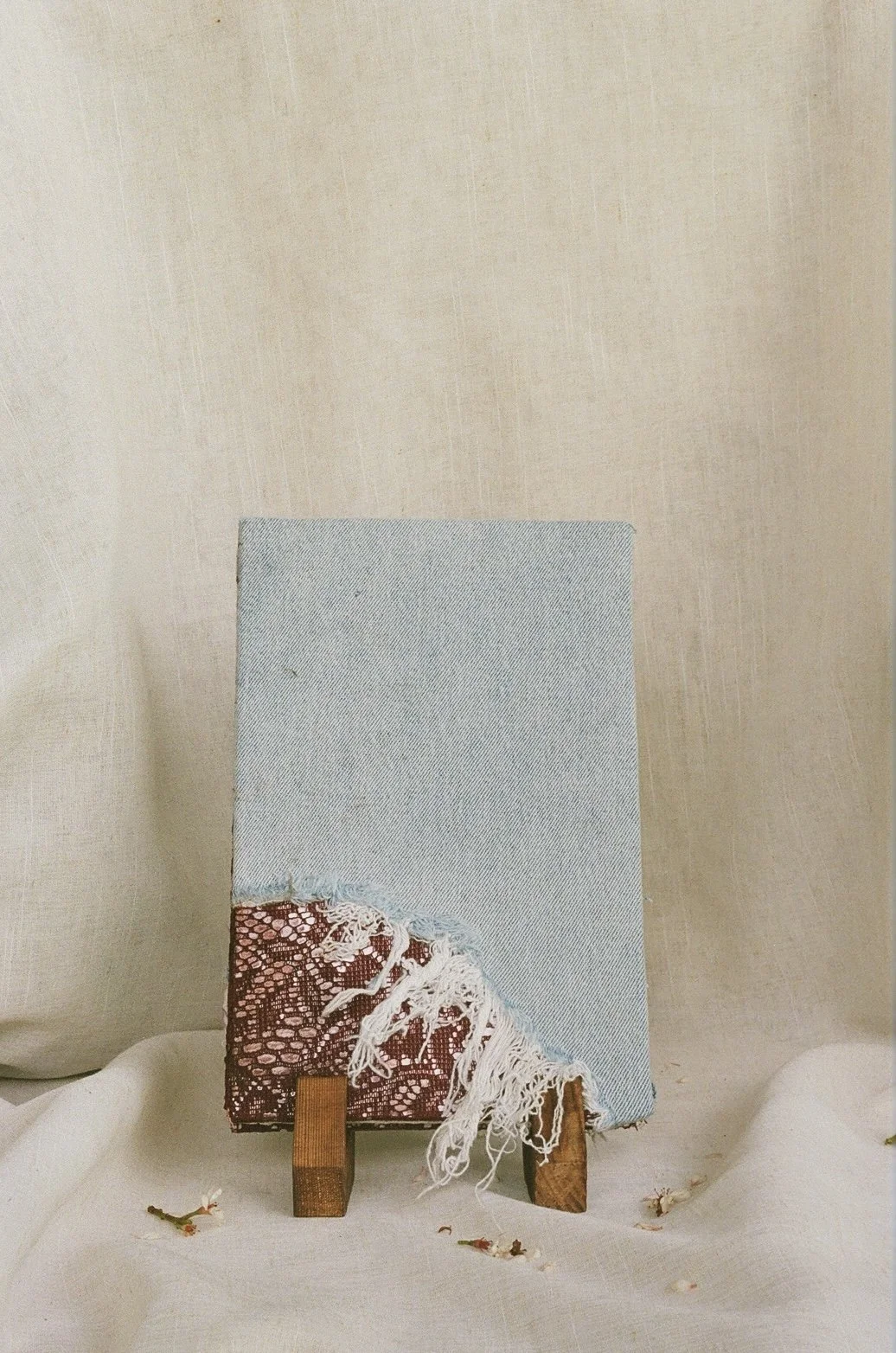
Jeans and Lace
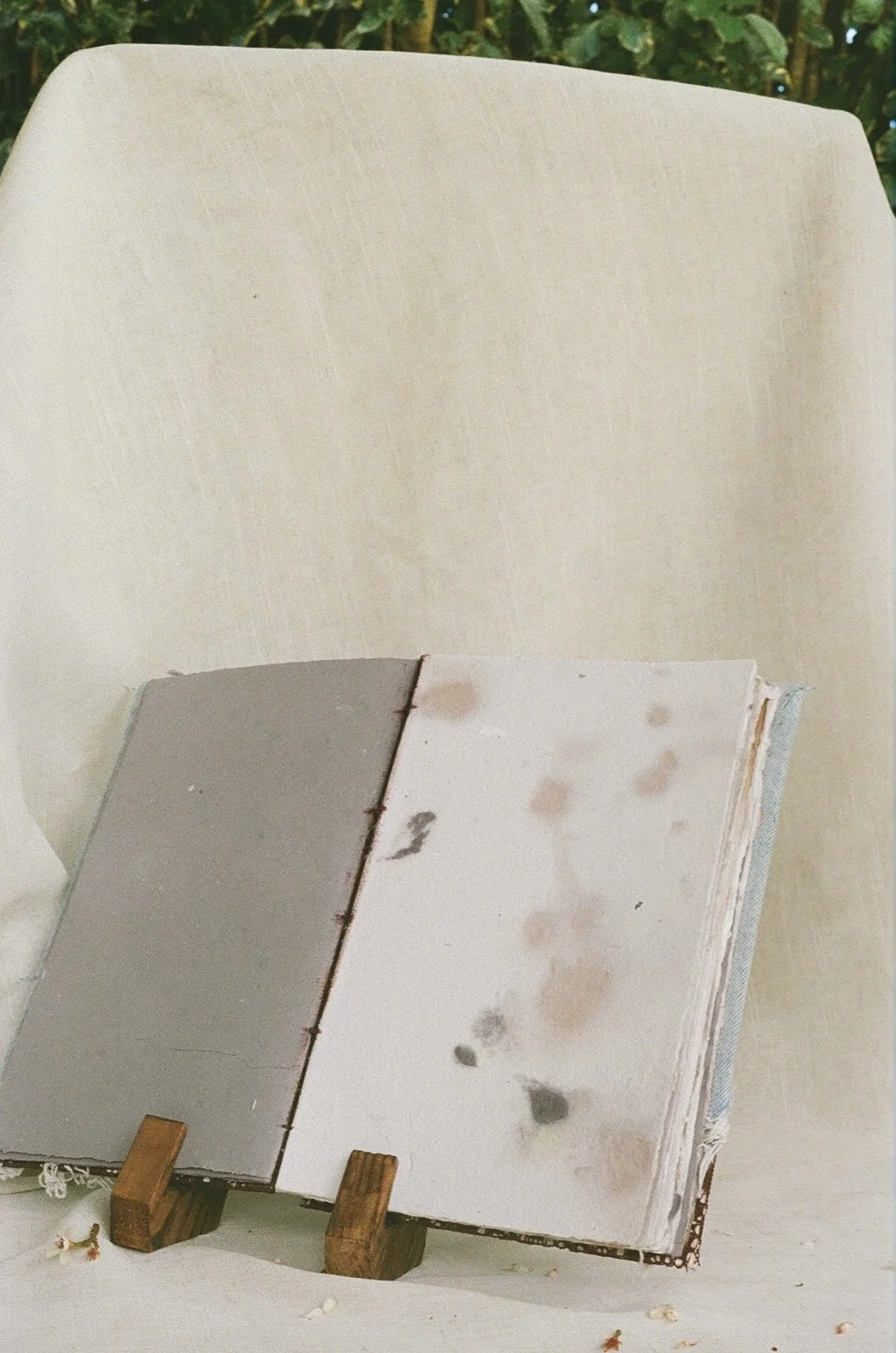
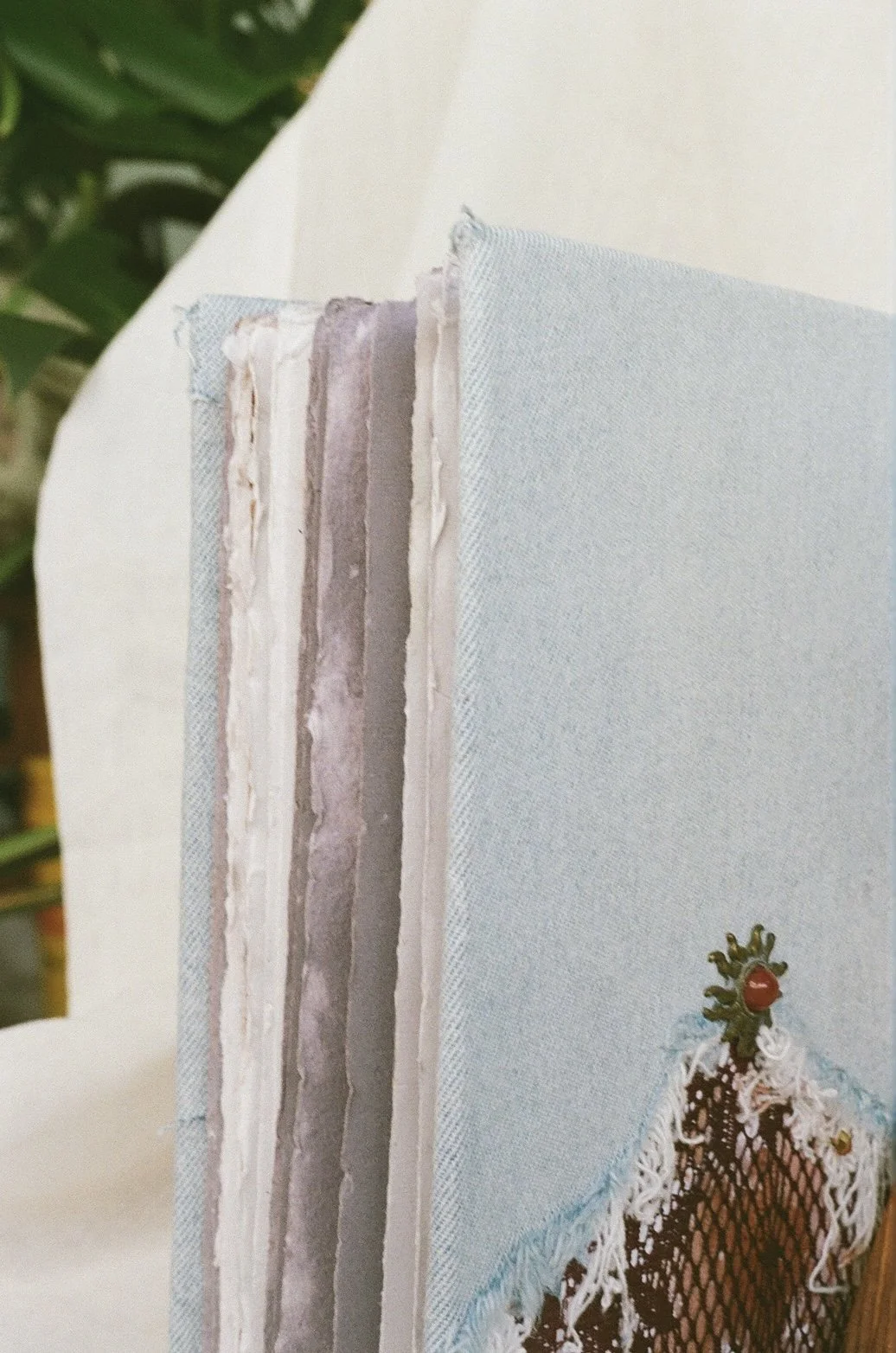
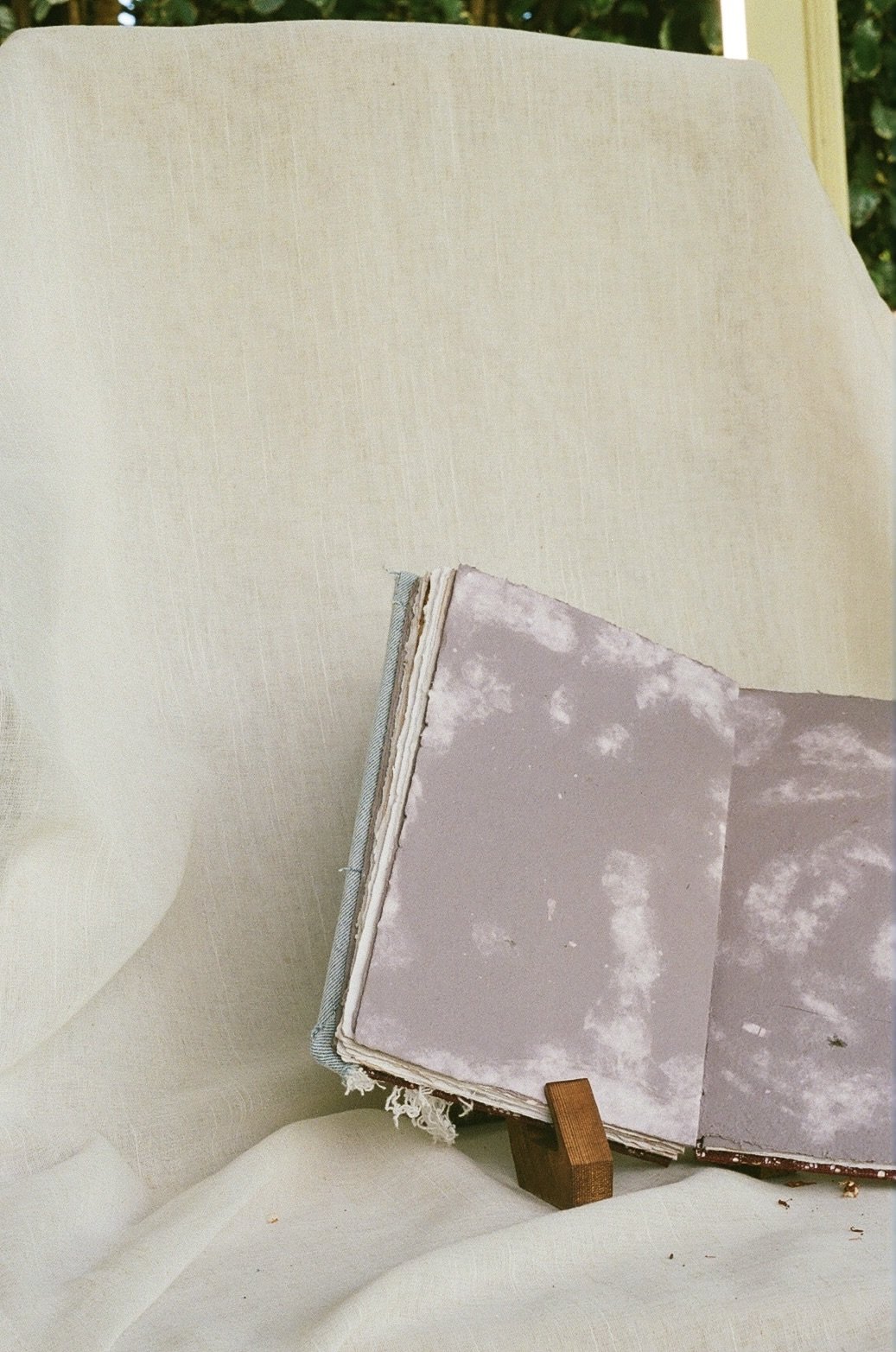
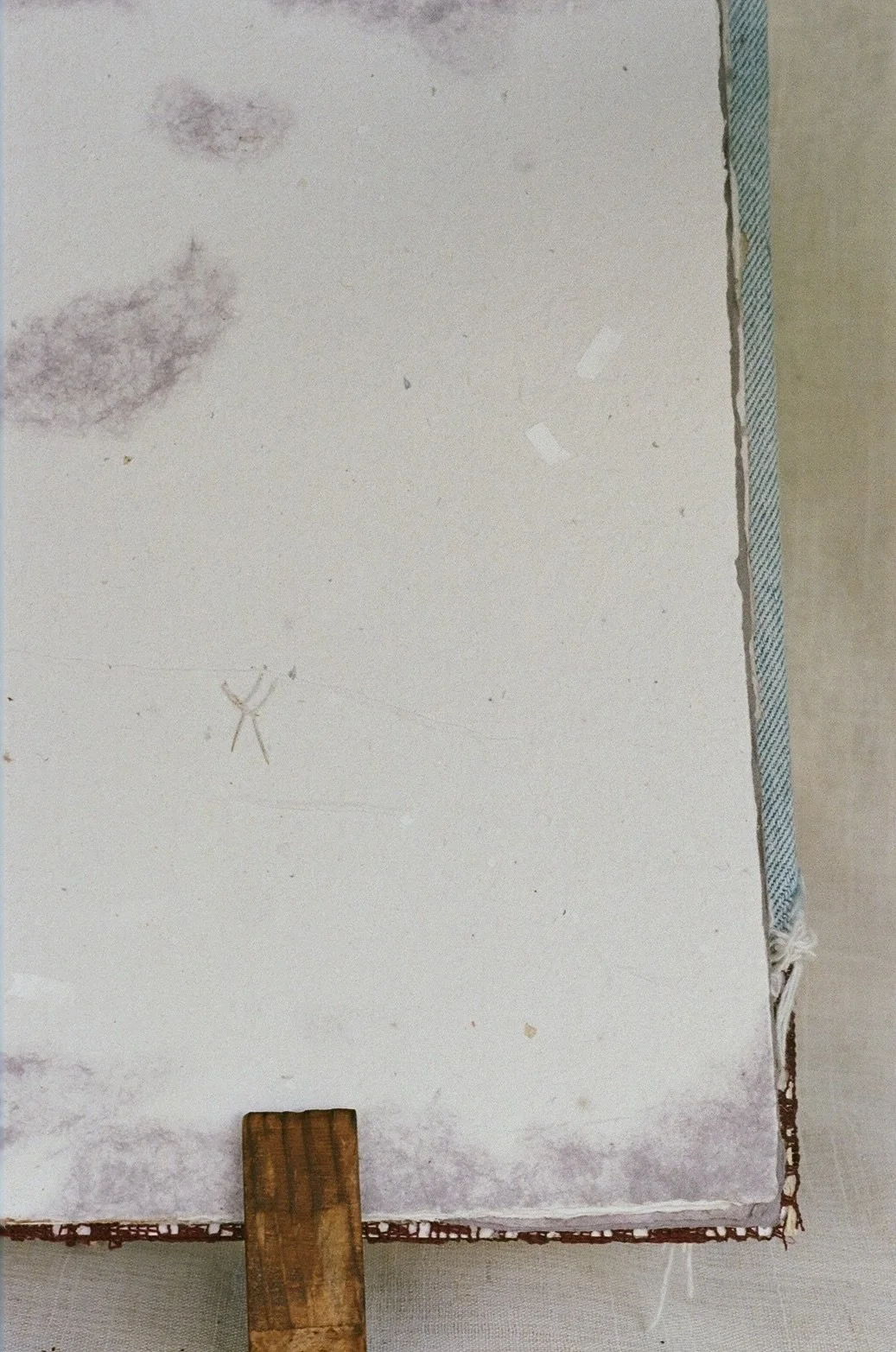
The Dreamlander is a book crafted to hold the softest imagination. Its pages—formed from a delicate, hand-pulled blend of cotton and abaca fibers—possess a gentle quality. They don't just turn; they caress the fingers with a light, pillowy softness, inviting you to slow down and wander through a realm between realms.
The Alchemy of the Storm
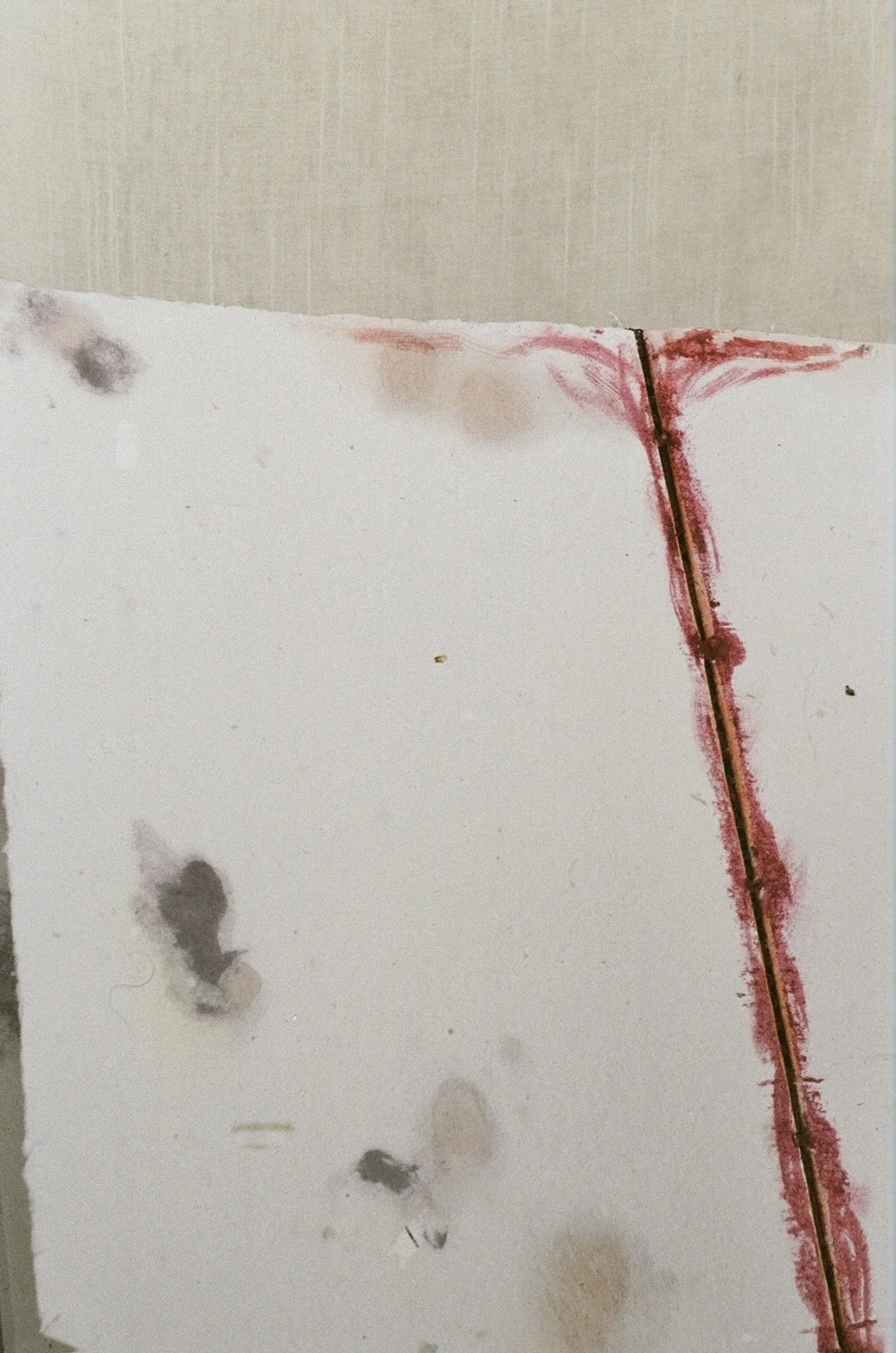
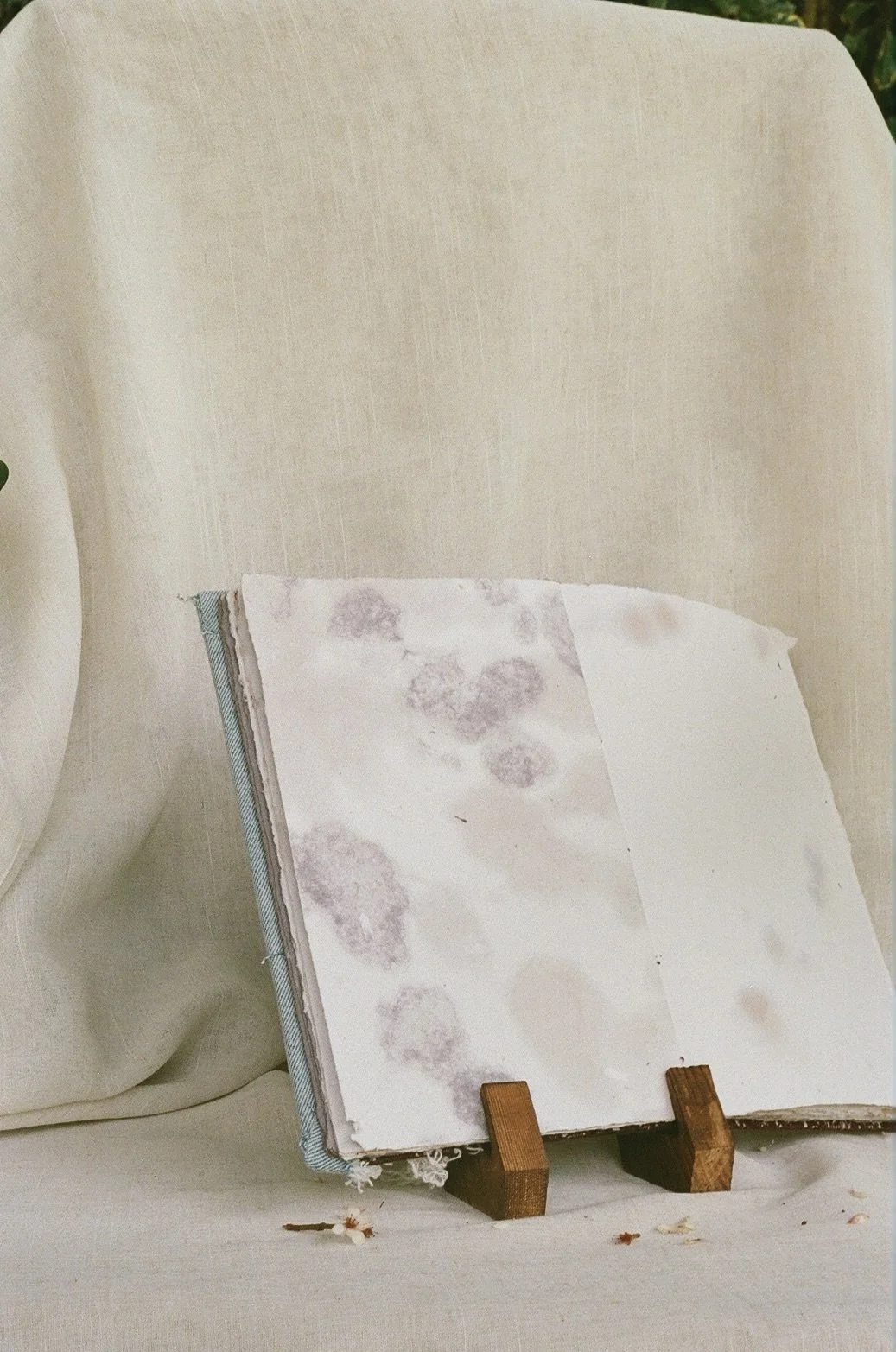
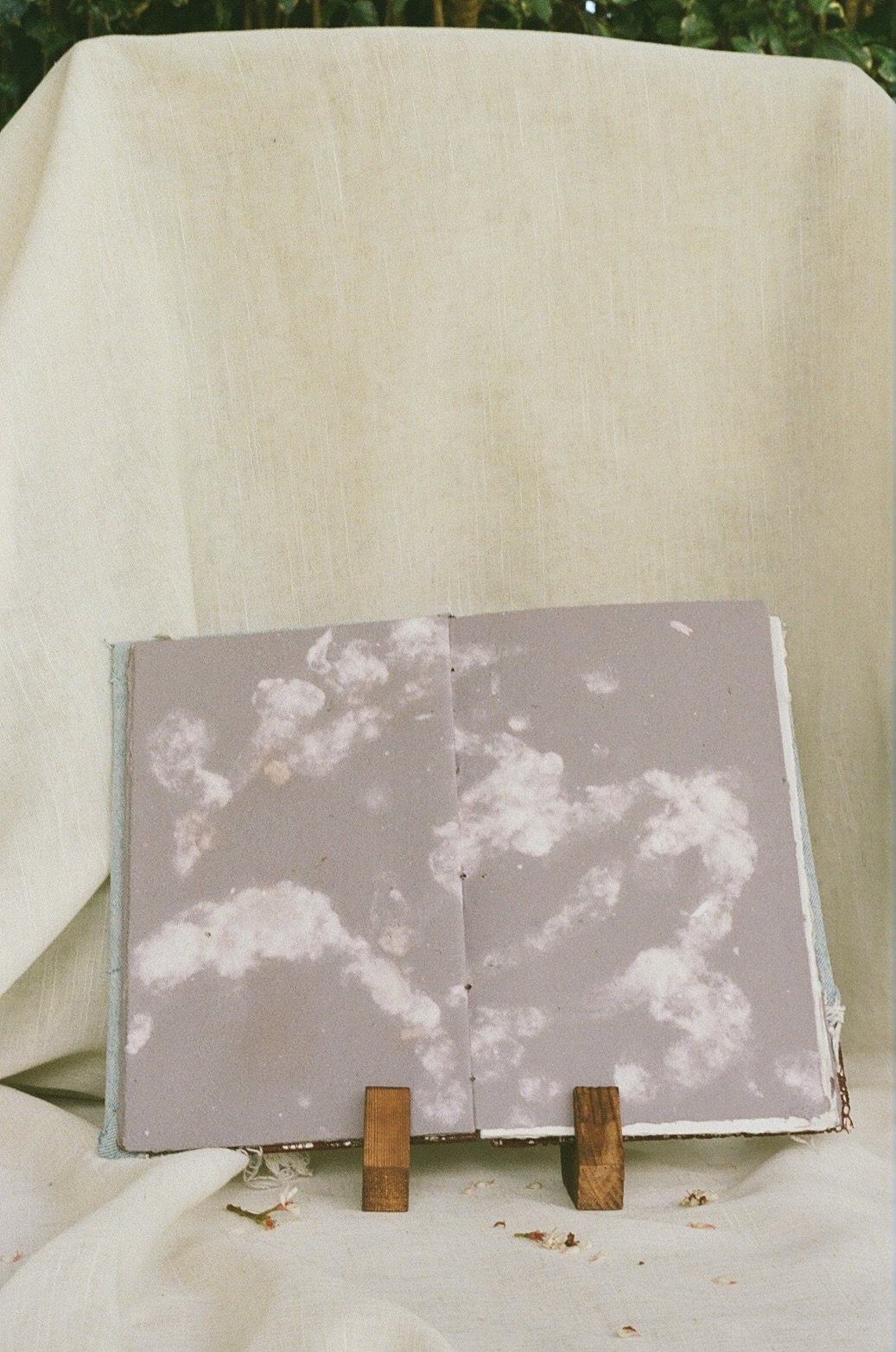
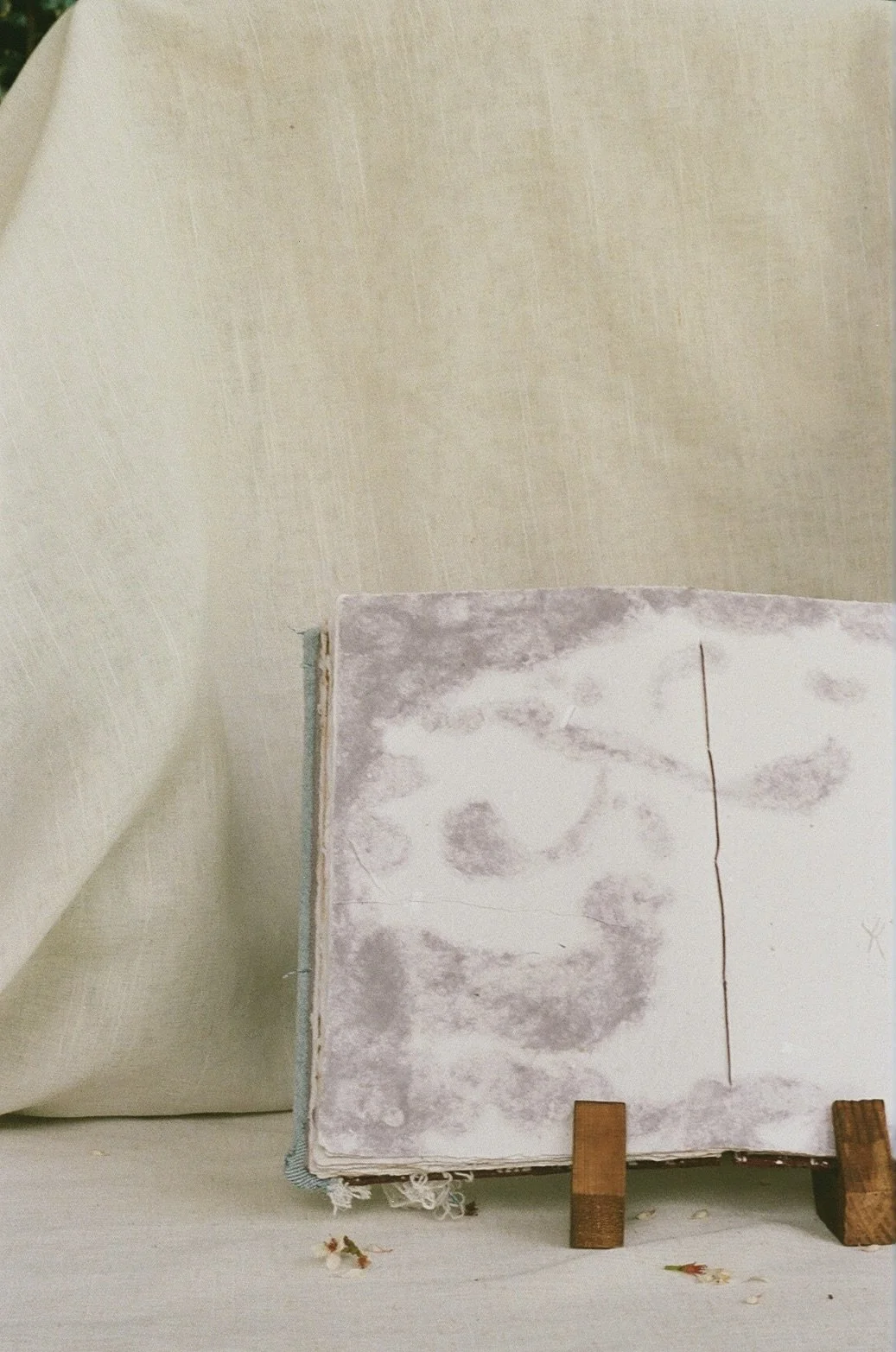
While some of the sheets retain their pure, cloud-like lightness, others were treated with classic black Rit fabric dye. In bookbinding and papermaking, black is often expected to be absolute—an anchor of deep shadow. But chemistry had a different story to tell. Instead of a harsh, solid night, the fibers emerged from the vat awash in an enchanting spectrum of light greys and soft, misty purples.
The resulting pages look less like manufactured paper and more like a snapshot of nature: moody swirls that mimic a heavy thundercloud mixing into a perfectly clear sky, capturing the very essence of a transitioning dreamscape.
The Story in the Science
In the world of synthetic chemistry, "black" is rarely a single, pure pigment. It is a crowded room—a dense, concentrated marriage of intense primary and secondary colors. To create the illusion of absolute darkness, dye makers mix deep blues, fiery reds, rich purples, and stabilizing greens.
When these pigments met the raw pulp of the Dreamlander, a beautiful separation occurred. Cotton and abaca are incredibly thirsty cellulose fibers, but when the dye is introduced in a diluted form or mixed directly into the shifting currents of the papermaking water, the fibers become selective.
Like a crowd dispersing, the different colored molecules began to travel and bond at different speeds. The heavier, faster-binding red and blue molecules rushed forward to embrace the cellulose first, marrying together into a soft purple. Meanwhile, the components that would have neutralized them into a solid black were left behind in the water or diluted away. What looks like a happy accident on the page is actually chromatography in action—the hidden, vibrant DNA of the black dye revealing its secret purples as it danced with the fiber.
Logwood Extract: The Science of Rust vs. Violet
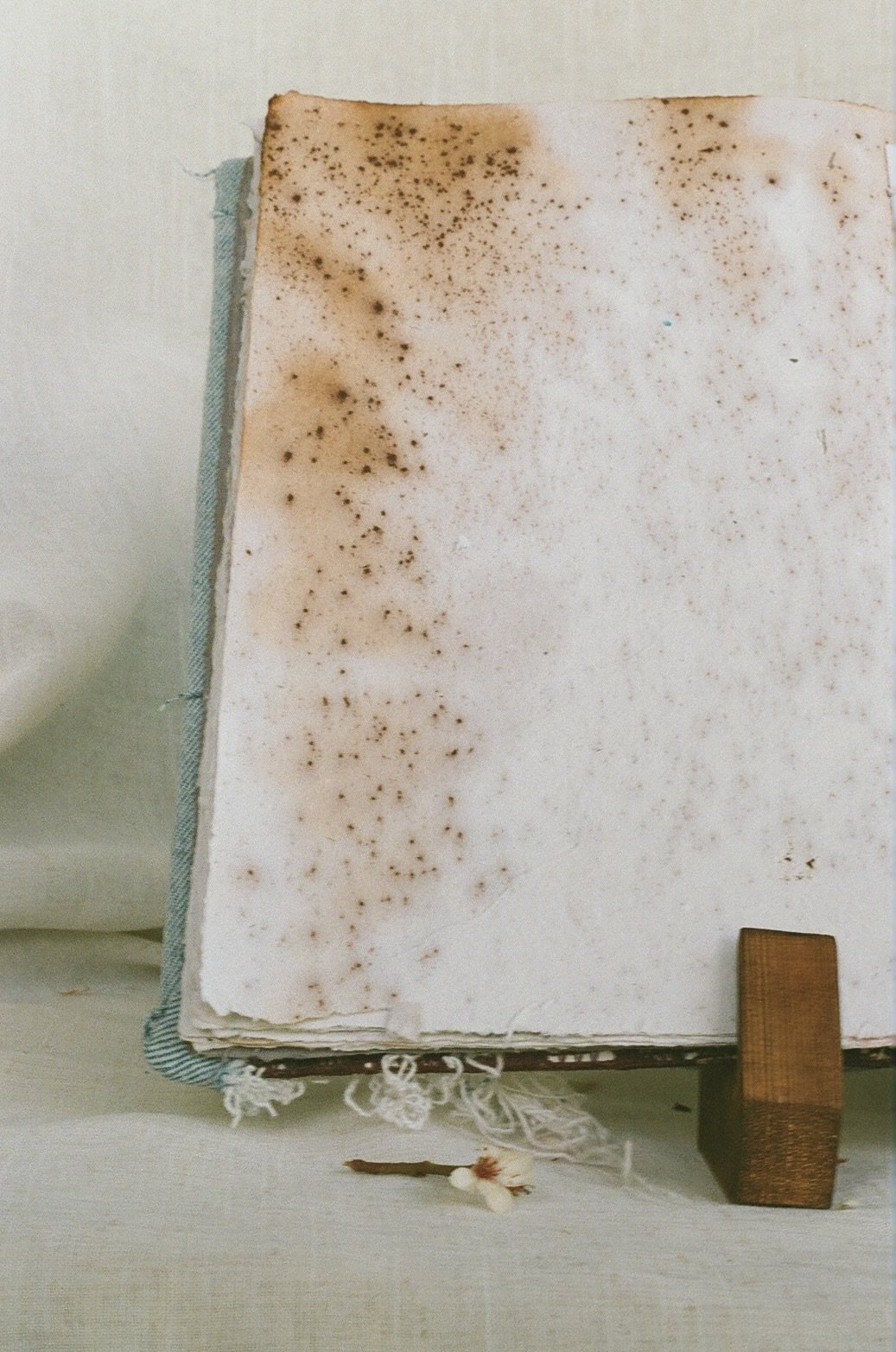
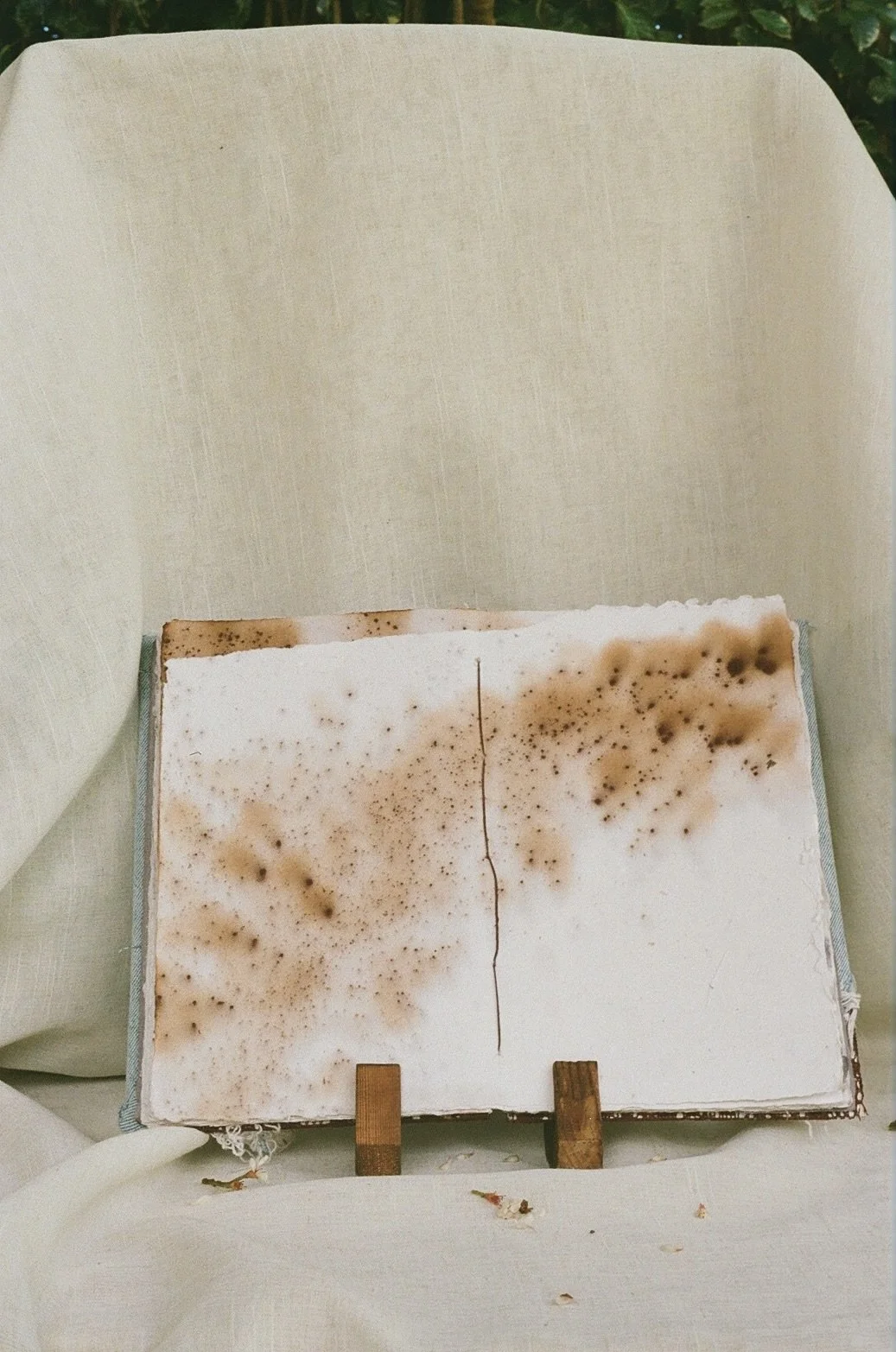
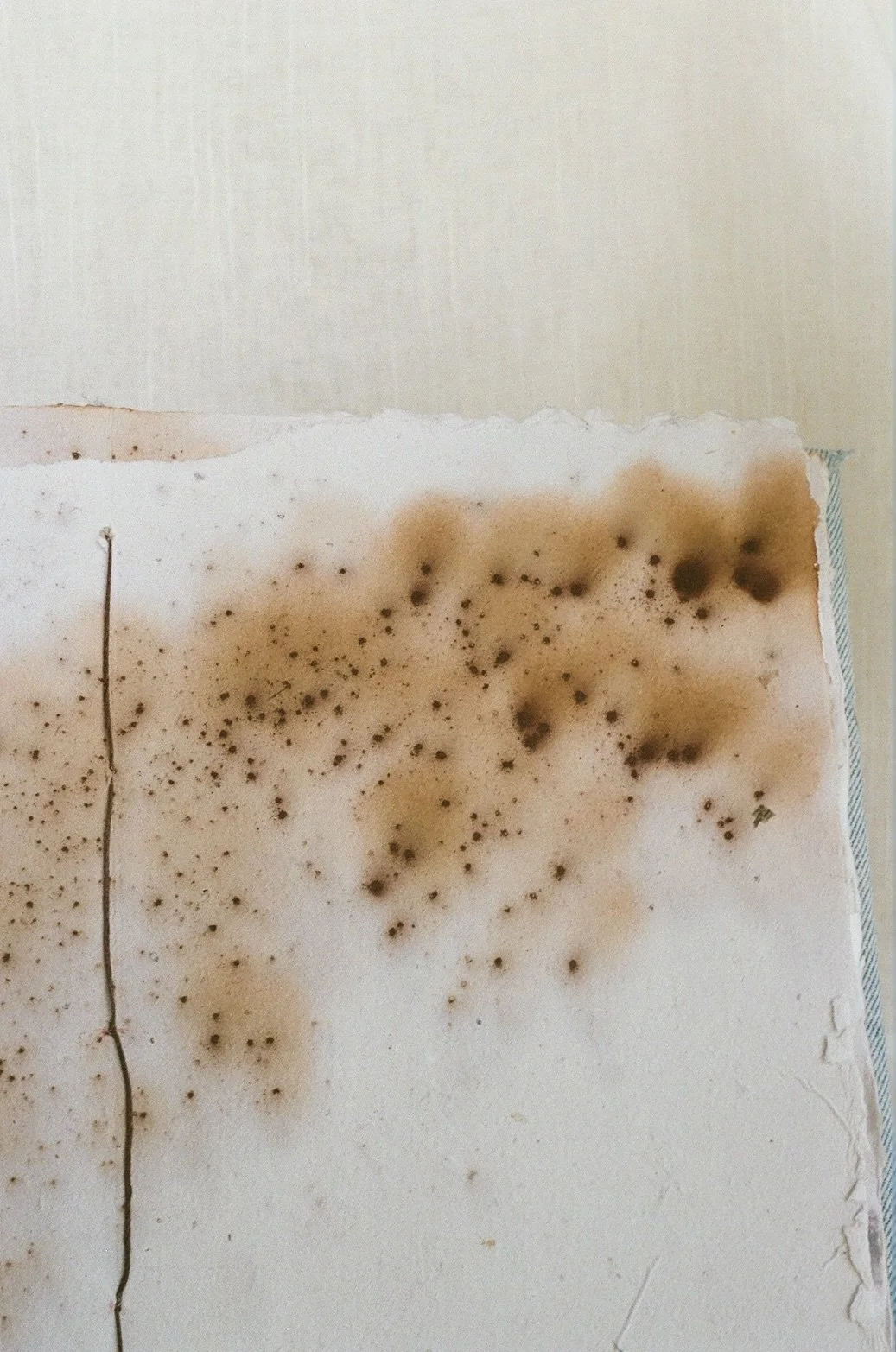
In papermaking, natural dyes rarely produce a single, fixed color. Their results depend entirely on the chemistry of the water and the fibers. Following the experiments with the Dreamlander, this latest batch of hand-pulled cotton and abaca paper was treated with logwood extract (Haematoxylum campechianum), yielding an unexpected and deep rust color.
Logwood is highly sensitive to pH, meaning it acts as a natural indicator and changes color based on how acidic or alkaline the environment is. When the logwood extract was added to this specific pulp vat, the sheets emerged with a rich, coppery rust tone rather than the dark purple or black typically associated with the dye. This happened because the vat and the paper fibers were slightly more acidic. In an acidic environment, the color components in logwood shift away from the blue spectrum and bond with the cellulose as warm, red-brown pigments.
Comparing Vats: "A book for a poet"
To see this pH sensitivity in action, you can look back at the previous batch made for “A book made for a Poet” In that project, logwood powder was used under different chemical conditions. The vat for the poet's book was neutral or slightly alkaline (basic). Because the pH was higher, the chemical reaction was completely different, resulting in an entirely blue and purple color palette.The contrast between these two batches shows how a minor change in water acidity can completely alter the final look of the paper, turning the exact same natural dye from a twilight purple into an earthy, weathered rust.