A book for a Poet
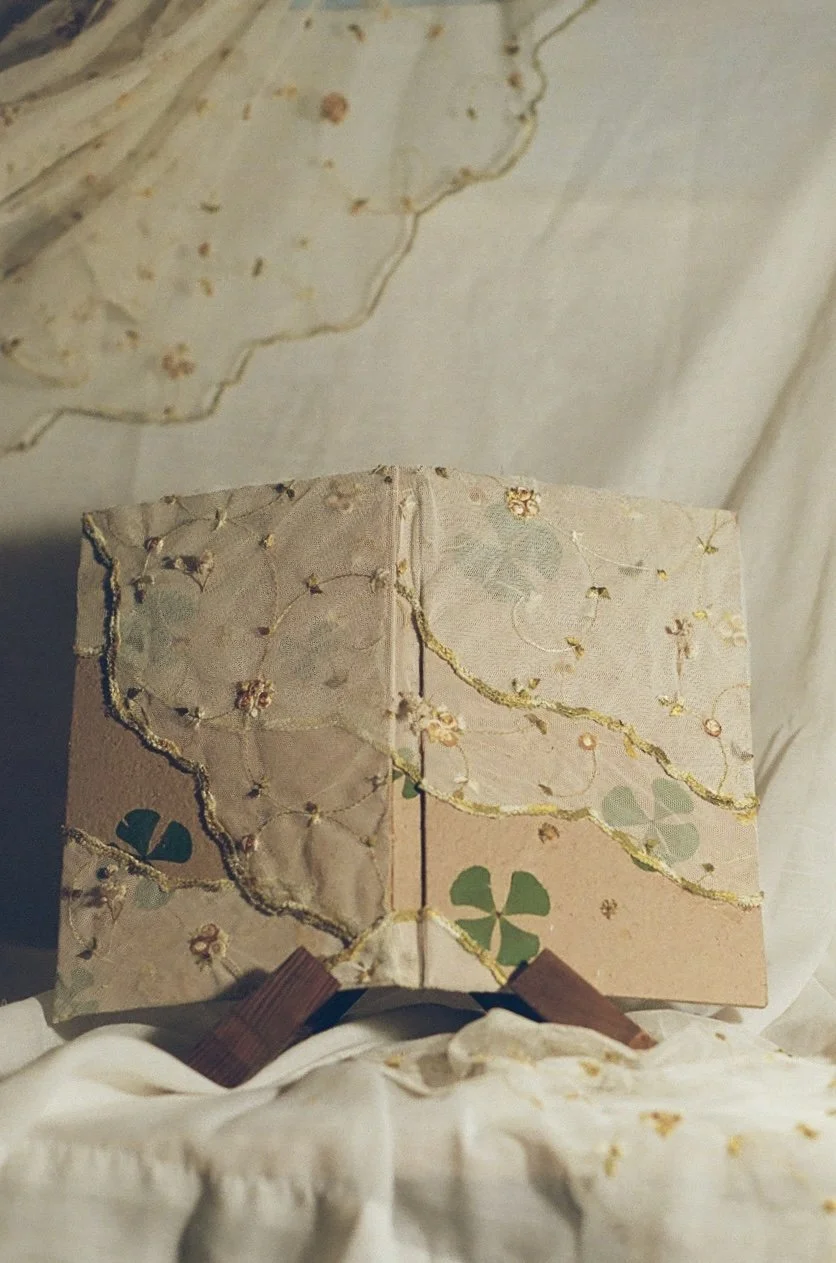
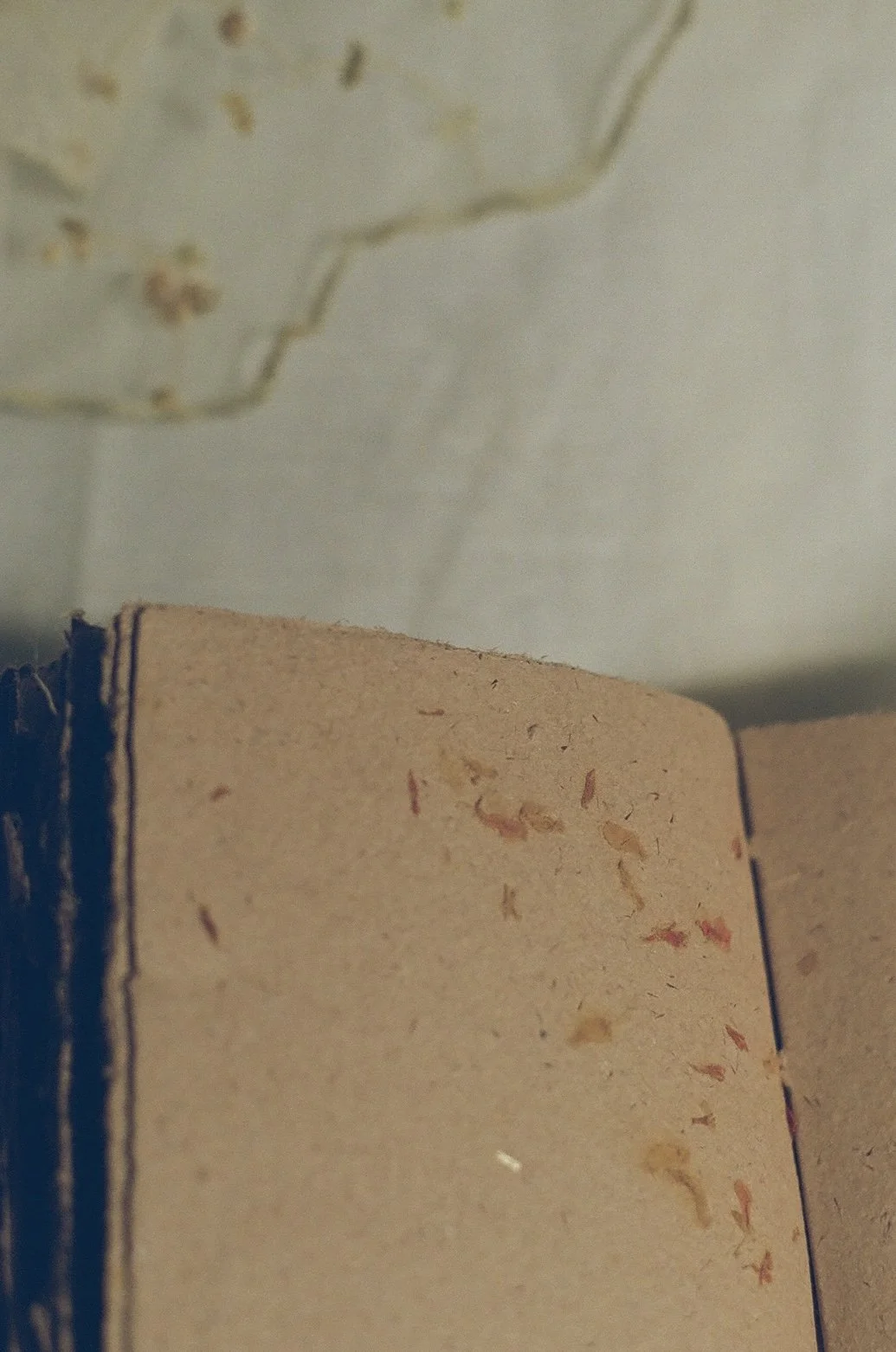
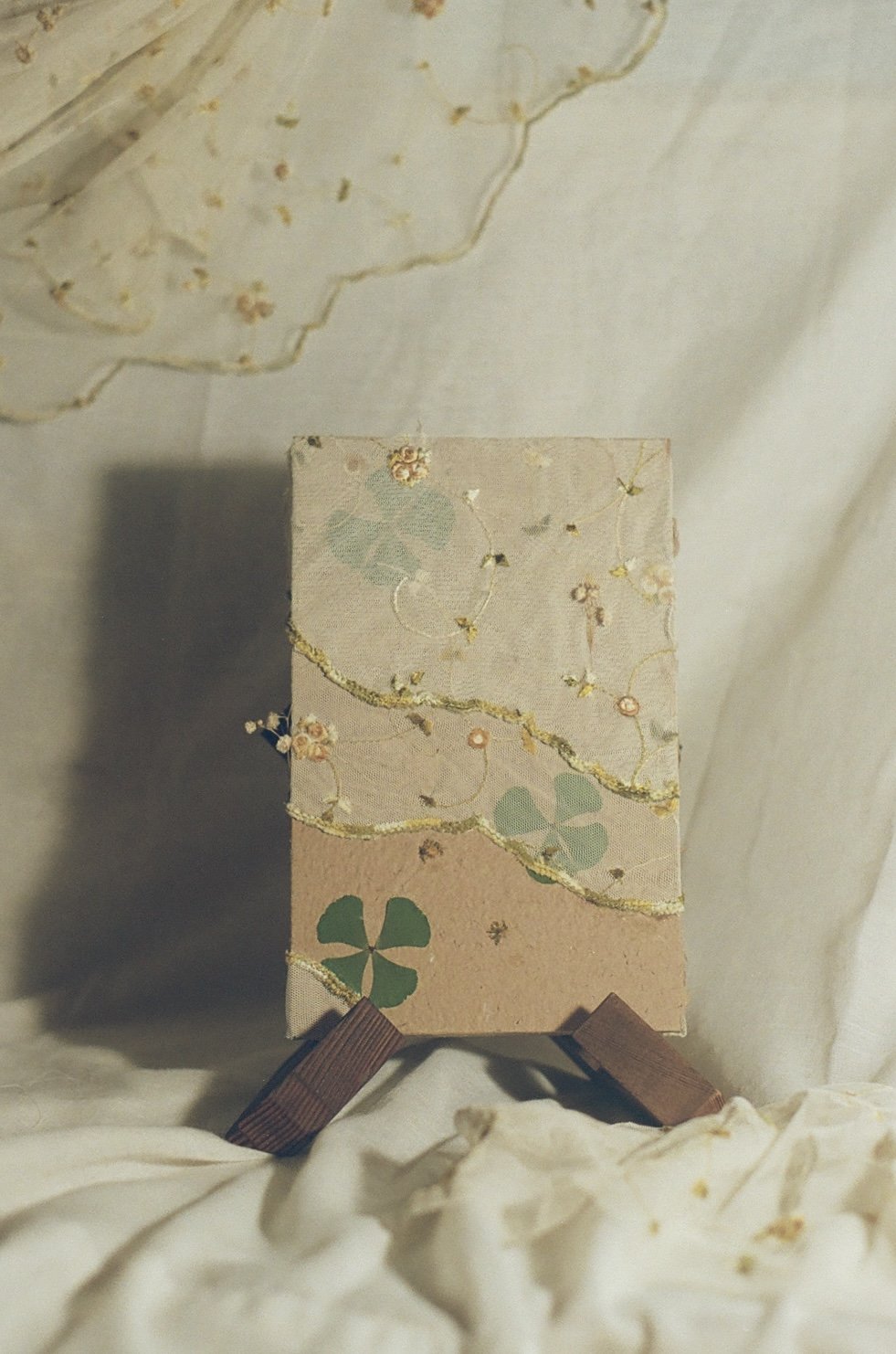
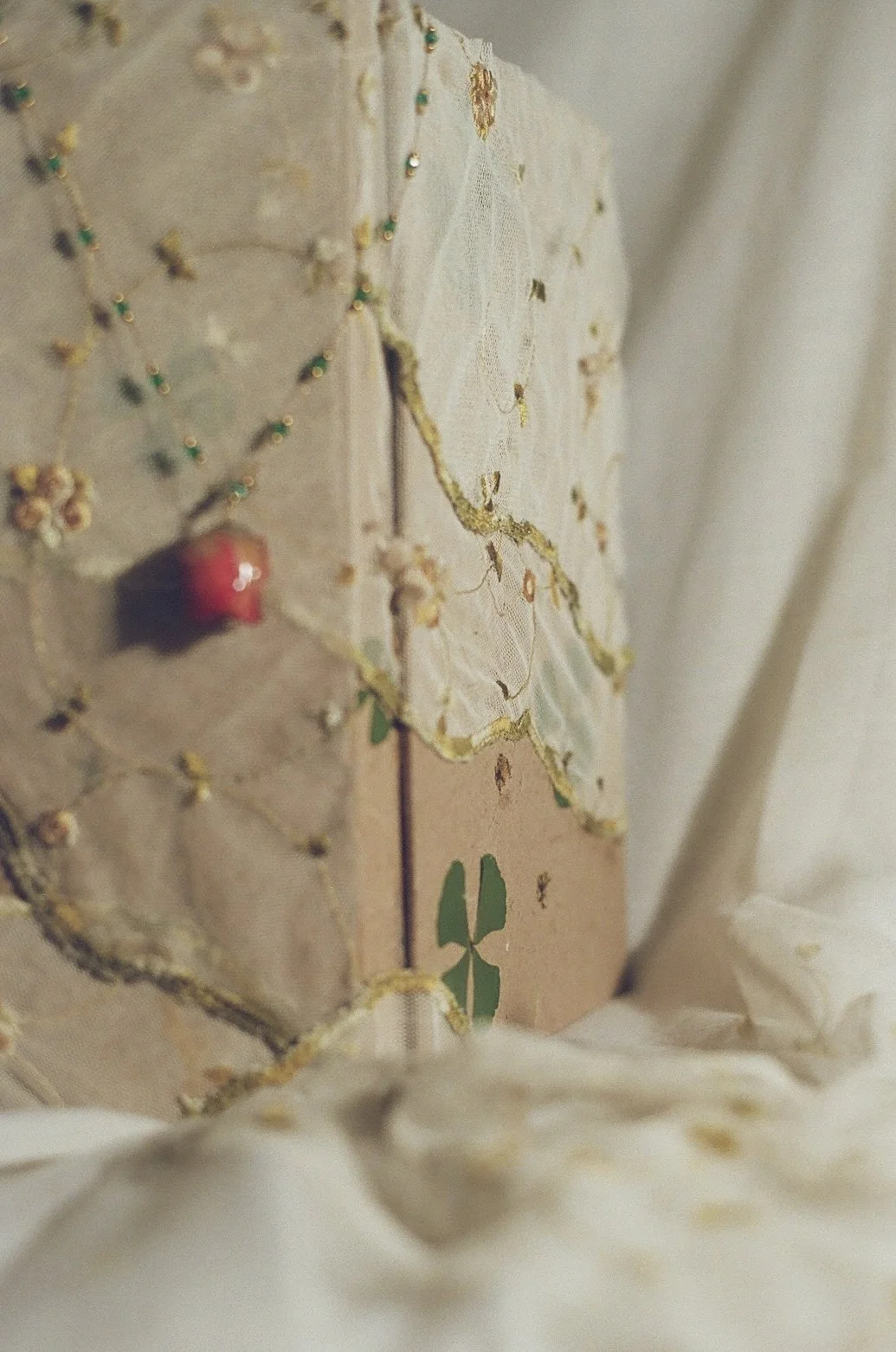
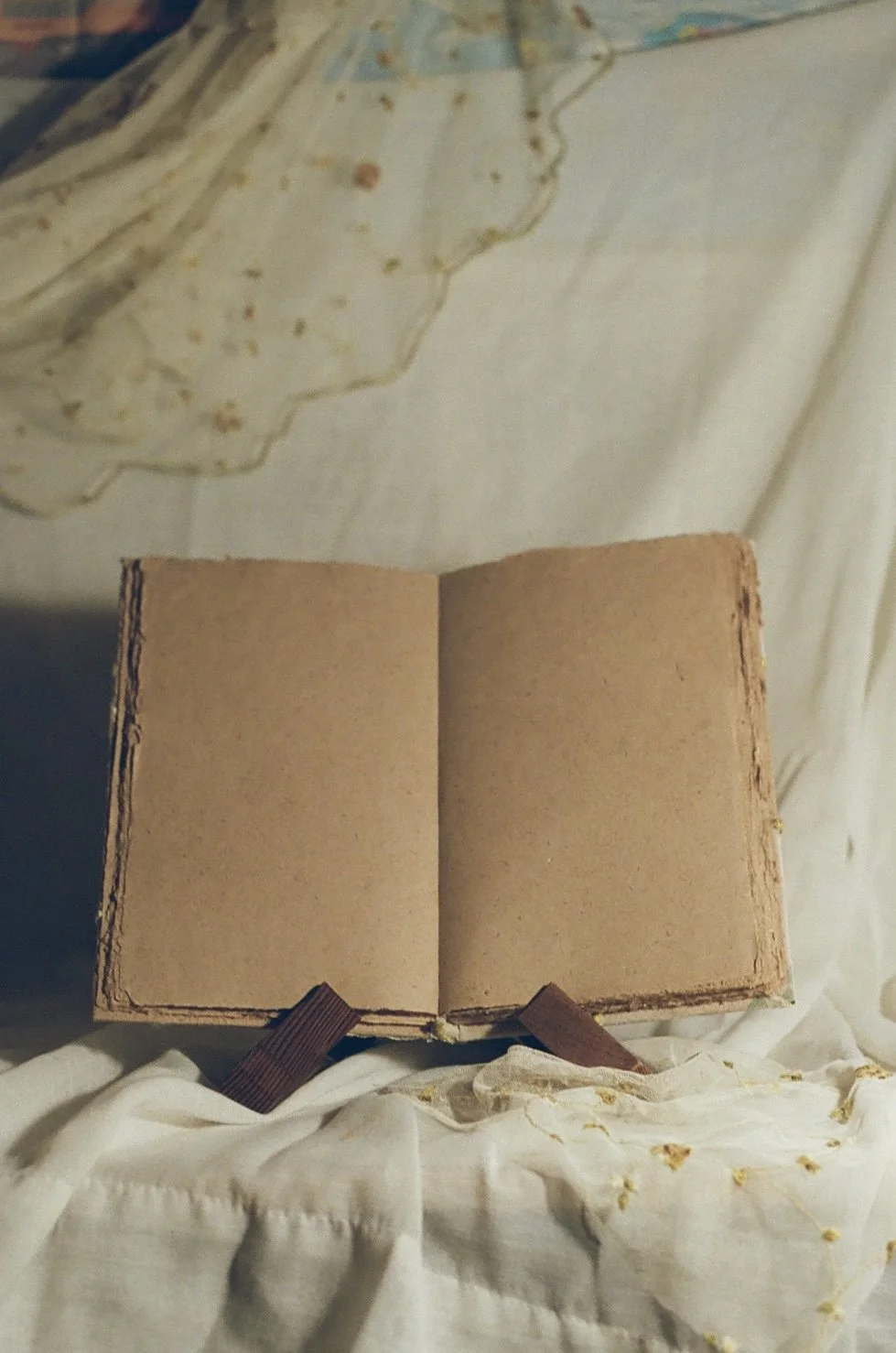
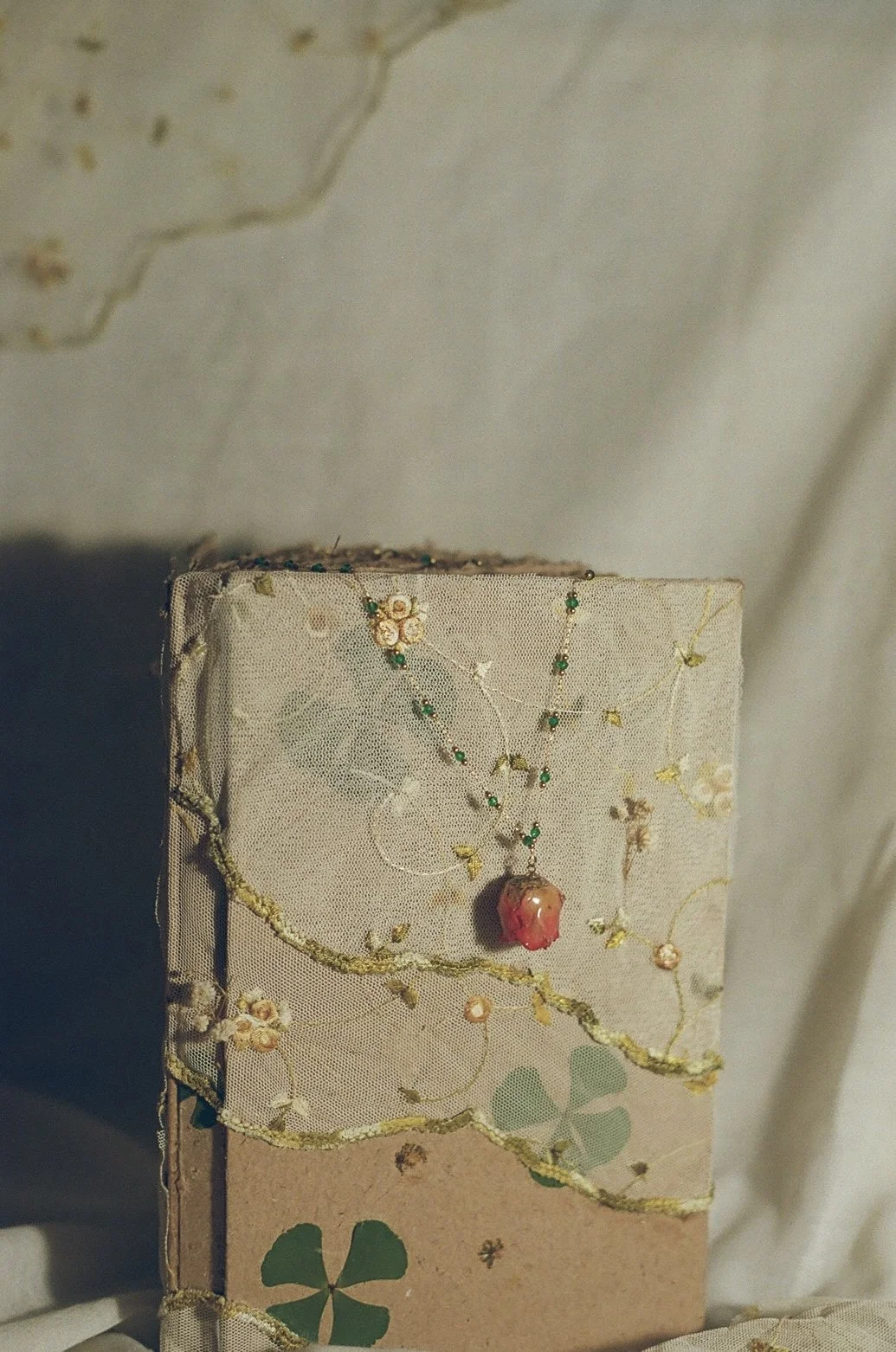
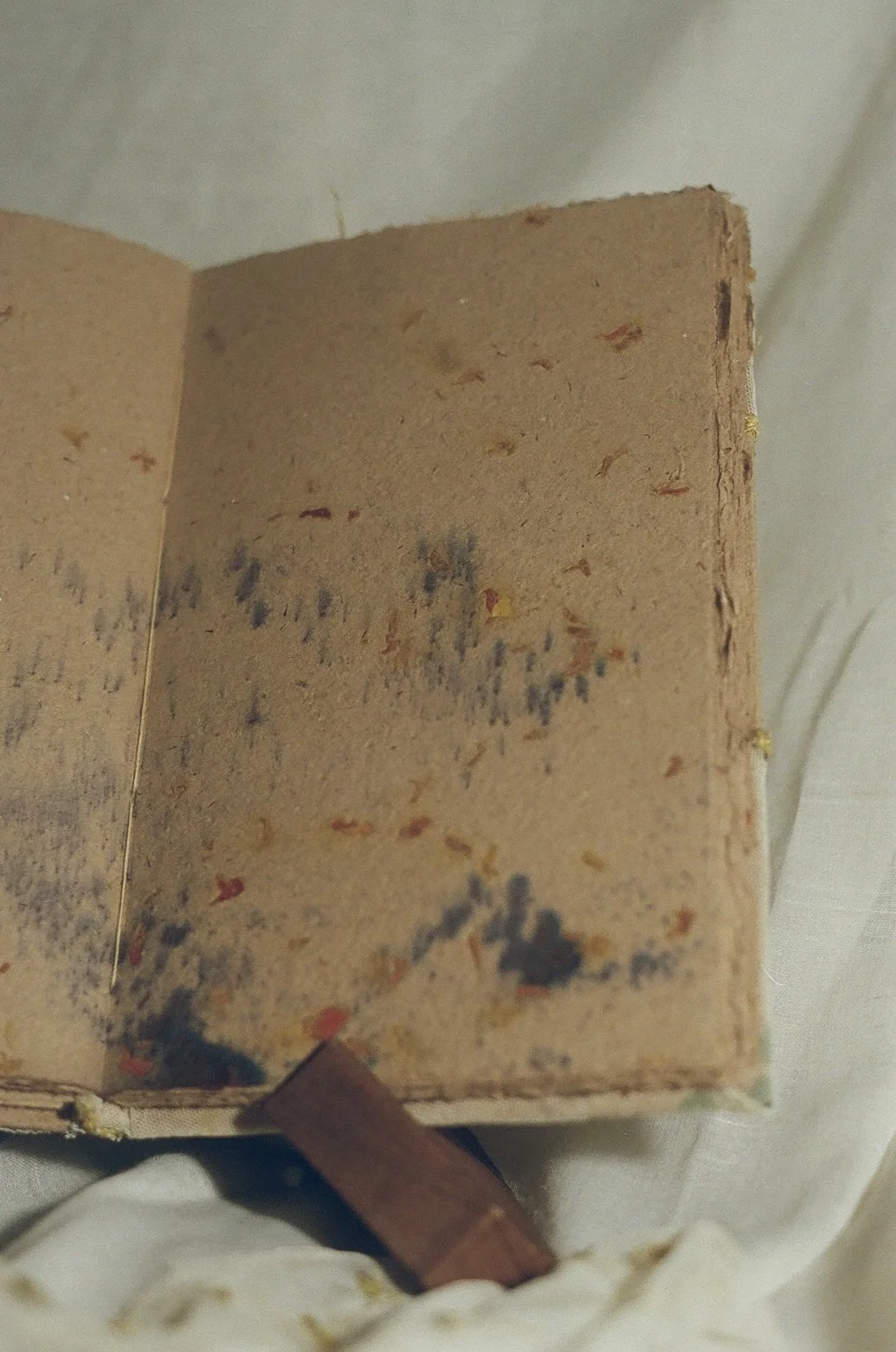
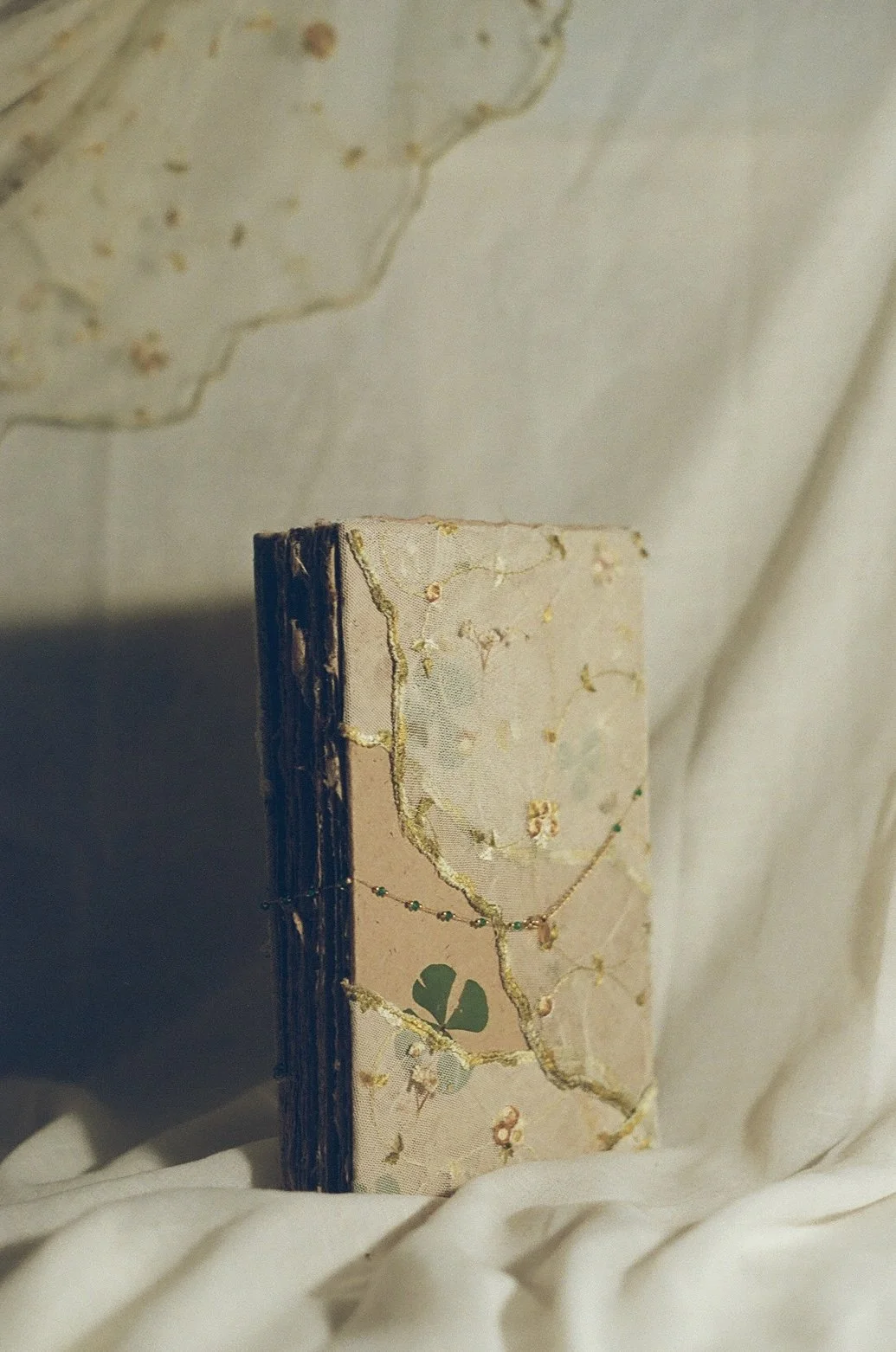
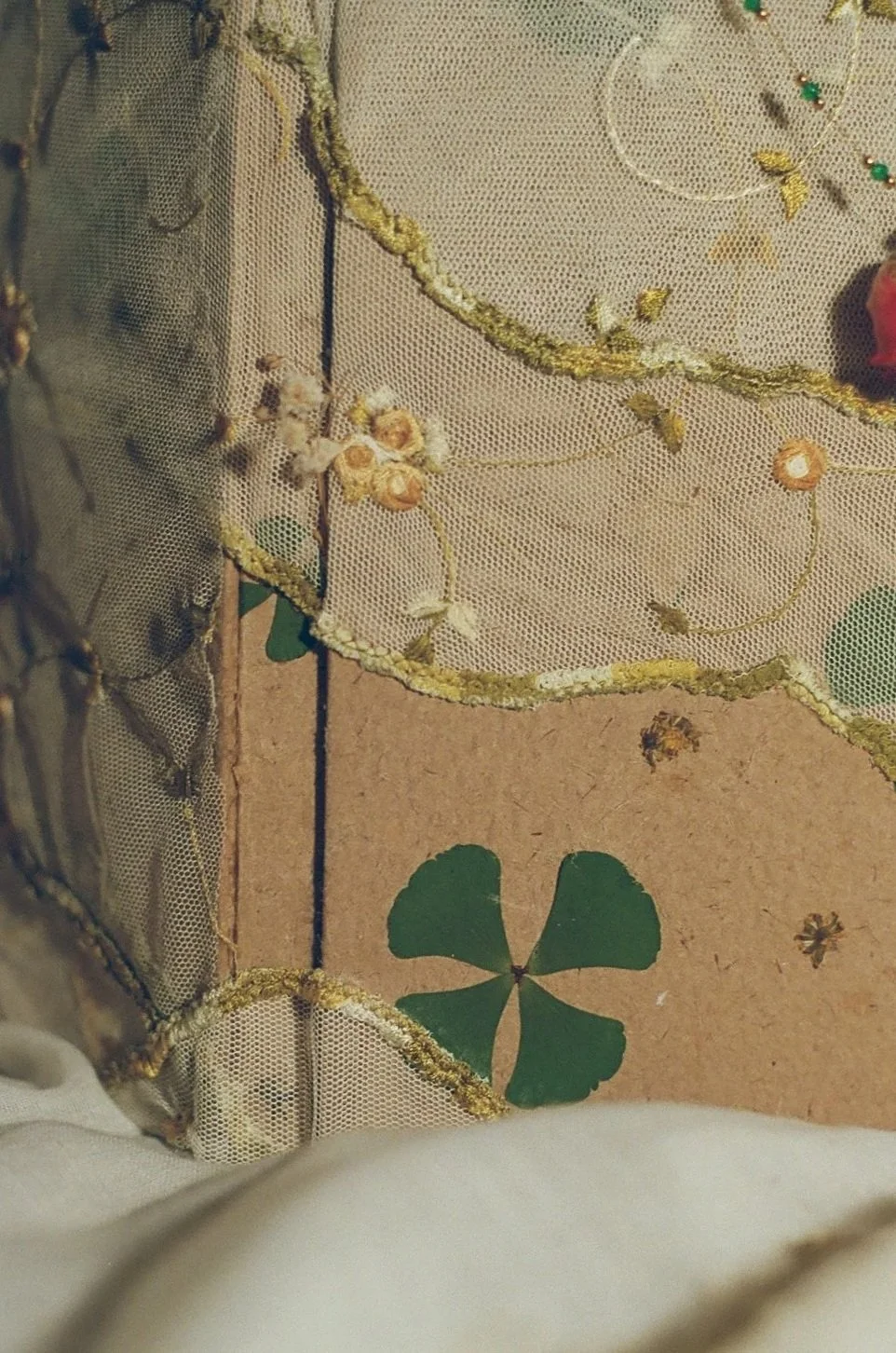
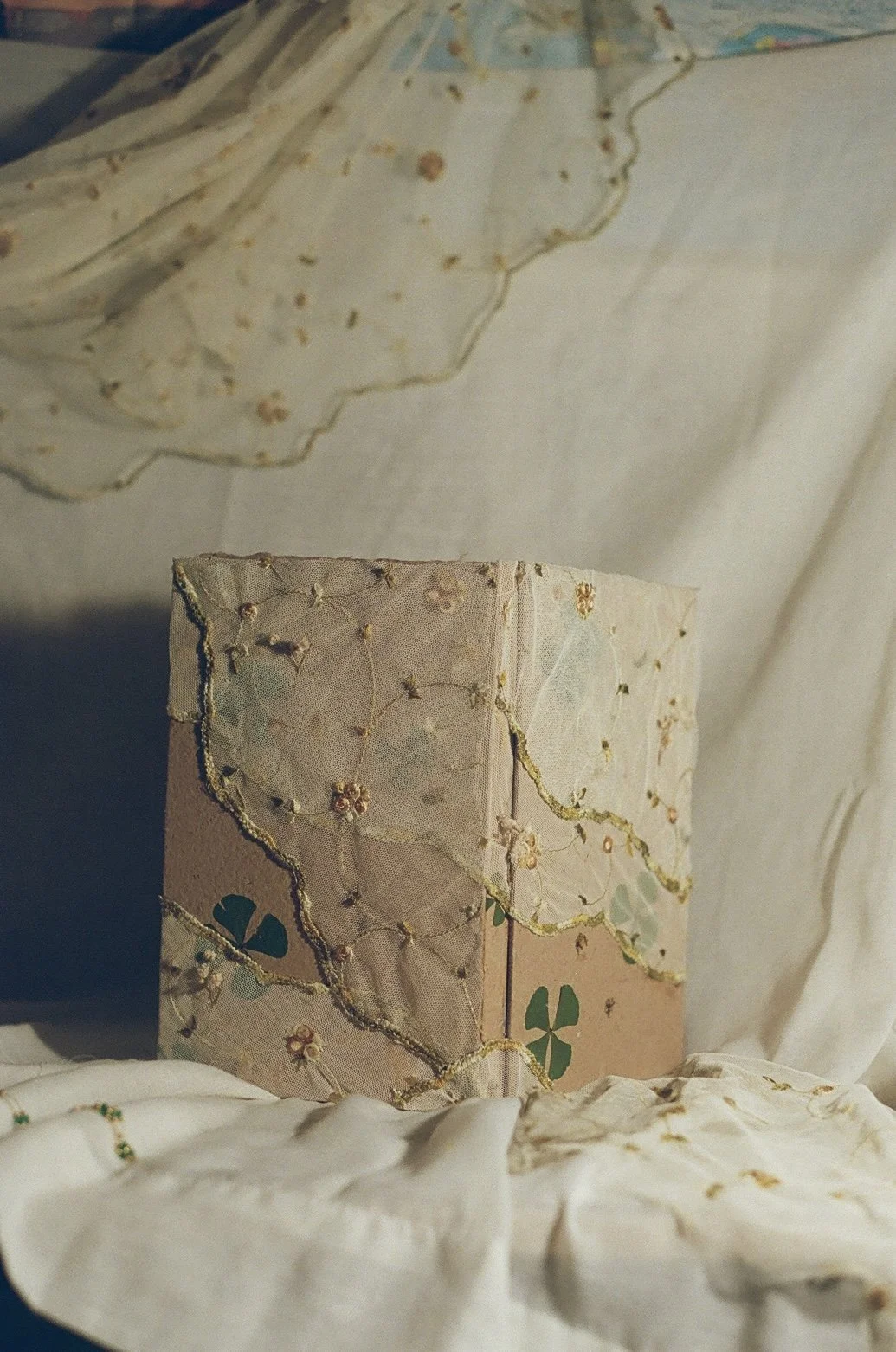
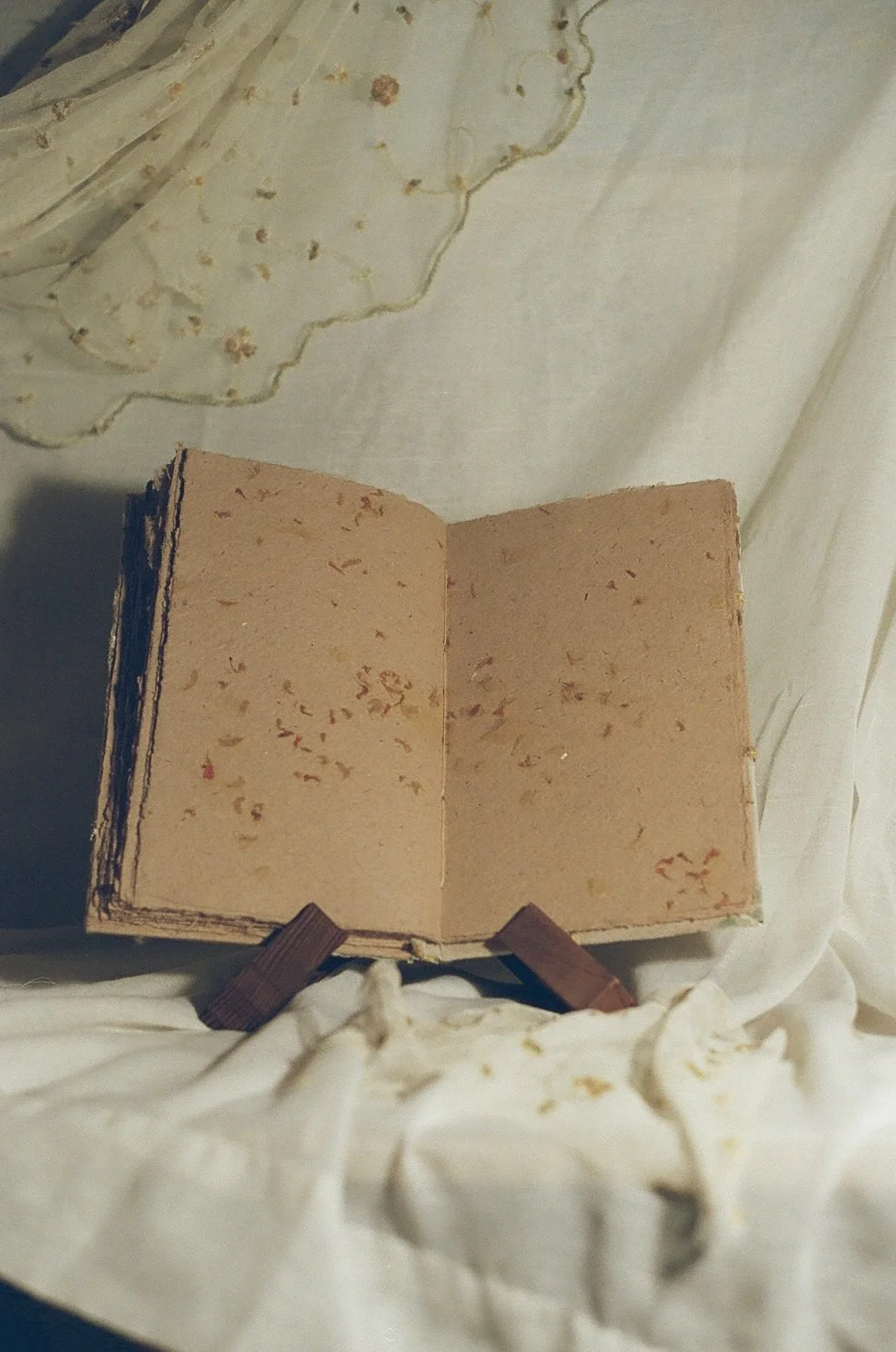
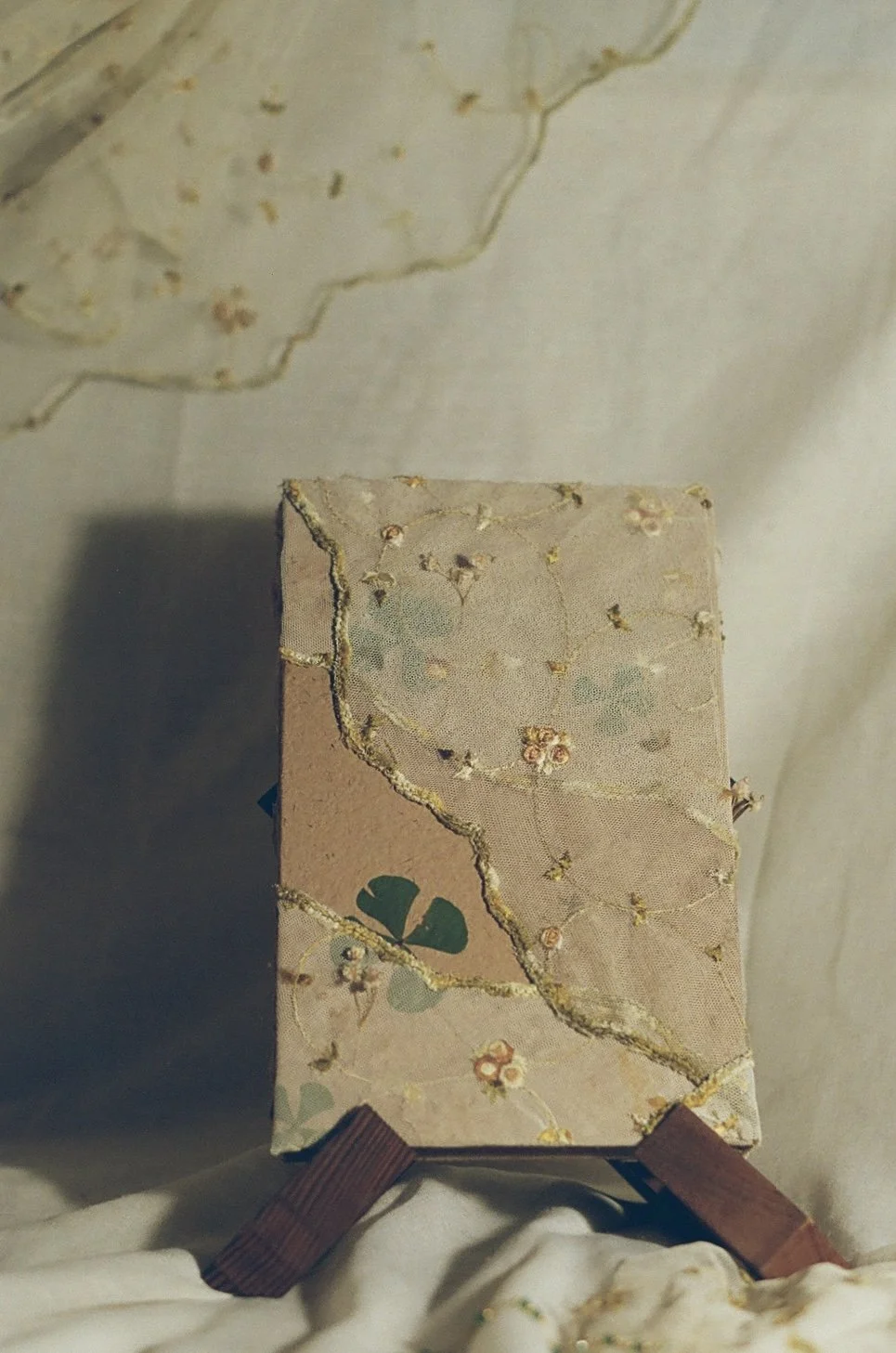
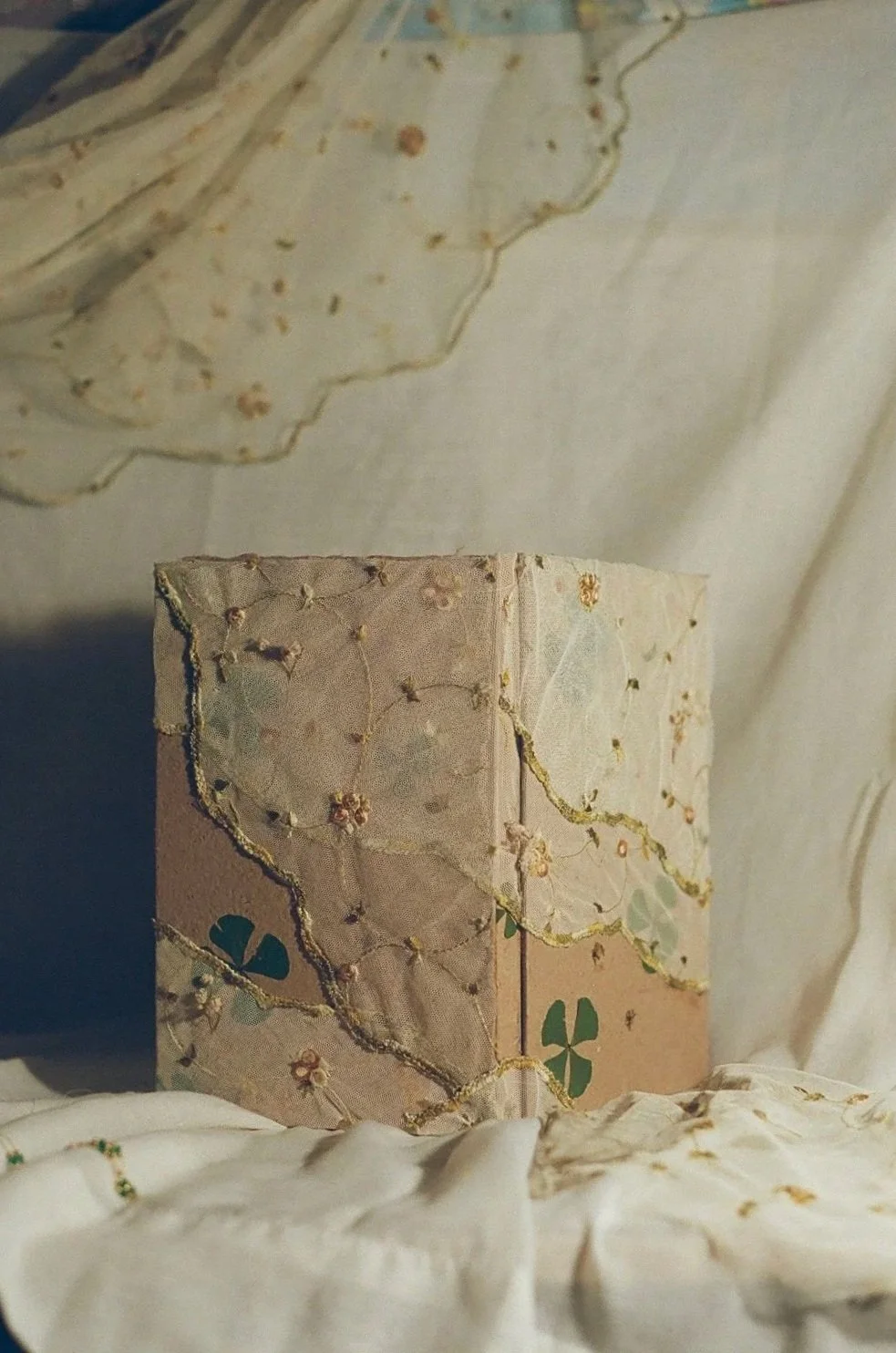
This bespoke volume was envisioned specifically for a poet who longs for love, crafted to hold the weight of verses dedicated to that endless pursuit. The deep brown pages carry a sense of antiquity that makes the book feel like a relic pulled from an old-world library. Dressed in vintage lace and adorned with garden-grown botanicals that bleed erratic, emotional pools of crimson and deep indigo, it is a tactile piece designed to look and feel like old money. Each page stands ready to absorb a love that is as beautiful, unpredictable, and haunting as the chemistry trapped within its fibers.
Ingredients
Recycled Bags & Toilet Ends
Abaca
Dried Marigold Flowers
Pressed Ihi Ihi Ferns
.Lace
Logwood Powder
This book was envisioned for a poet who writes his words with love. It is an unapologetically romantic piece, dressed in delicate lace and adorned with pressed Ihi Ihi ferns ( Marsilea villosa), a species endemic to the Hawaiian Islands, that gracefully mimic the form of a four-leaf clover.
The entire book is crafted from recycled paper bags and toilet paper. Because these materials consist of highly processed, short fibers that naturally produce flimsy, delicate pages, a touch of Abaca (Musa textilis) pulp was introduced. Abaca is highly prized in papermaking for its exceptionally long, resilient plant fibers. As the sheet dries, these fibers undergo significant shrinkage, tightening and locking together to drastically increase the paper's tensile strength and structural integrity. The final intent was to evoke an eerie sense of antiquity—yielding a durable, tactile piece that carries the quiet, enduring elegance of old money and timeless beauty.
~ Materials from the garden ~
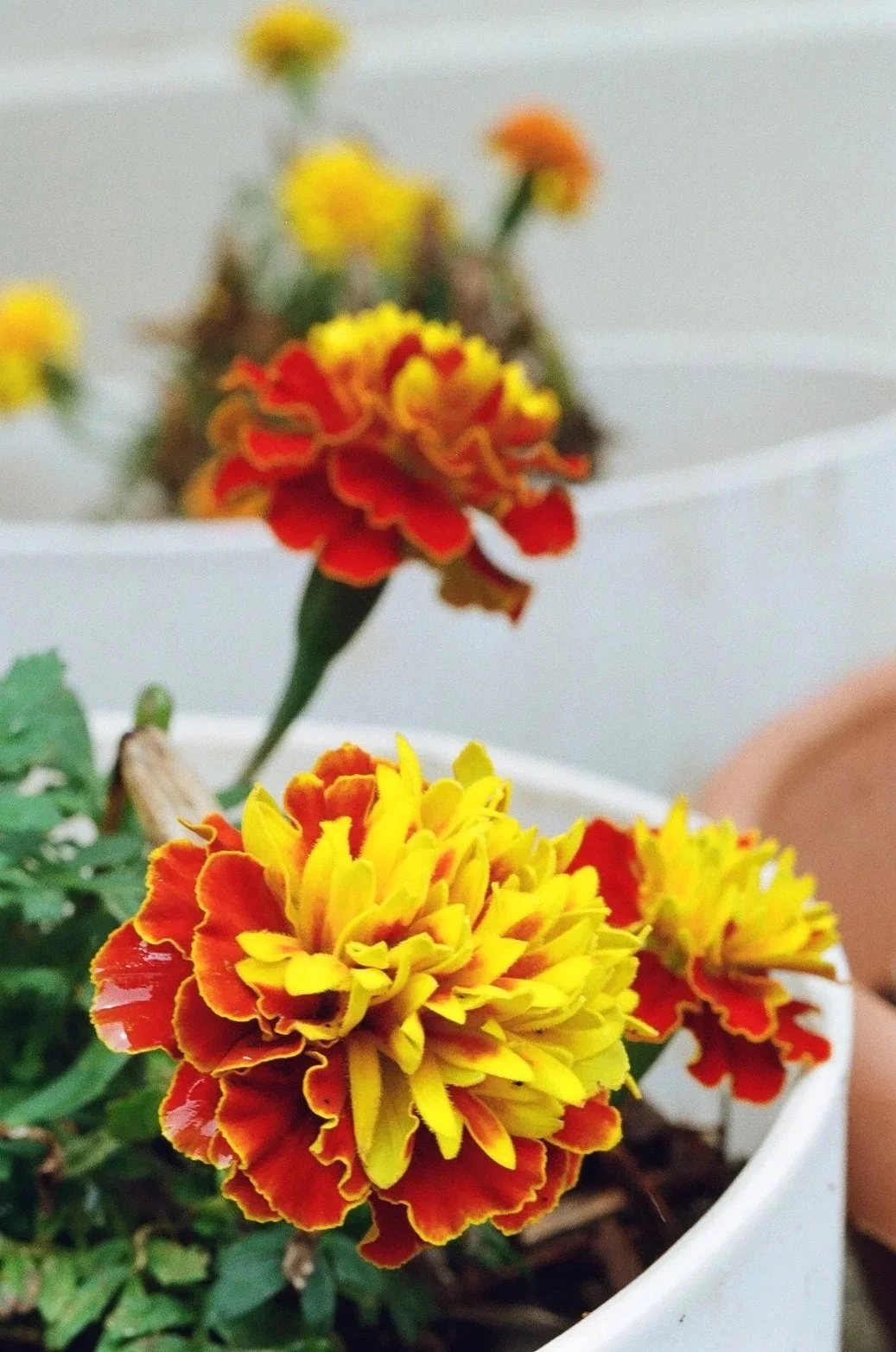
French Marigold - Tagetes patula
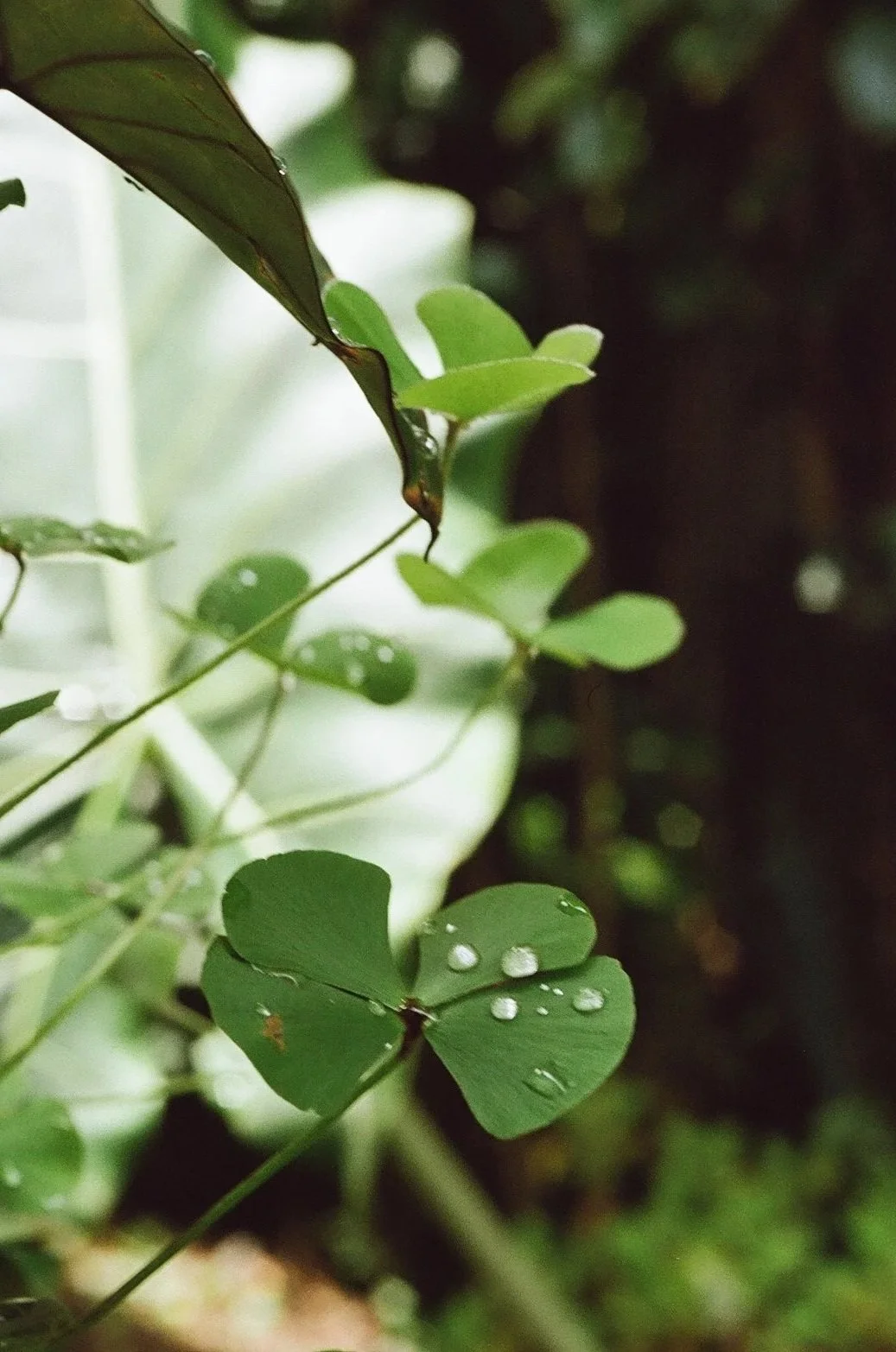
Ihi Ihi Fern - Marsilea villosa
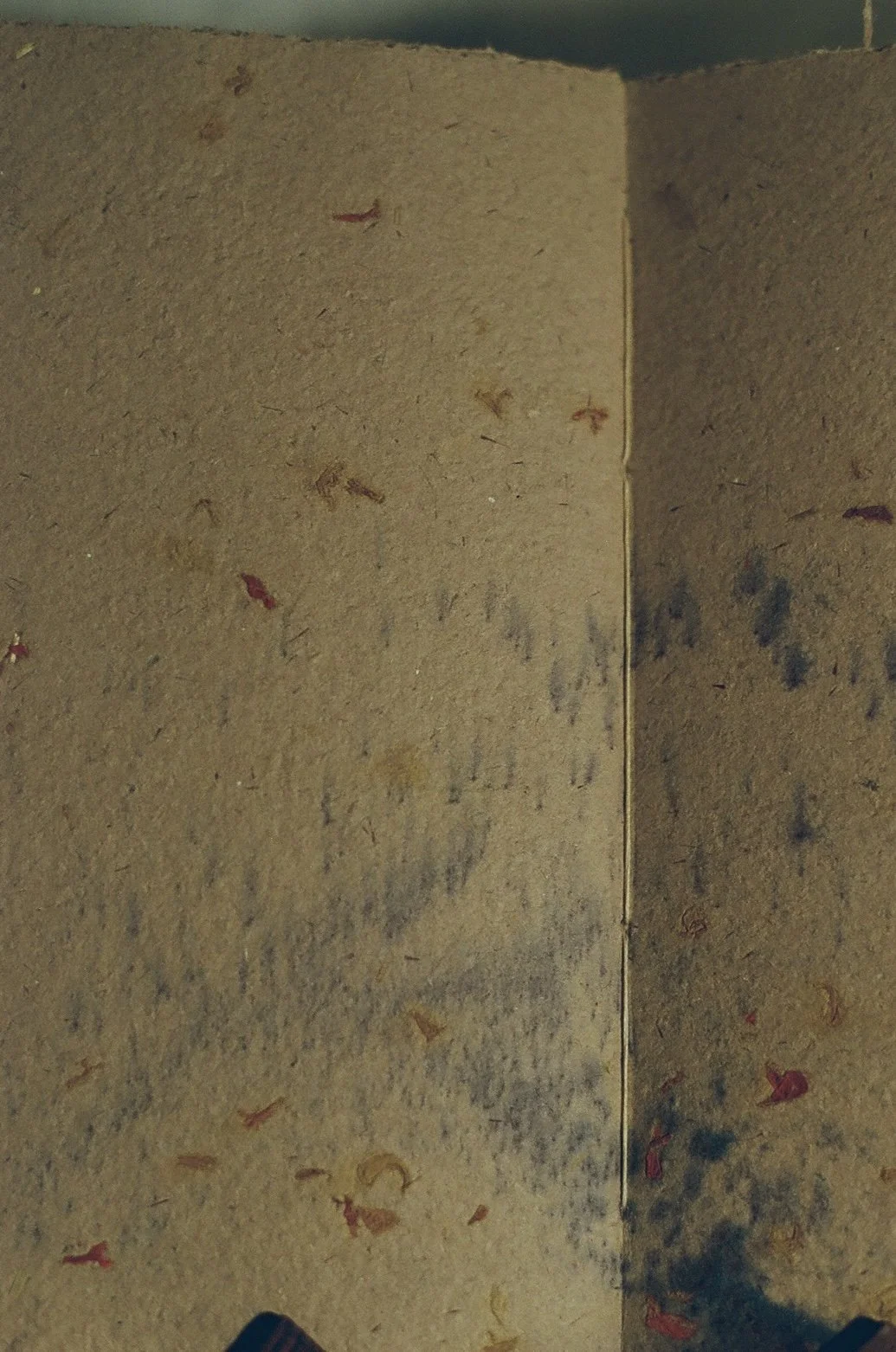
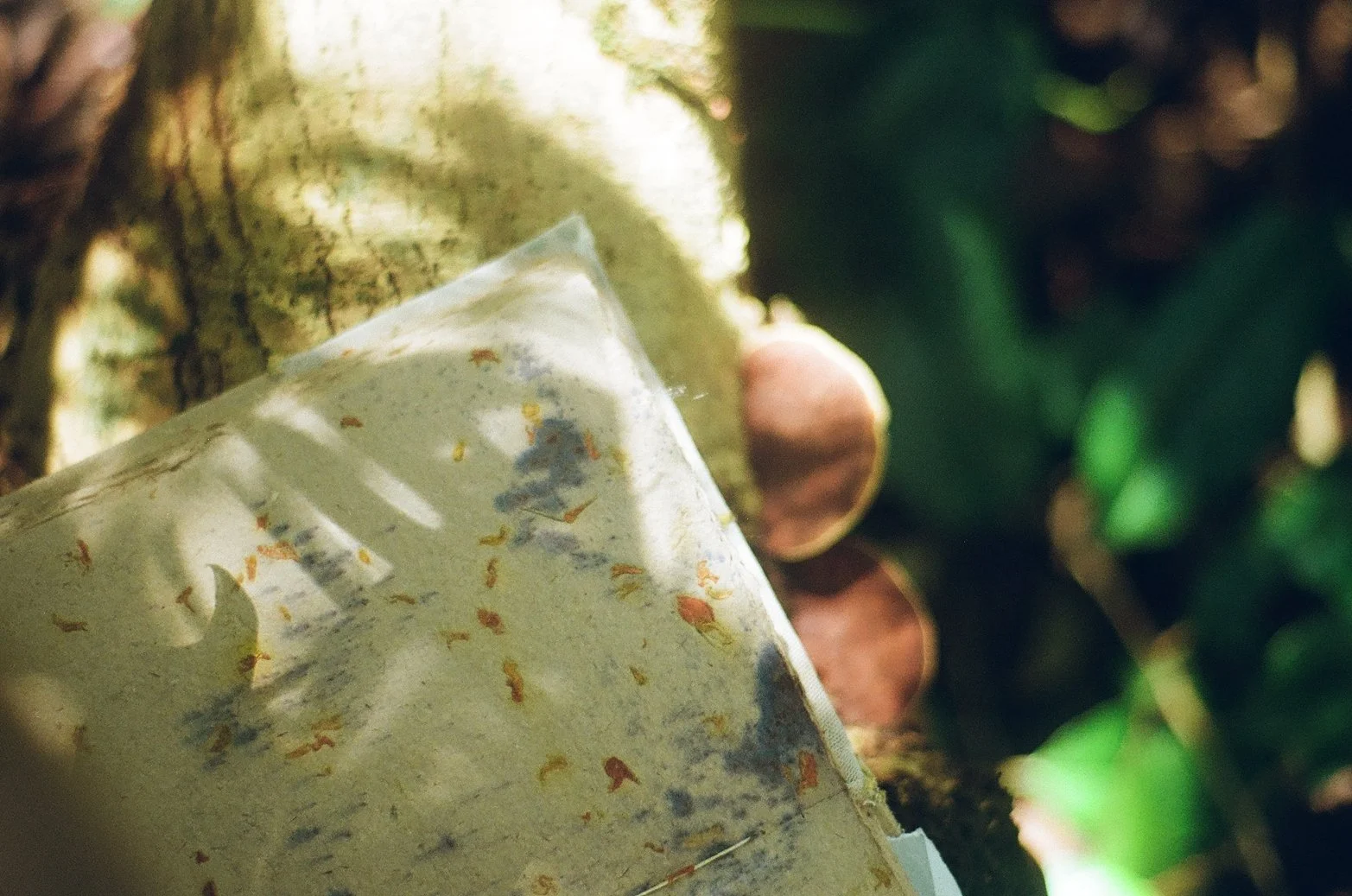
Embedded within the pages are French Marigold flowers (Tagetes patula) harvested straight from the garden. The moment these blossoms touch the wet pulp, they undergo a quiet alchemy, seeping warm gradients of light oranges and rich reds directly into the fibers. Contrasting this warmth is a bleeding, deep blue ink derived from Logwood extract (Haematoxylum campechianum), a traditional natural dye sourced from a flowering tree native to southern Mexico and northern Central America. Typically used as a finely ground powder for textile dyeing and historical ink-making, the logwood reacts within the paper, leaving behind rich, unpredictable pools of color
Logwood (Haematoxylum campechianum) is a natural pH indicator, meaning its pigments are incredibly sensitive to the environment around them. When the pulp leans acidic, the logwood flushes with its natural, warm reddish-purple tones. This happens when the recycled paper bags retain their original acidic manufacturing traits, or when the fresh garden marigolds spill their own acidic juices into the slurry.
However, the moment the environment shifts to alkaline, a transformation occurs. The highly processed fibers of the toilet paper—often rich with alkaline bleaching agents and optical brighteners—alter the water's chemistry. If the tap water carries a high mineral content, or if the pulp touches an iron or copper tool, the logwood extract binds to those metallic ions. Instantly, the crimson retreats, and the fibers lock onto a striking, deep violet-blue, which is what happened with this batch of papers.
Because every batch of this book utilizes a shifting balance of gathered garden plants and varied recycled papers, the chemistry is never identical. The logwood reacts in real-time to the unique DNA of the tub, leaving behind those beautifully erratic, localized pools of color that give the pages a feeling that its crying almost ~ perhaps a page dedicated for a love that missed each other.