A book for a little Dragon
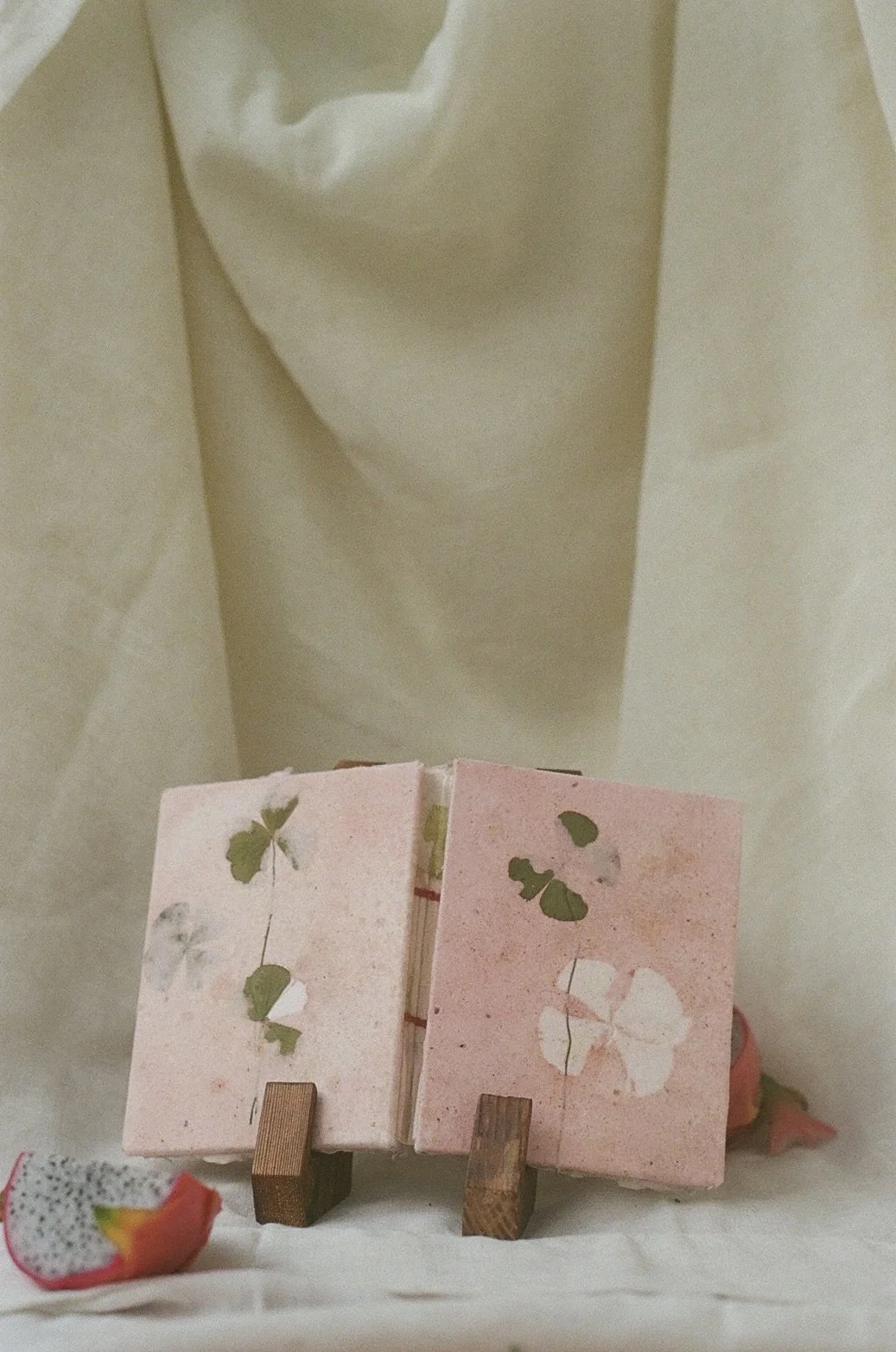
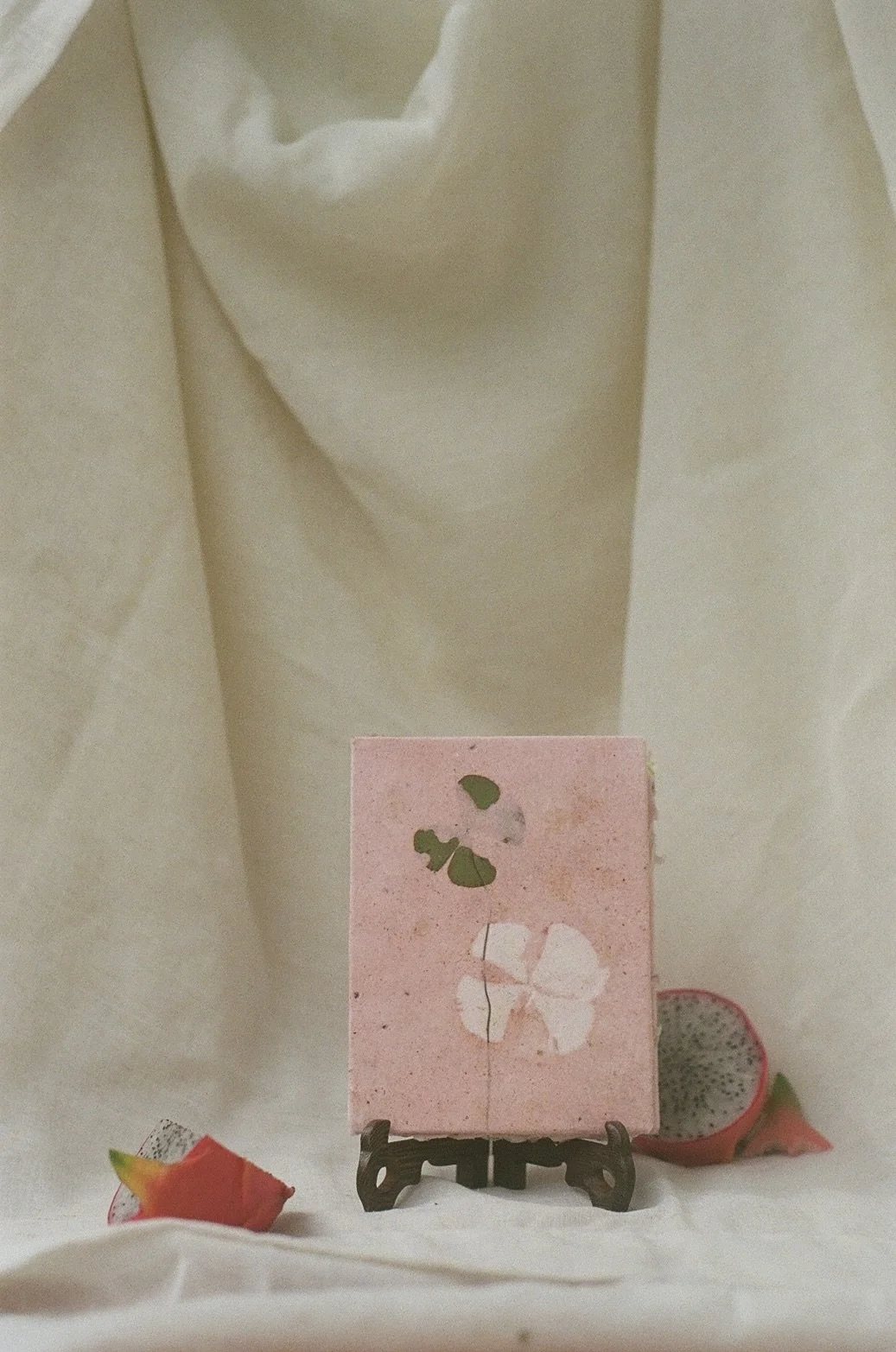
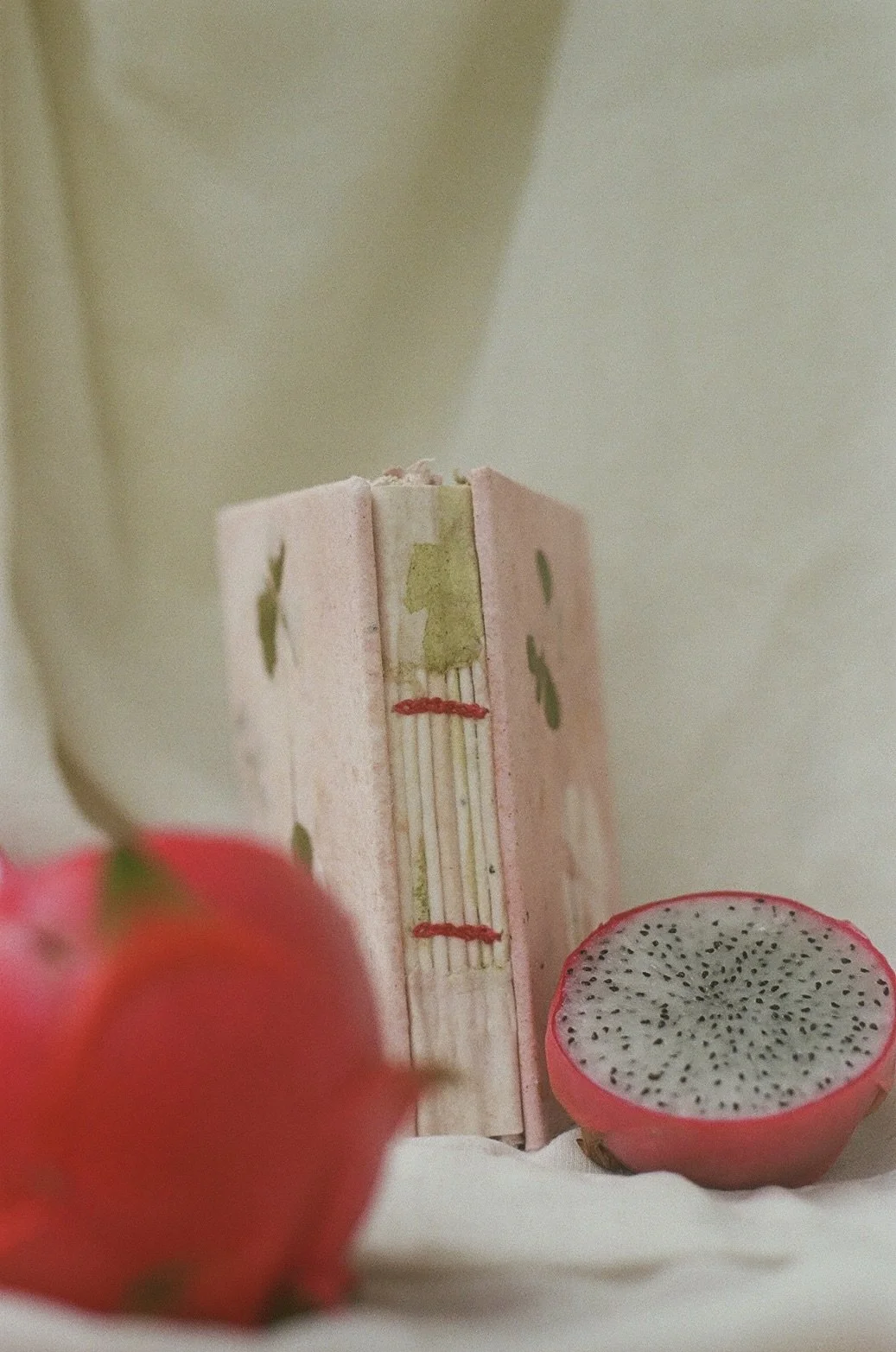
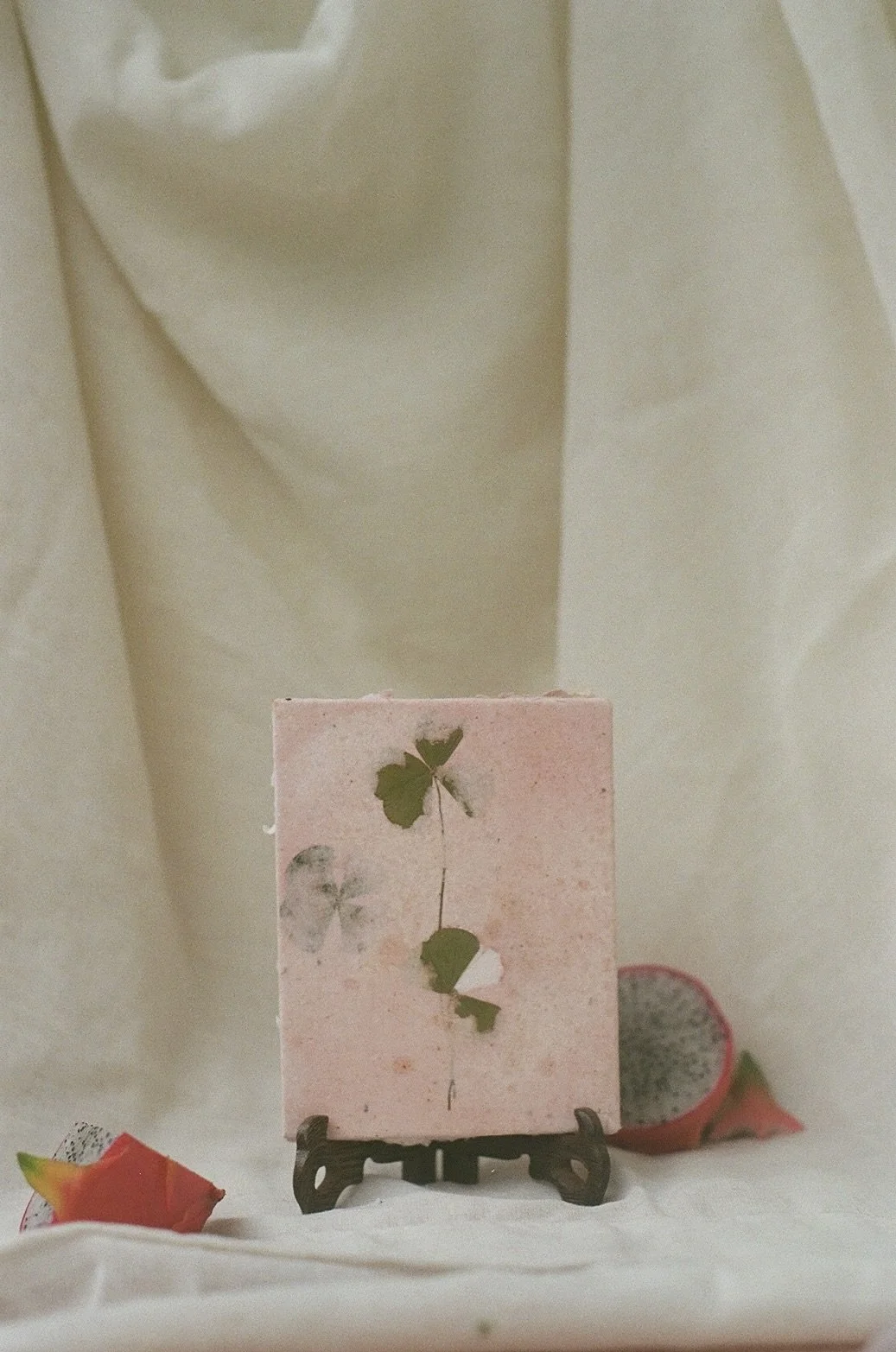
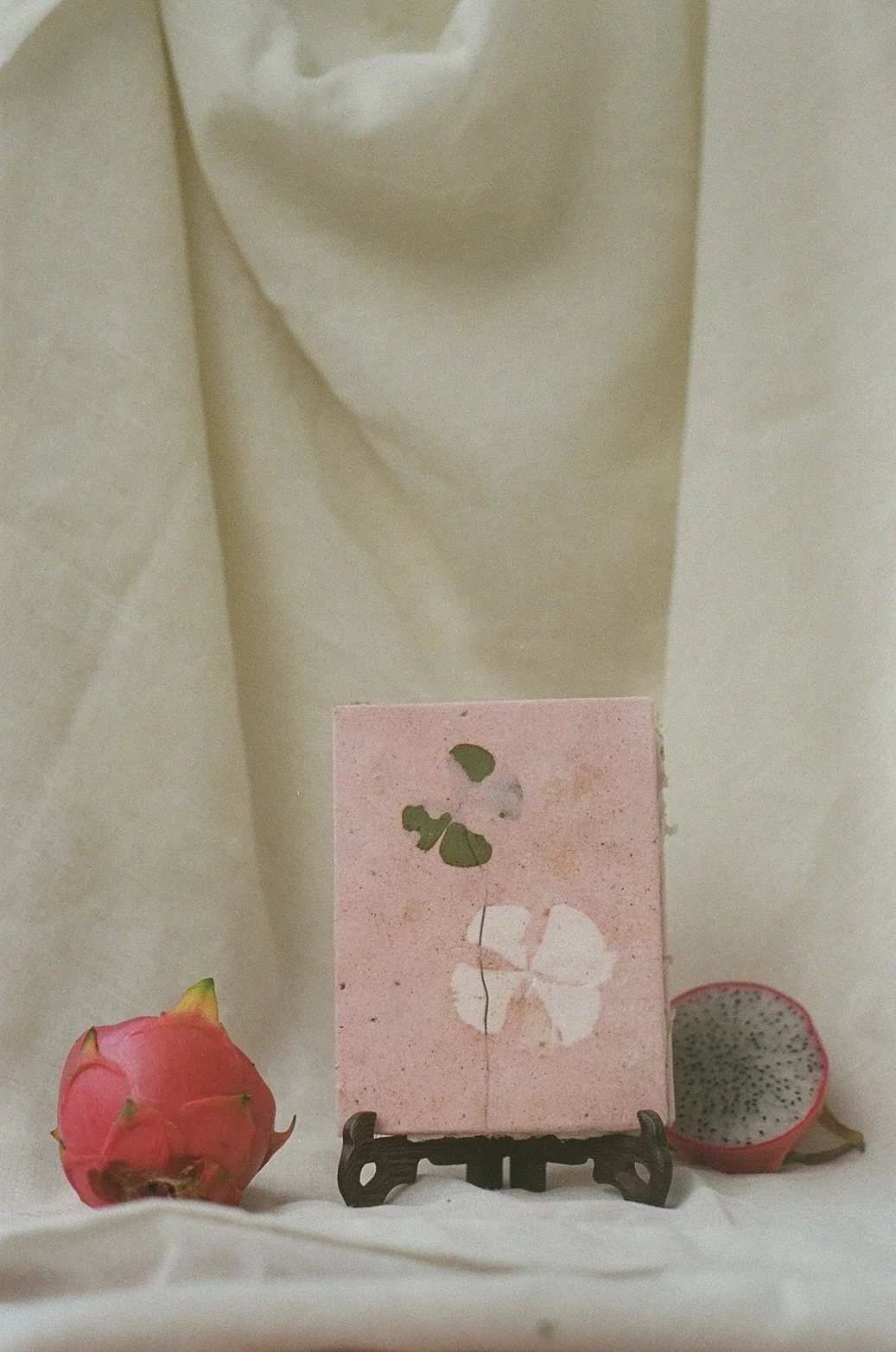
You ever cut into a dragon fruit and just gawk at the intense marron that’s hidden inside? I couldn’t help but wonder how that would look on handmade paper. Let’s take it a step further and make the whole book mimic a dragon fruit itself! The Dragon’s book is a prototype for plantable books, embedded with seeds and intended to be planted once the book is finished. Stay with me, imagine you reach the end of your journal and its words can turn into a plant that bears fruit for you to enjoy……..sign me up.
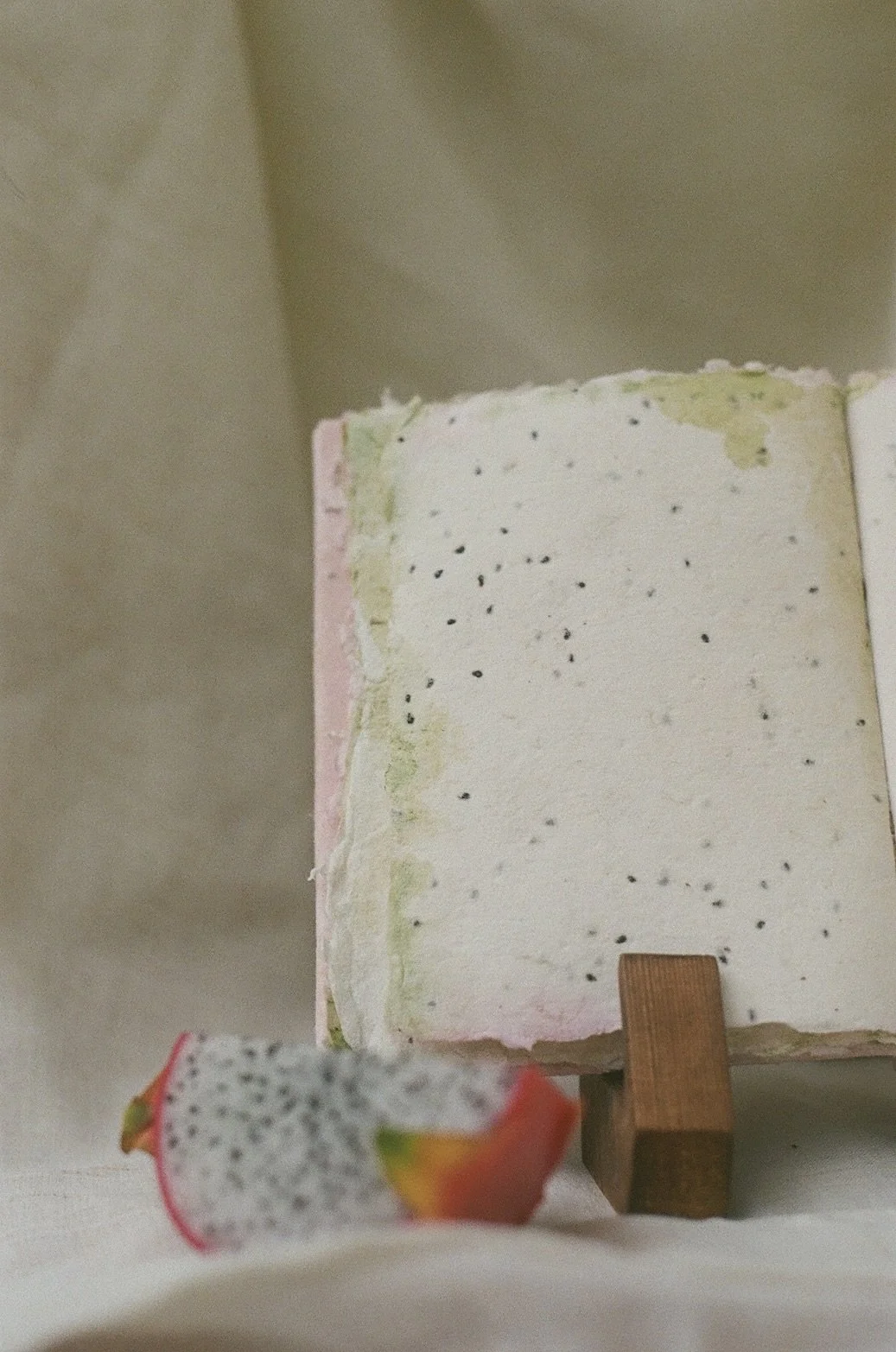
Ingredients
Cotton Sheets
Dragon fruit Juice and Seeds
Matcha Powder
~
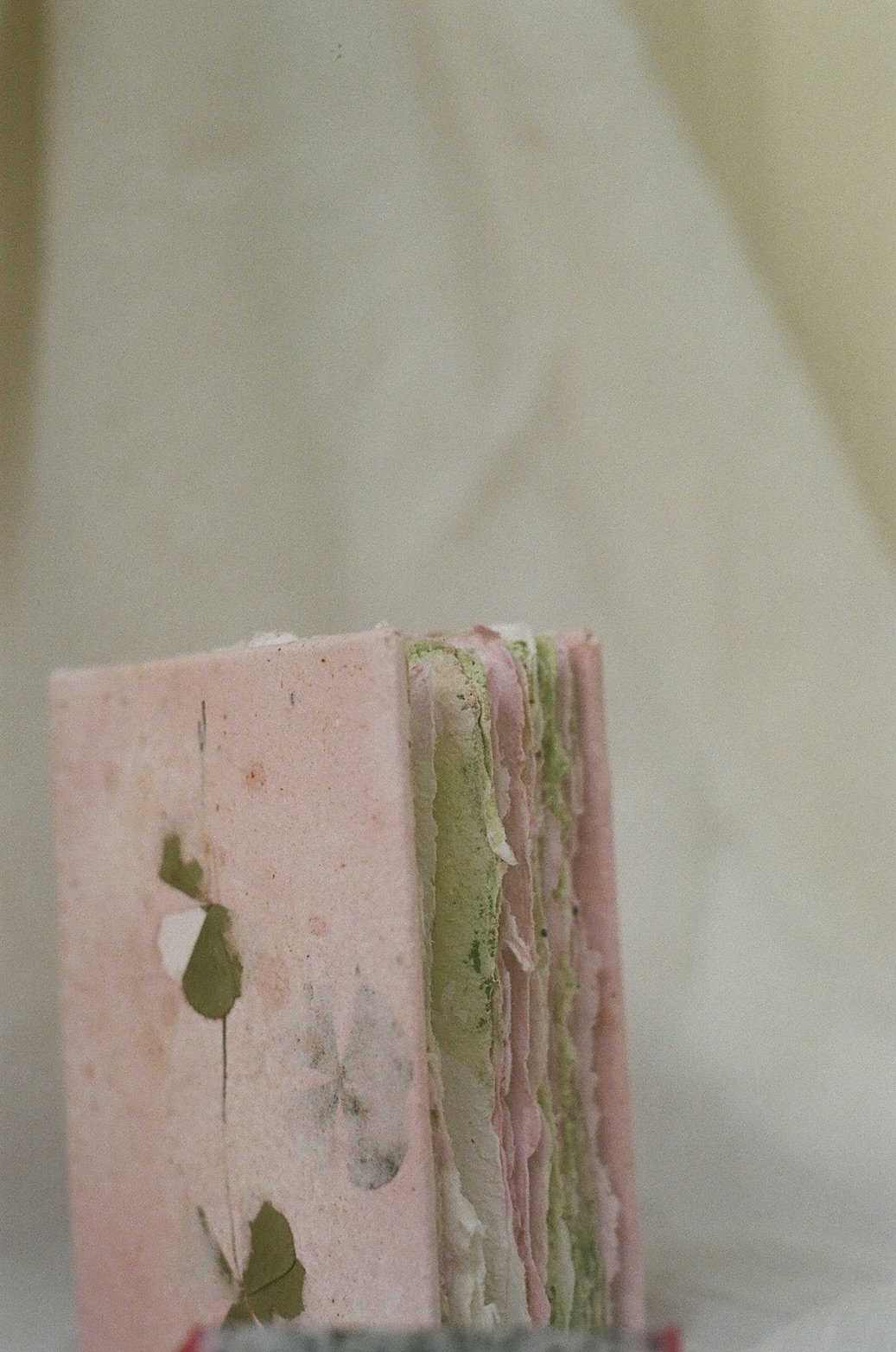
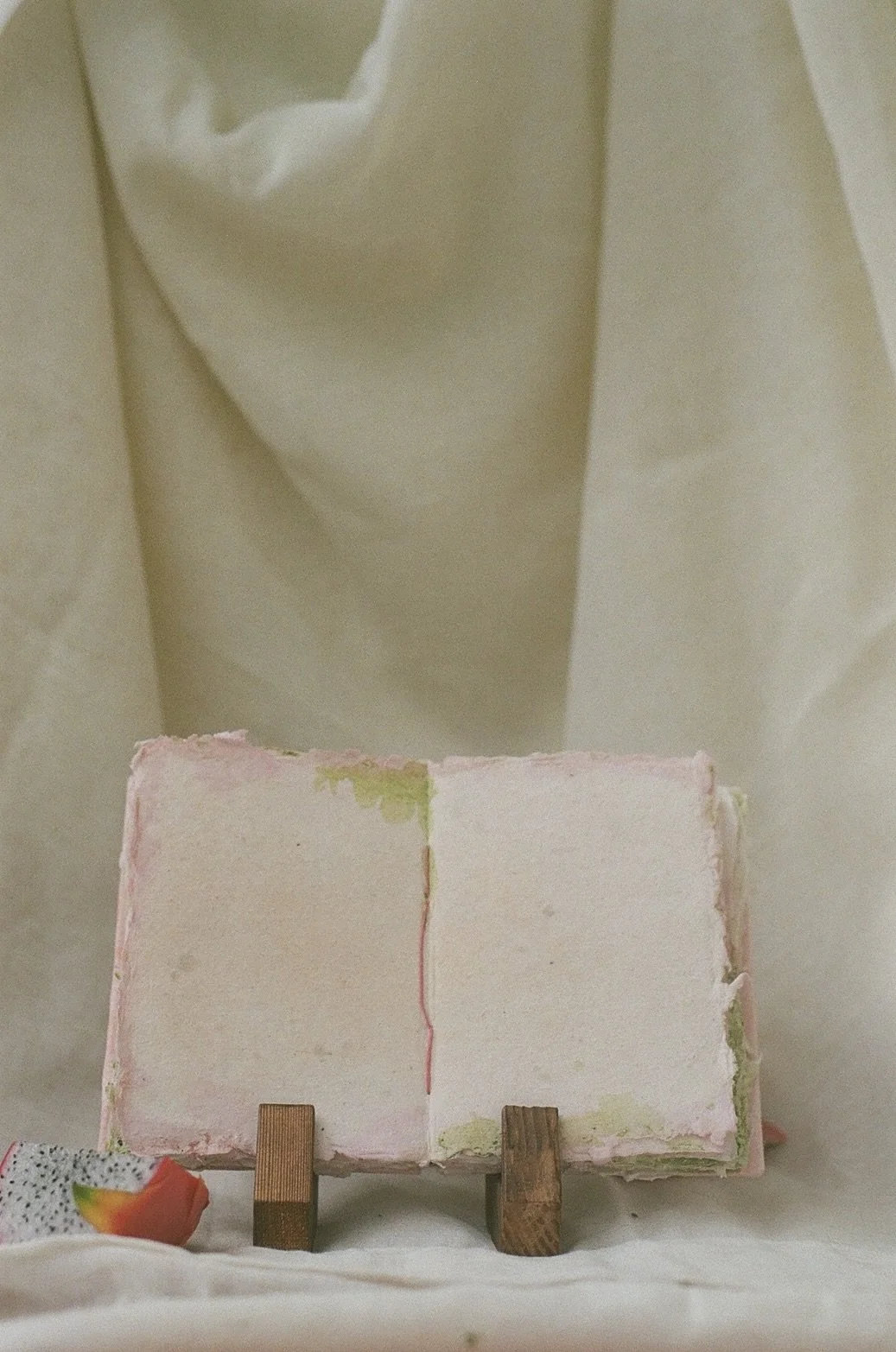
I crafted this book utilizing only pressed cotton sheets, a deliberate experiment to see how the material would fare entirely on its own, stripped of traditional binders or heavy pressing. The result is an incredibly soft and fluffy page, possessing a cloud-like loft that begs to be cradled. From a scientific perspective, this texture is a direct result of cotton’s unique molecular structure. Cotton fibers consist of nearly pure cellulose. Because they are naturally longer and more flexible than wood pulp, they intertwine to create a durable, web-like matrix. By allowing the sheets to dry with minimal compression, the microscopic gaps between these interwoven fibers remained open, trapping air and giving the paper its signature velvet softness.
~
Echoes of the Dragon Fruit
To complement this delicate texture, I turned to natural ingredients for the color palette. Inspired by the striking contrast of the dragon fruit, I extracted its vibrant juice and paired it with matcha powder to mimic the rich pinks and greens of the fruit’s exterior. Because matcha consists of suspended solids rather than a soluble dye, the fine powder merely rests atop the cotton fibers and may gently rub off over time with handling. Furthermore, the very chlorophyll that grants matcha its brilliant green hue is notoriously light-sensitive. As the book is opened and exposed to the world, that vibrant emerald is destined to gently fade into a muted, vintage olive.
For this initial experiment, the raw dragon fruit juice was applied directly to the sheets, capturing a fleeting, wild stain. To transform this simple squeeze into a true, long-lasting botanical dye for future volumes, the process requires a bit of chemistry. Instead of relying on raw juice, a future iteration would involve gently simmering the dragon fruit flesh and skins to highly concentrate the pigments. The brilliant pink of a dragon fruit comes from betalains, which are water-soluble pigments that struggle to grip onto plant fibers on their own. In the future, pre-treating the cotton sheets with a natural fixative like alum or a tannin bath will help provide a chemical bridge. This bond locks the vivid pigment directly into the cellulose matrix, ensuring the dragon’s fiery color survives the passage of time and light without washing away. Not knowing the full story during the experiment, to lock in the color from fading and high disturbance, a layer of gesso was brushed over each page to increase their integrity.
~ A Deeper Look~
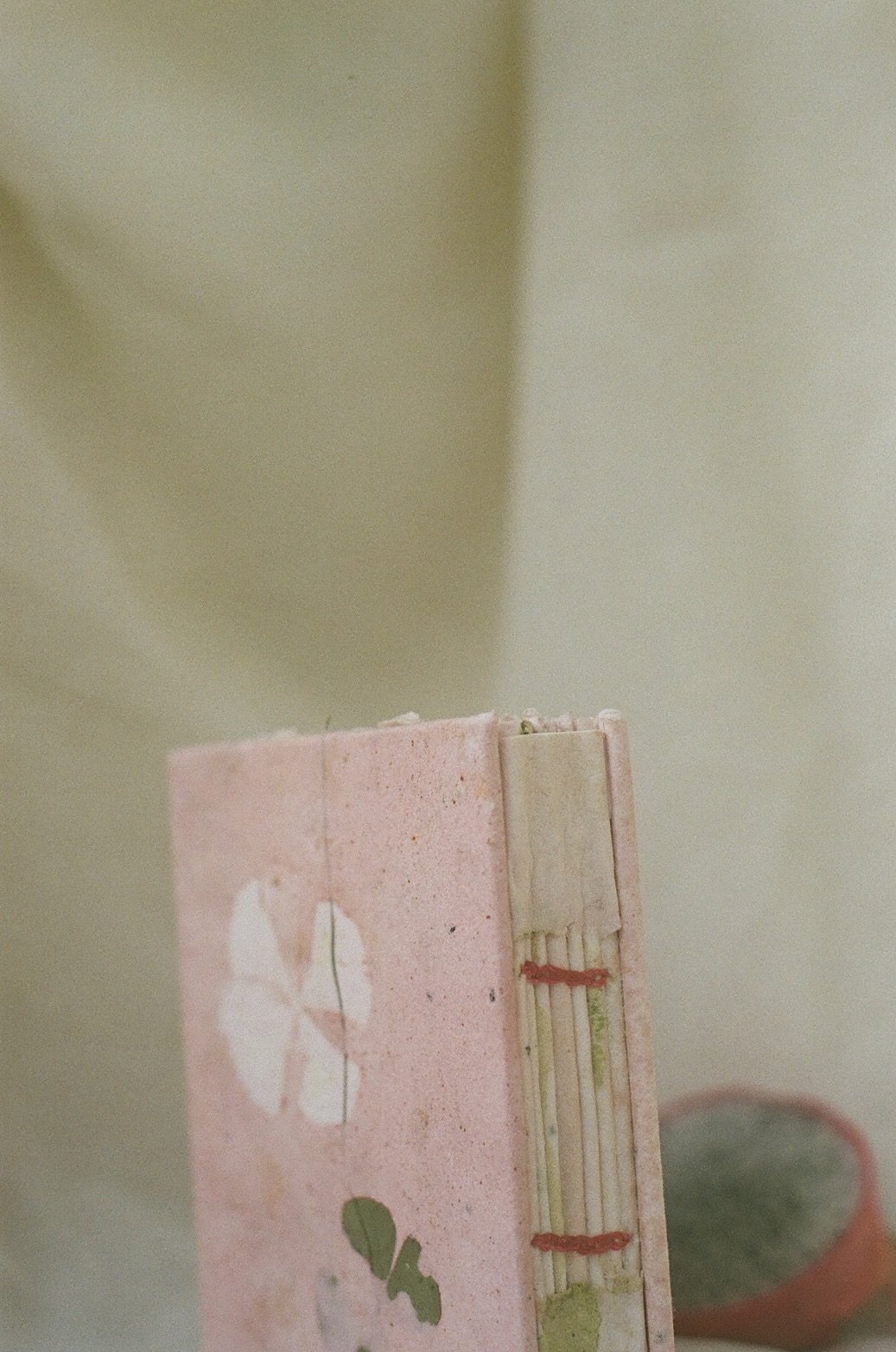
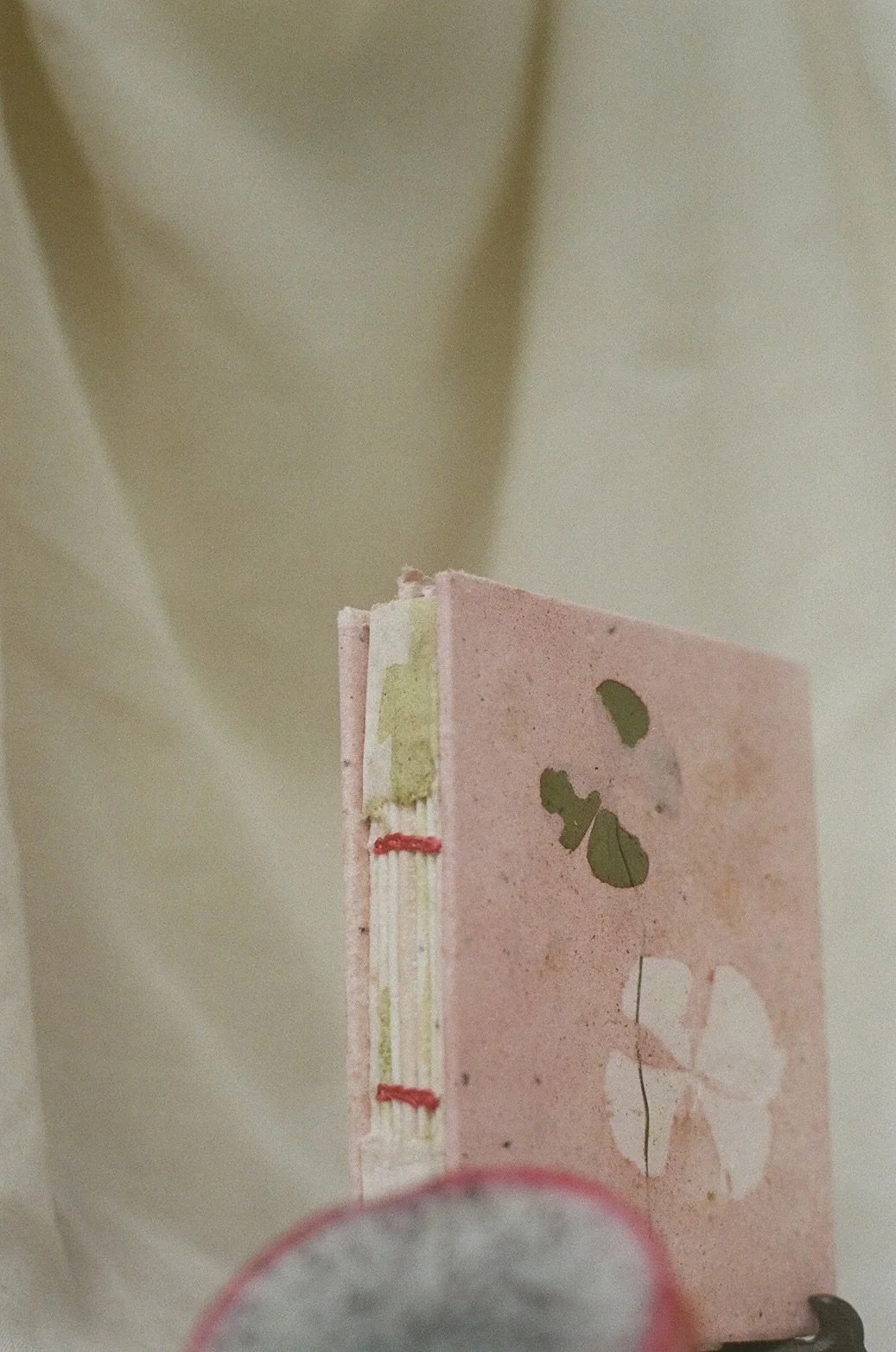
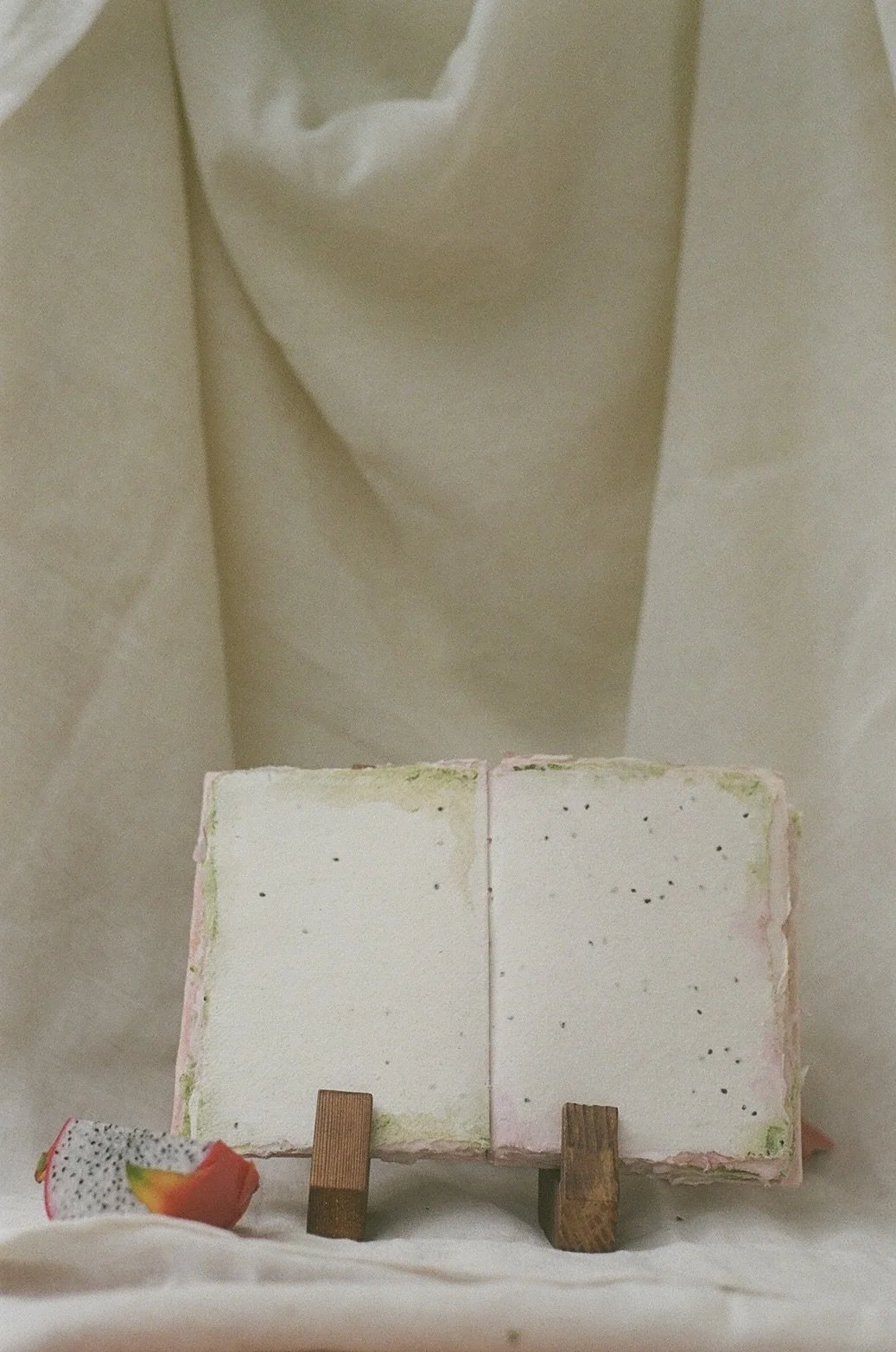
The Seed Bombing and Germination Experiment
To truly bring the dragon fruit concept to life, I literally "bombed" the soft cotton pages with the fruit's actual seeds, scattering them directly into the fibers while the pulp was still wet. Artistically, it creates a stunning, organic speckled effect, but it also sparked an idea for the future. While this specific prototype isn't fully natural—having been sealed with a layer of gesso to preserve its integrity—it serves as a blueprint for future volumes that will be 100% natural. The ultimate goal is a completely plantable book. In theory, burying those future natural pages in the dirt would provide a great environment for germination. Cotton is excellent at retaining moisture, acting like a soft, biodegradable blanket that keeps the seeds damp and secure as they attempt to sprout.
Imagine a future edition embedded with wildflowers, hardy herbs like rosemary and thyme, or resilient vegetables like tomatoes and carrots. Tucked securely within the dry, breathable matrix of a 100% natural cotton sheet, these seeds would safely be preserved for years. They would rest quietly between the written words, waiting for the day the book is finally laid into the earth, where the moisture-retaining cotton fibers would awaken them to create a thriving, living garden.
