Kitis II
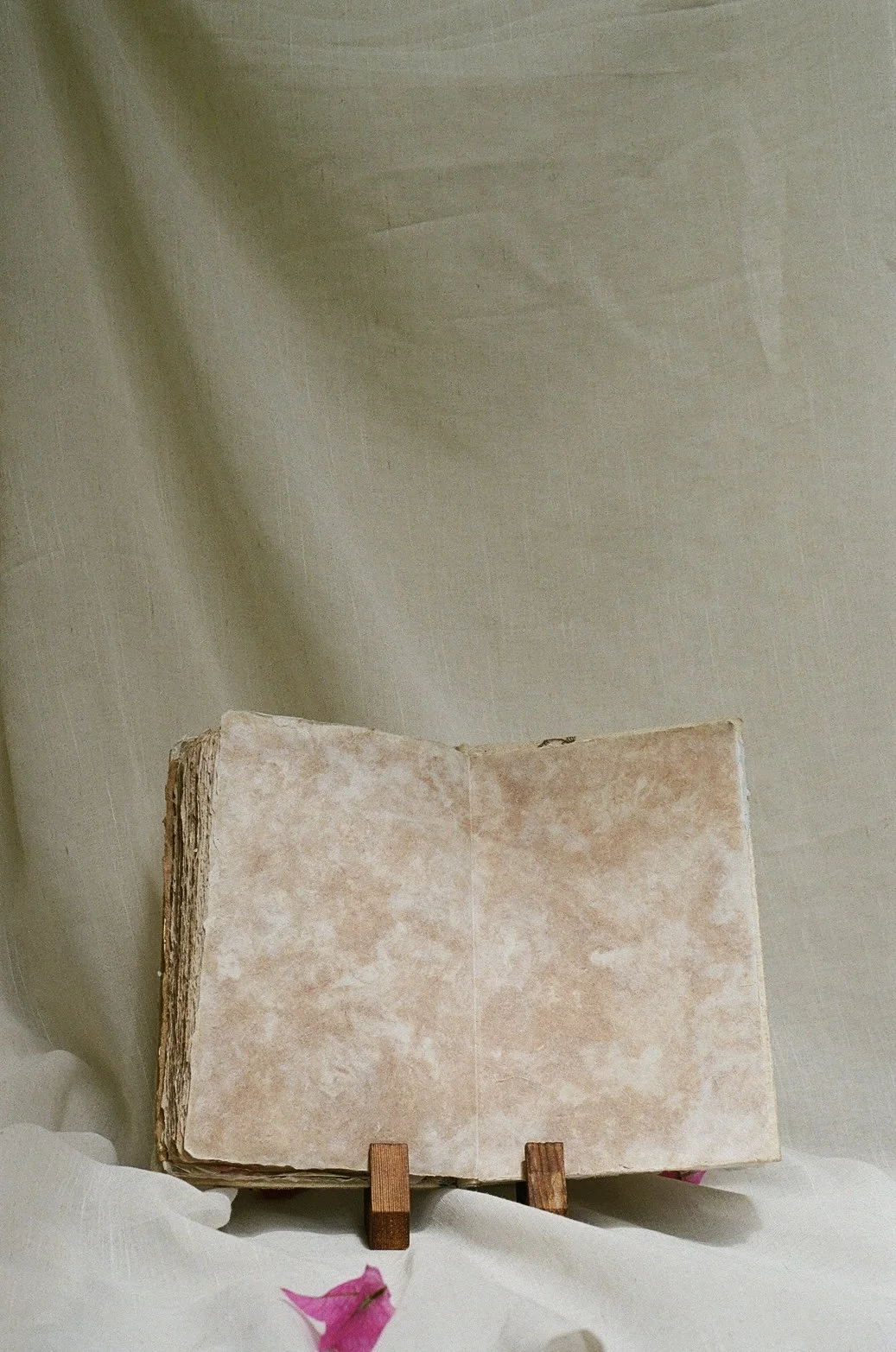
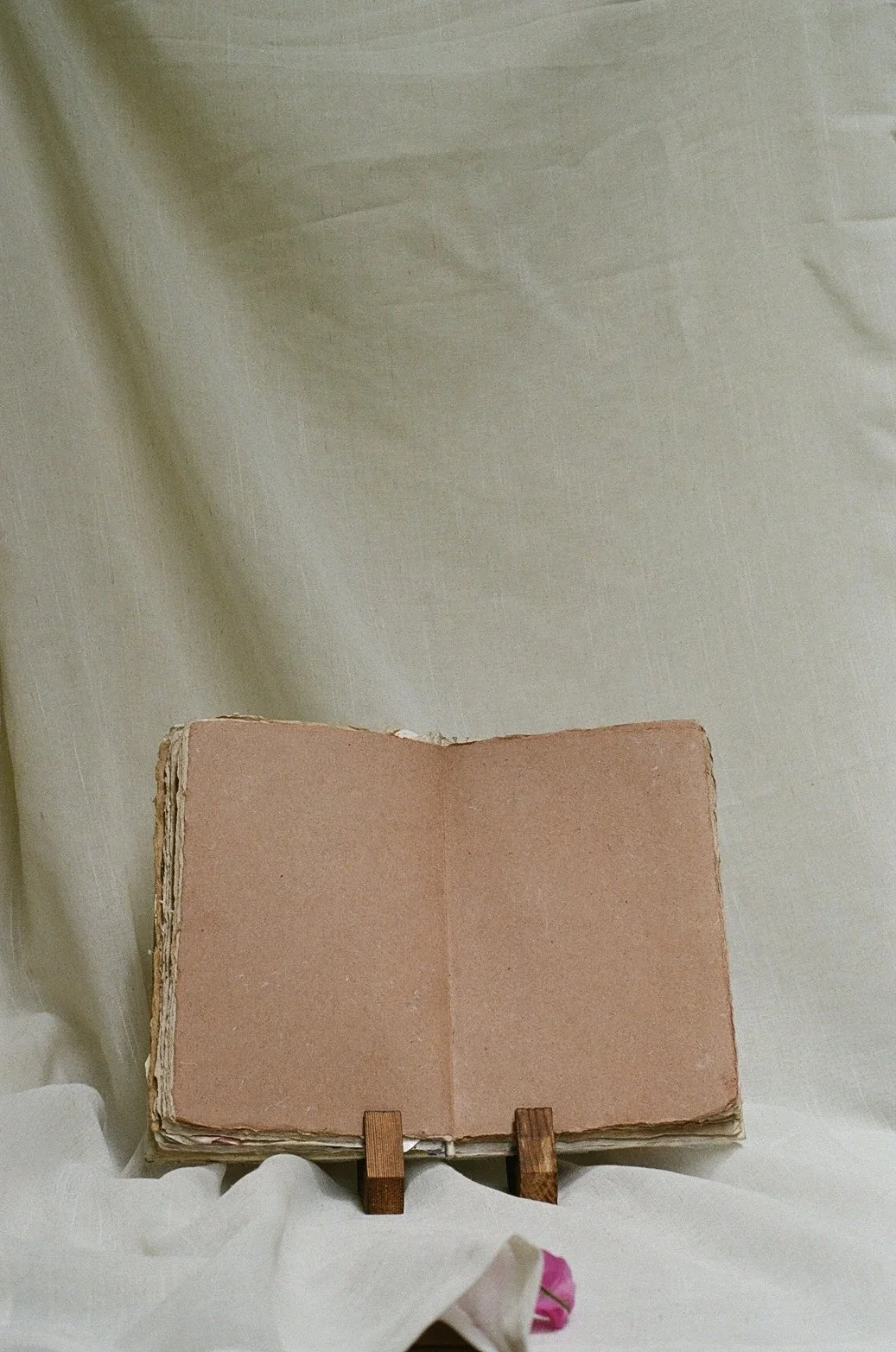
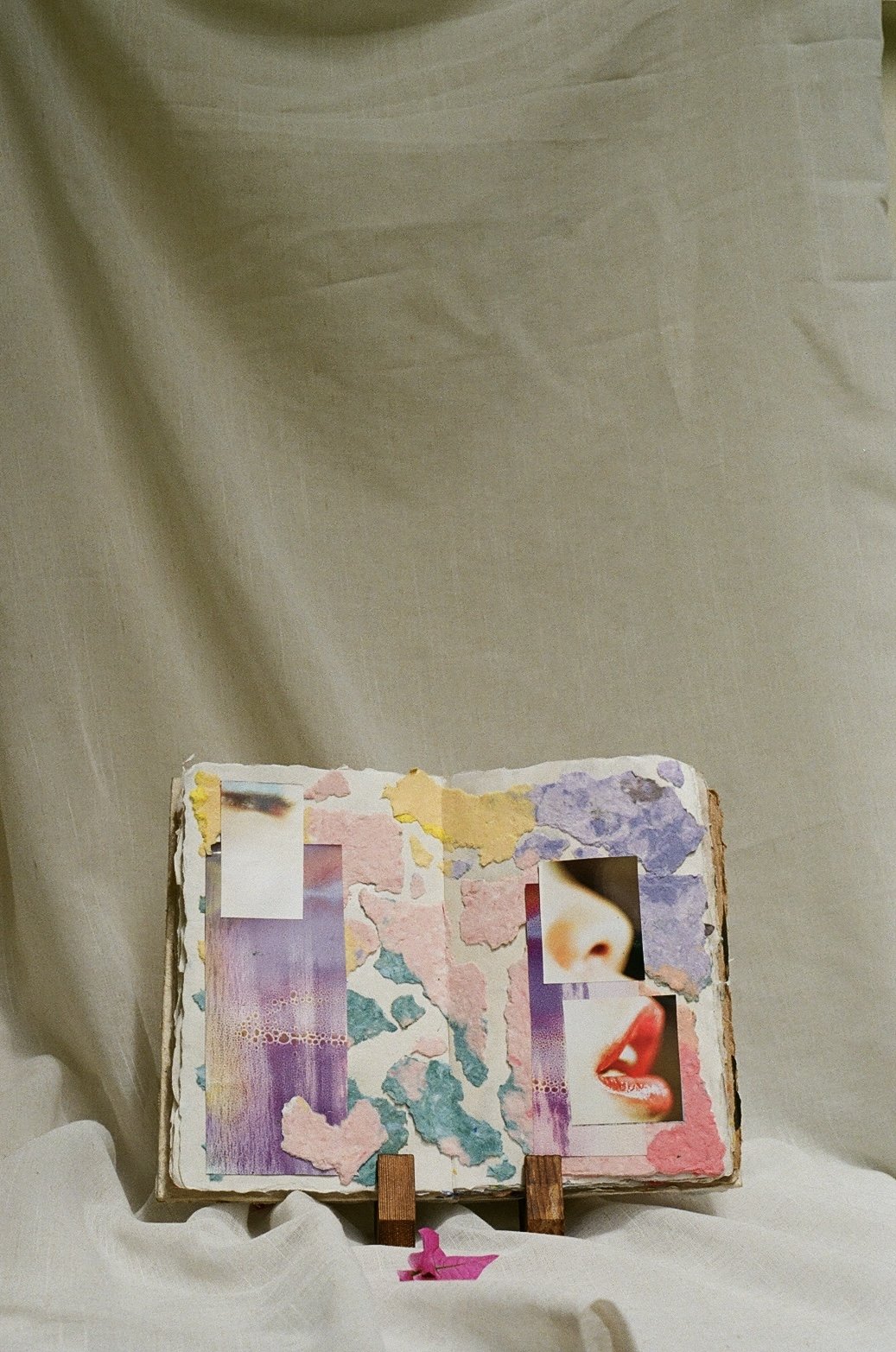
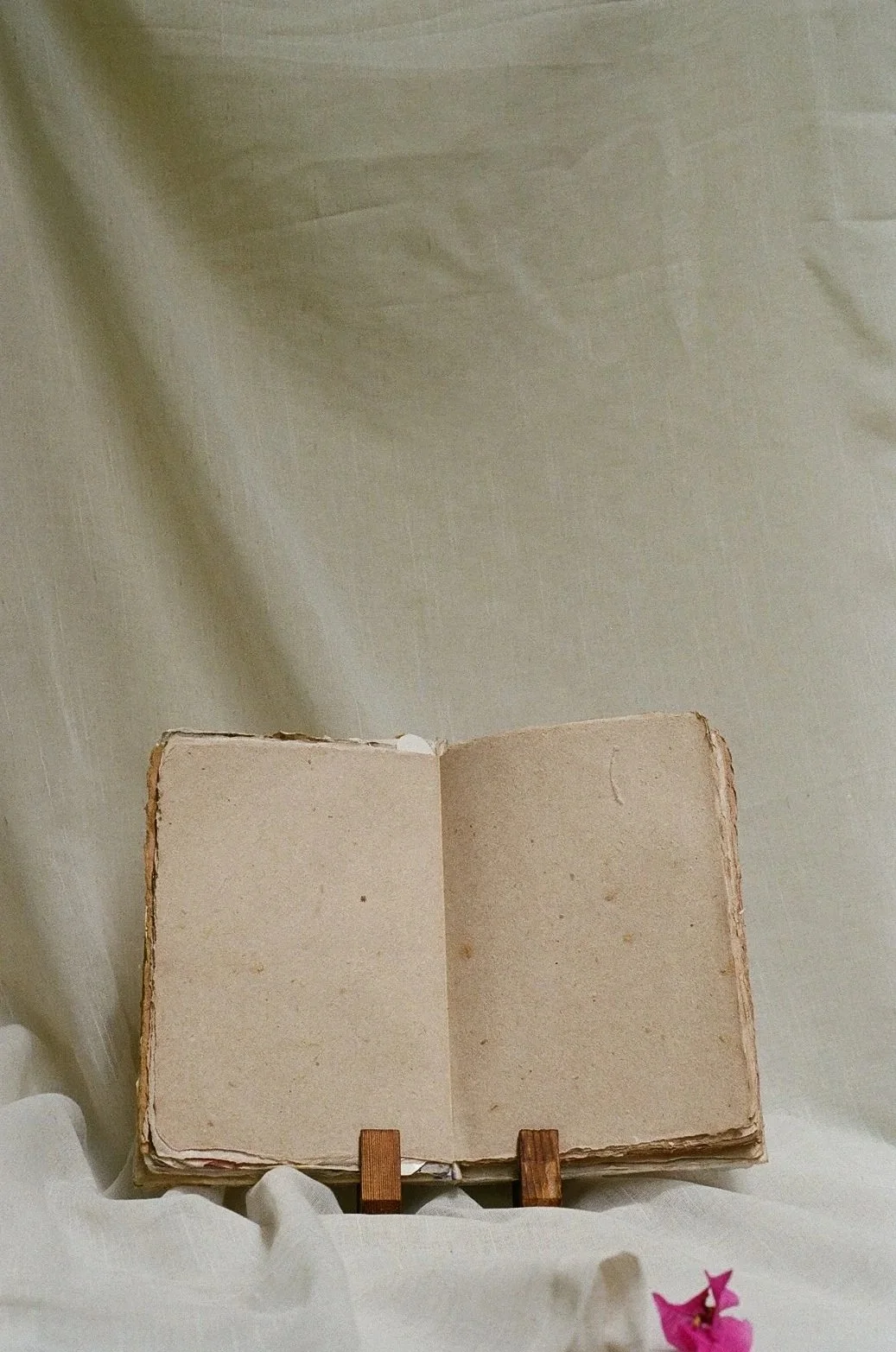
The Kitis II is the first sketchbook made for myself, intended to hold collages, paintings, poetry and more. I needed a home for my creative works and got bored of the bleached sketchbooks we buy from the stationary stores. This books marks the beginning of my bookbinding journey, being the prototype for all books to come.
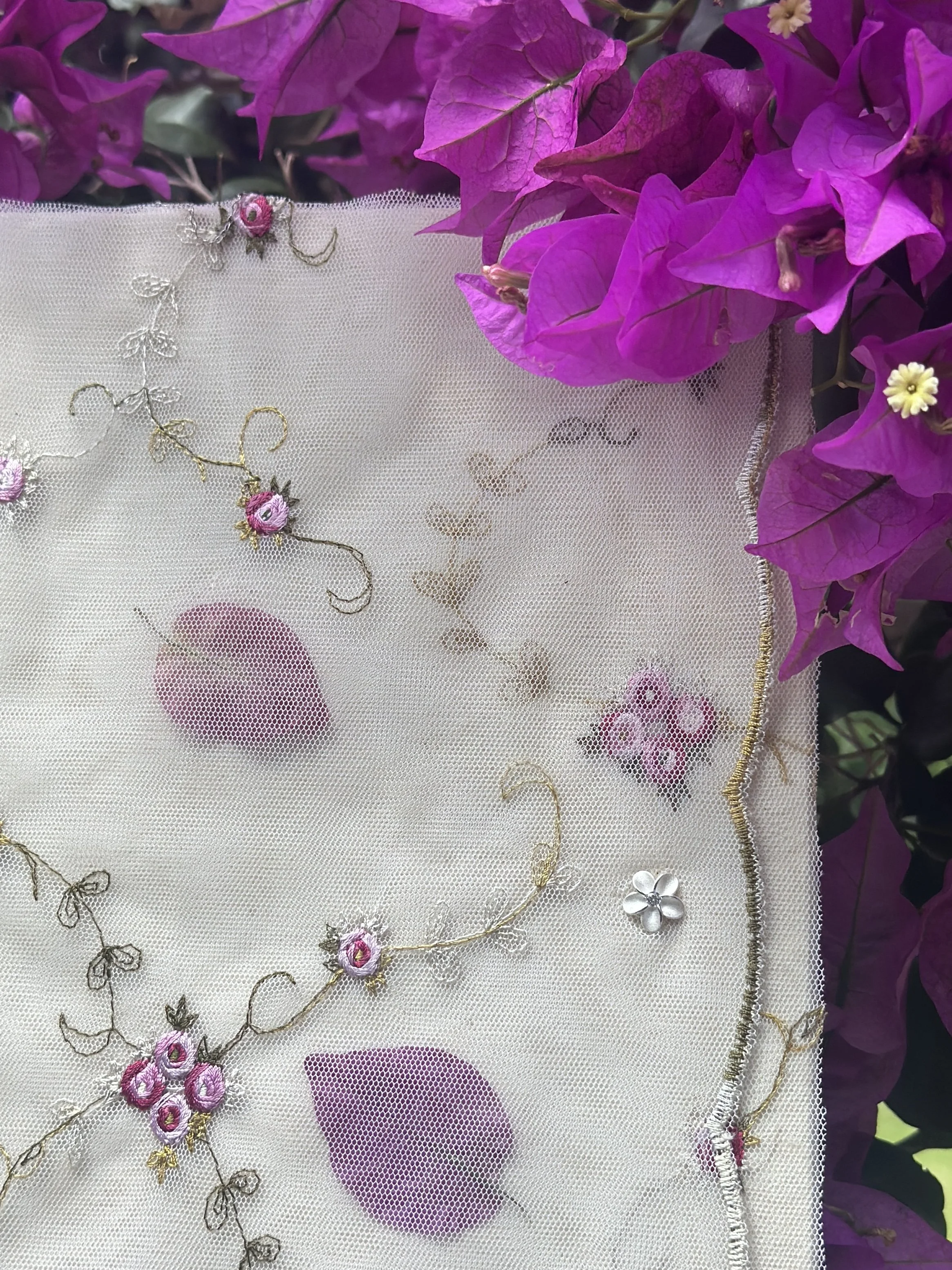
Ingredients
Dyed Cotton
Cottonized Flax
Abaca
Paper Mulberry - Wauke
Recycled Paper Bags
Bougainvillea Leaves
Floral Lace
Its as if this book was plucked from the bougainvillea tree herself. Her seductive pages are a combination of the first pages i’ve ever pulled in the early stages of my papermaking journey. I got to experience the different properties and qualities that different materials and plant fibers produces onced turned into a sheet of paper.
~
The Plant and The Paper
The Sea Hibiscus—Hibiscus tiliaceus—or Hau to the Polynesians, is a tree of profound giving. For this book, its harvested bark was beaten, soaked, and transformed into the very pages you hold, but its legacy stretches far beyond papermaking. Under the guidance of Hawaiian teachers, I learned how deeply interwoven the Hau tree is with traditional life. It is a plant of endless utility. Its lightweight wood was shaped into outrigger canoe booms (ʻiako) and fishing net floats, while its fibrous inner bark was meticulously stripped and braided into cordage, sturdy ropes, and even functional fabrics. To learn from the keepers of this knowledge was an honor, revealing that every part of the Hau has a purpose, a voice, and a craft.
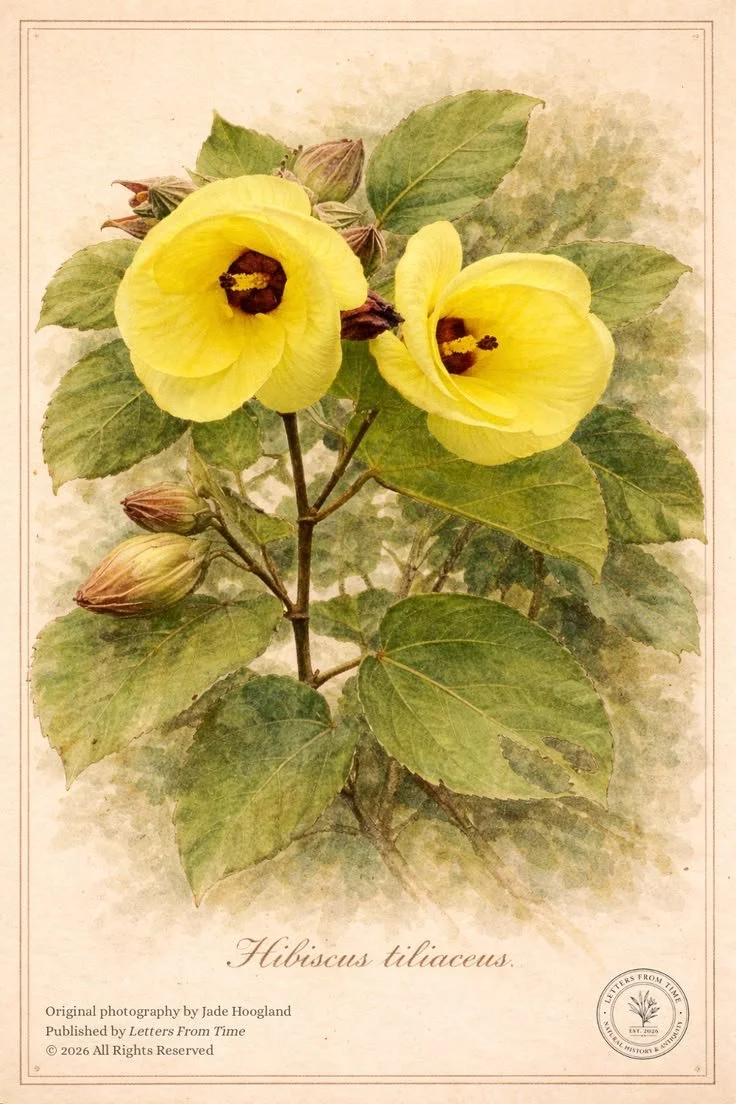
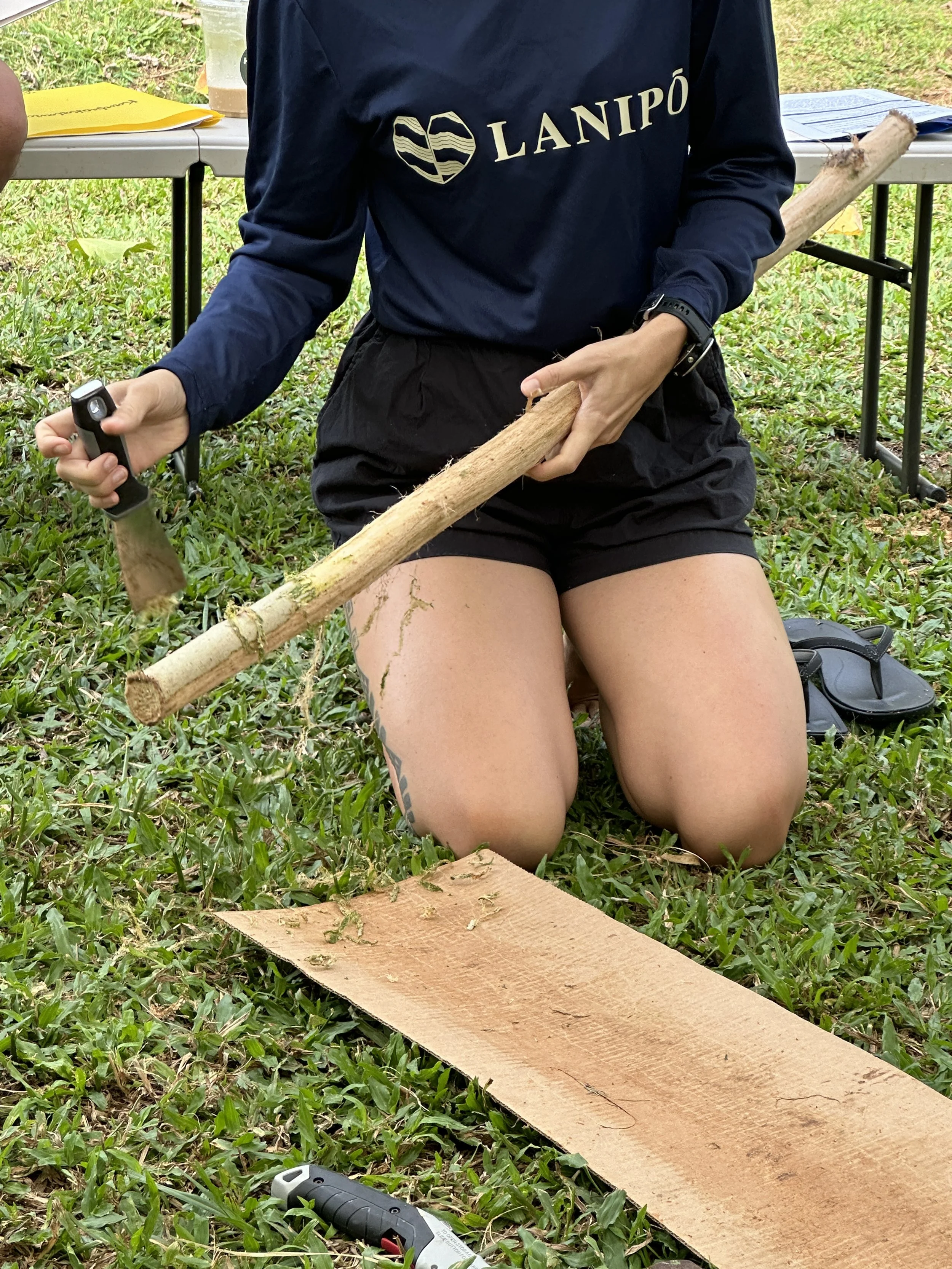
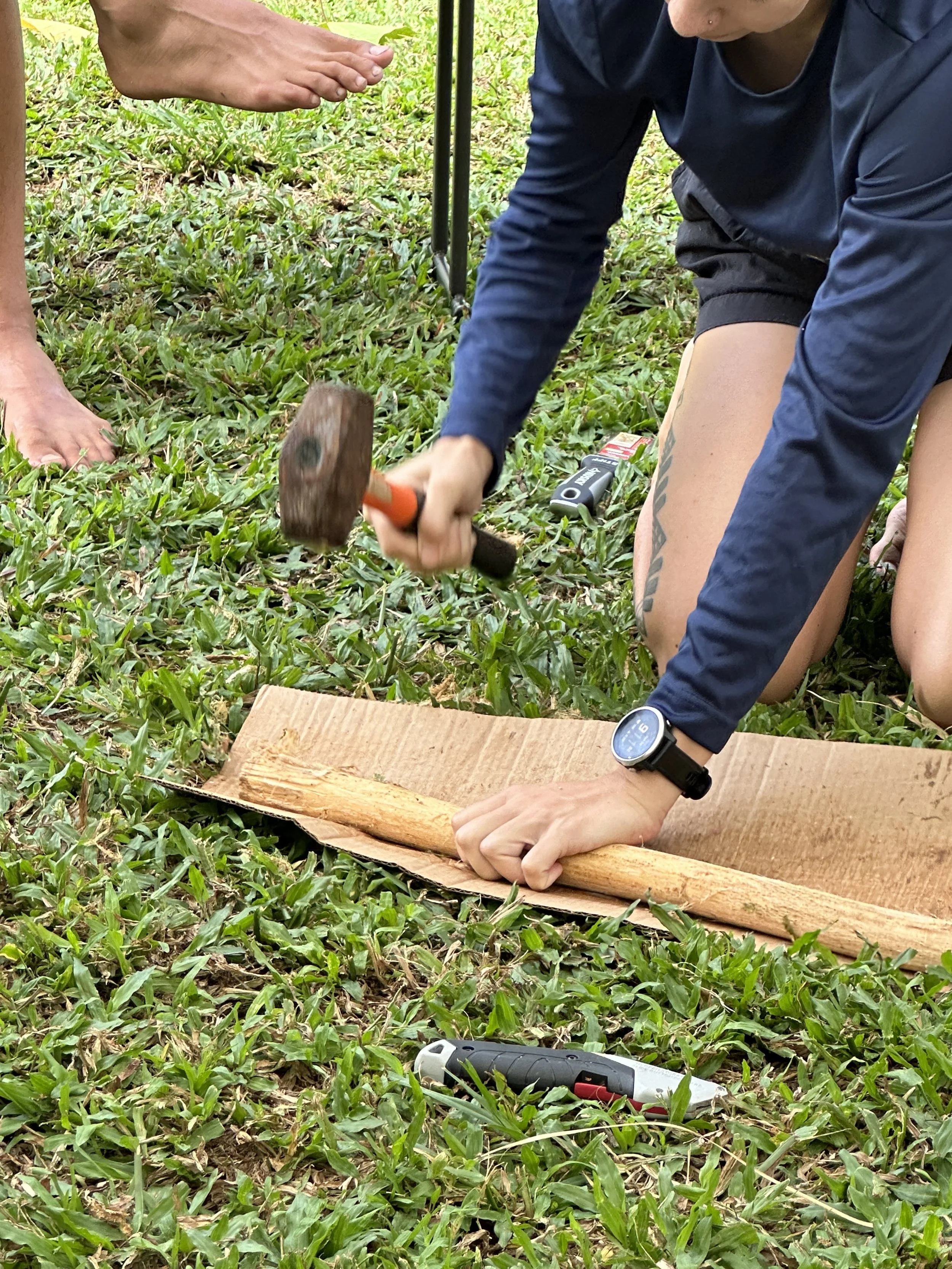
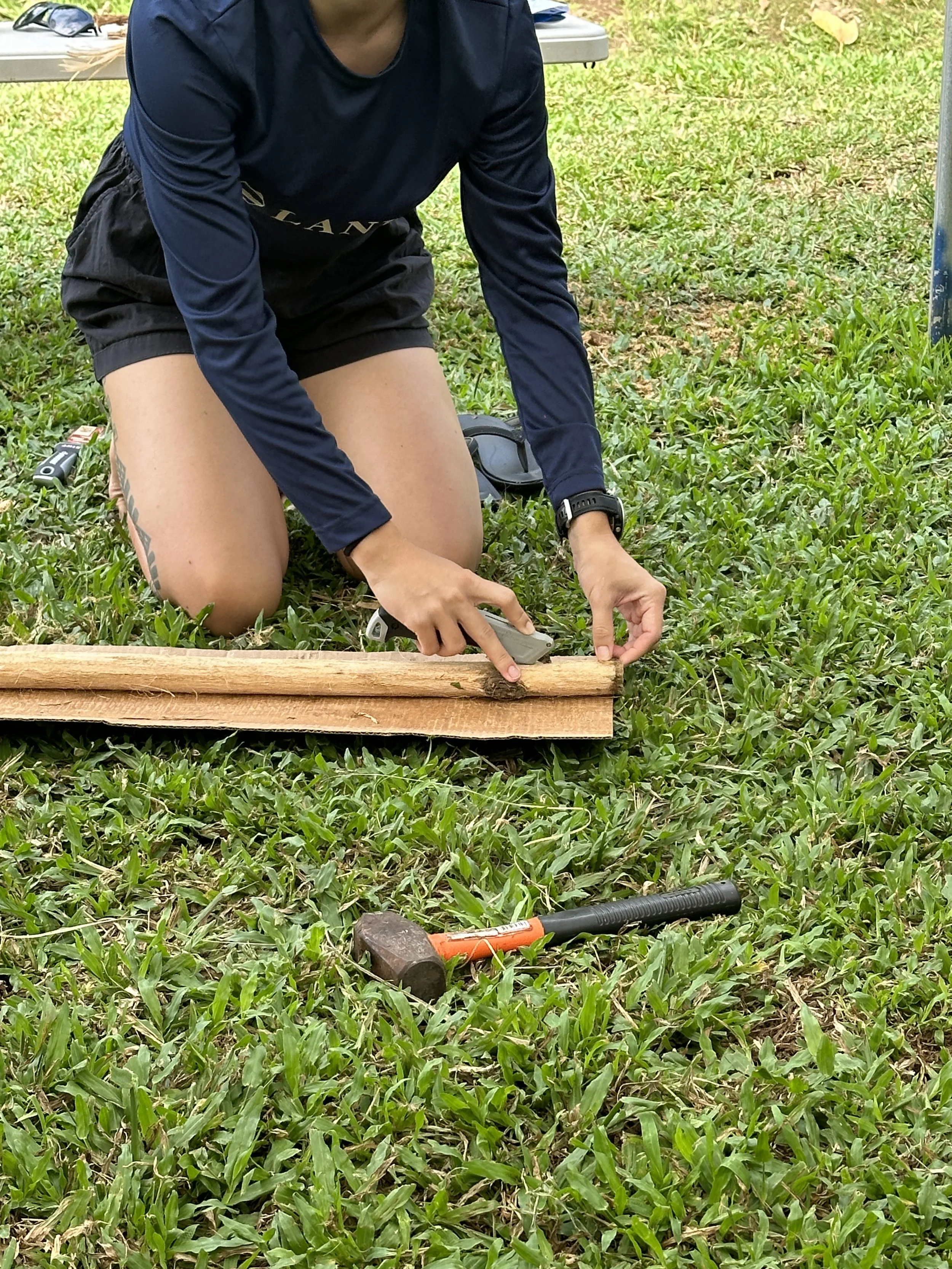
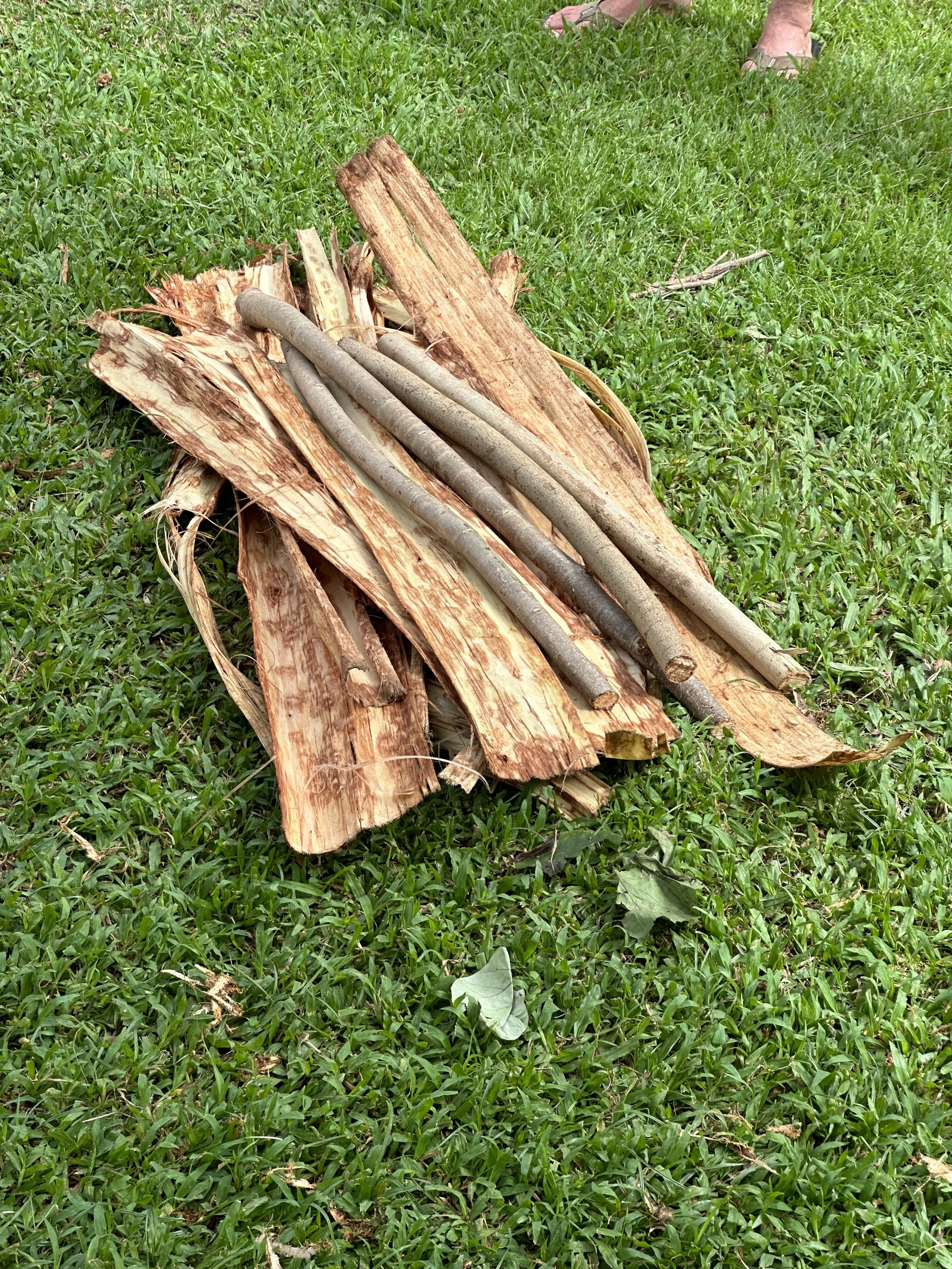
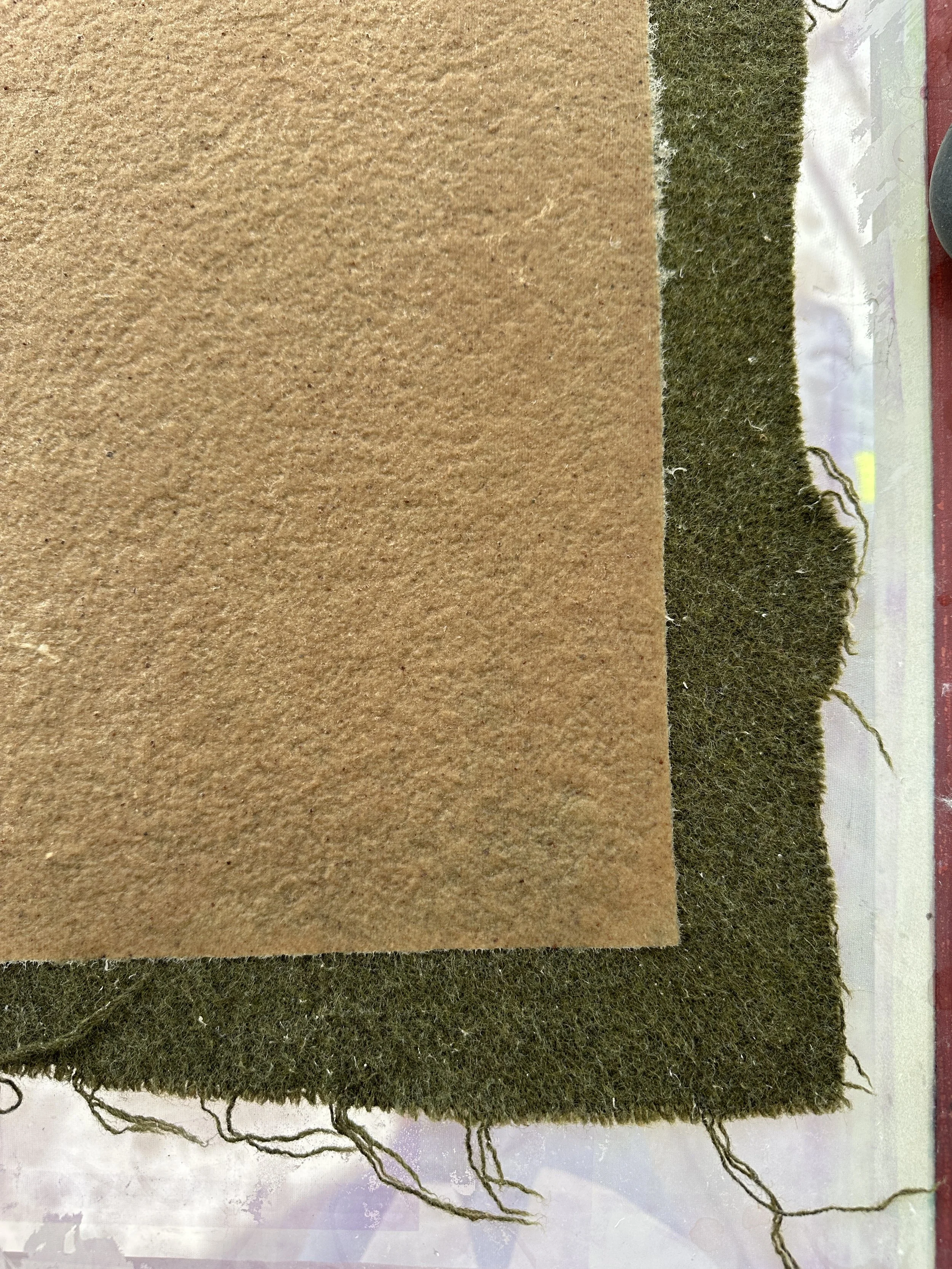
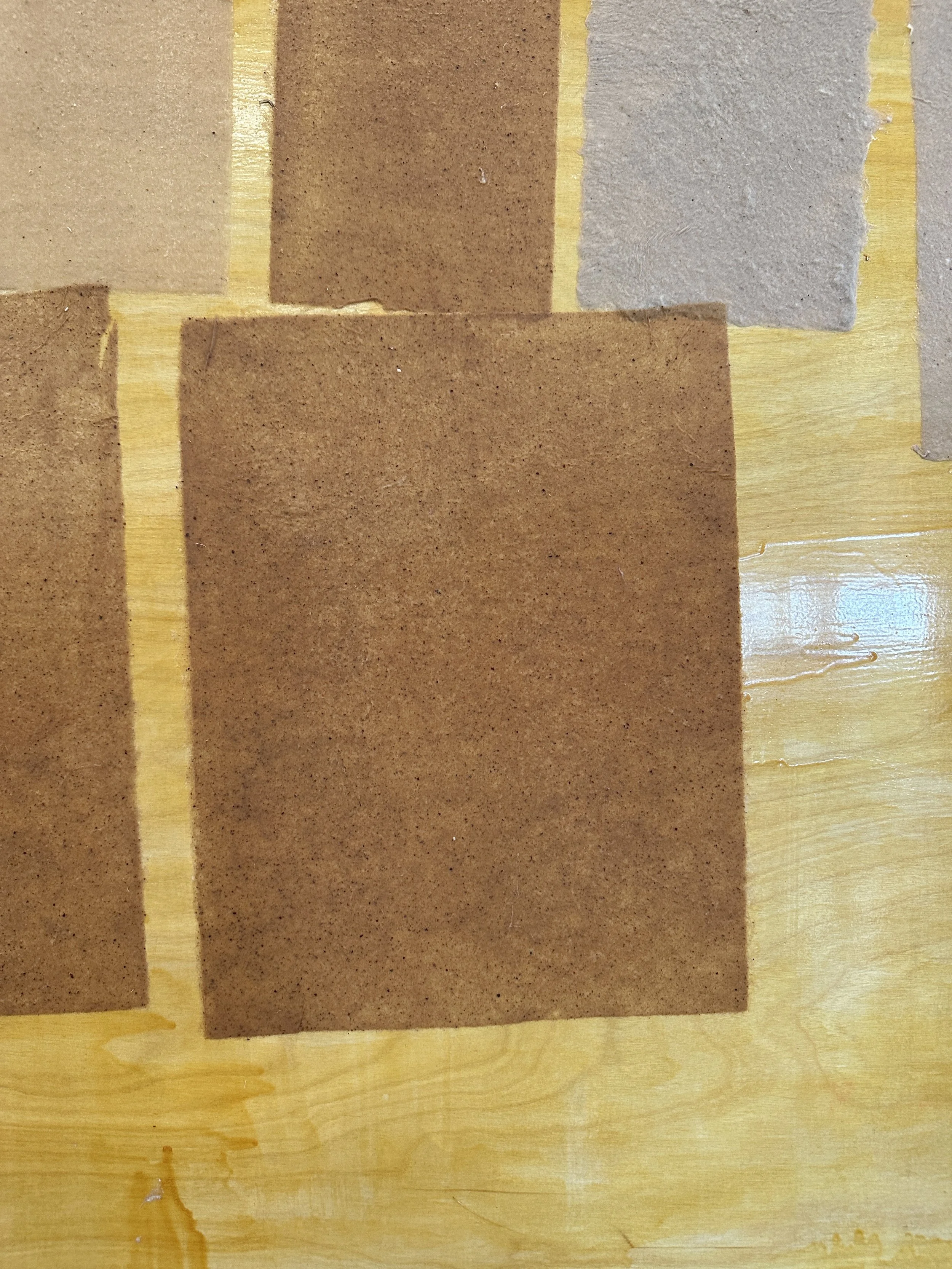
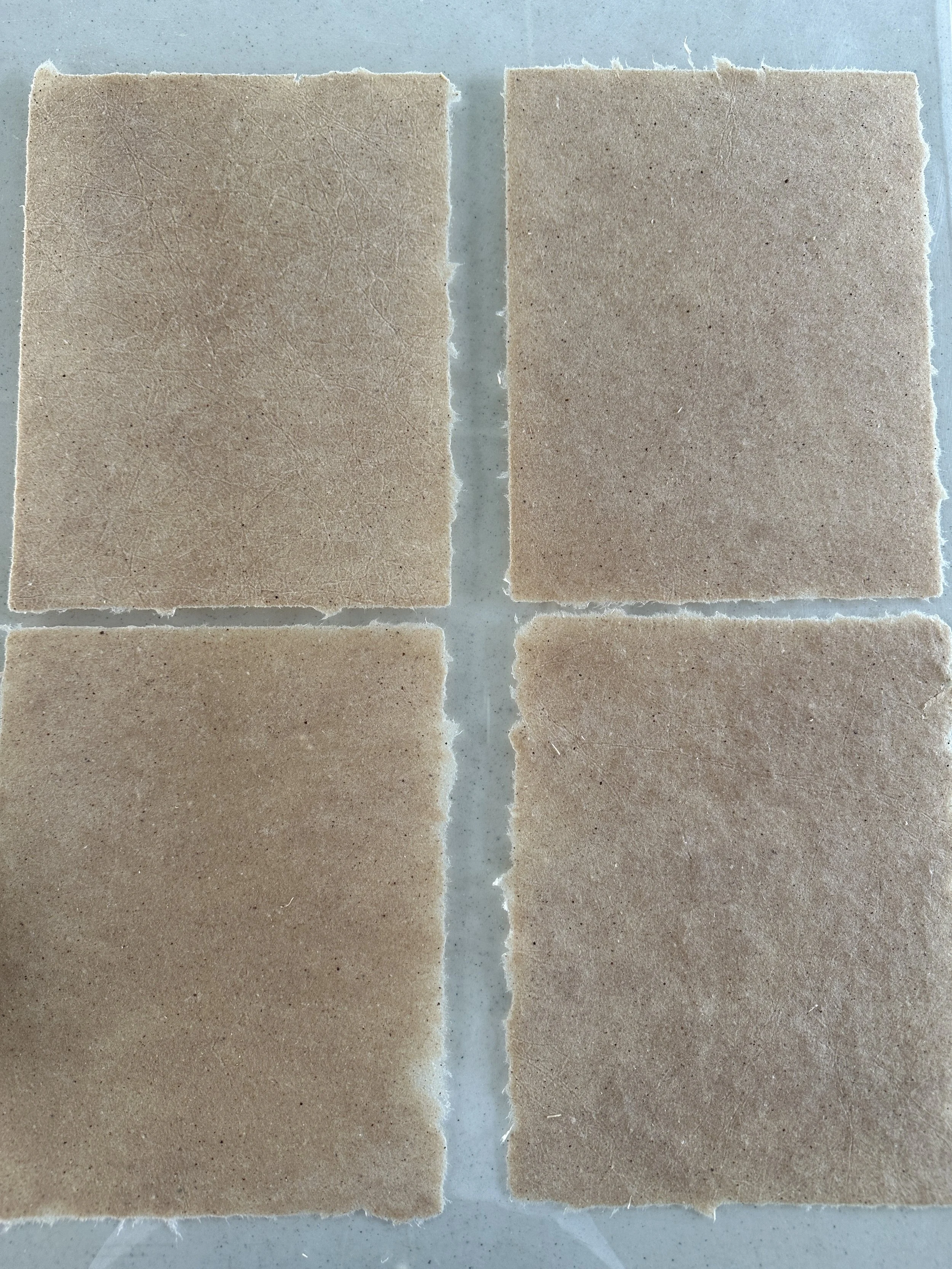
The photographs below capture the rhythmic, labor-intensive journey of transforming raw Hau bark into workable paper pulp. Under the guidance of cultural practitioners Nālamakūikapō Ahsing and Kamehanaokalā Taylor, co-founders of the Lanipō Organization, I was shown the exact steps required to honor this plant. The process begins by carefully stripping the rough outer bark to isolate the clean, fibrous inner ribbon, or bast. These ribbons are then submerged in a natural, flowing stream for several weeks. This vital soaking period allows the water to naturally ferment and break down the plant's rigid gums, transforming the tough bark into incredibly pliant, malleable fibers. Once softened, these strands are ready to be beaten further with traditional wooden mallets (ie kuku), beautifully yielding to the touch until they dissolve into a fine, interconnected pulp ready for the papermaking mold.
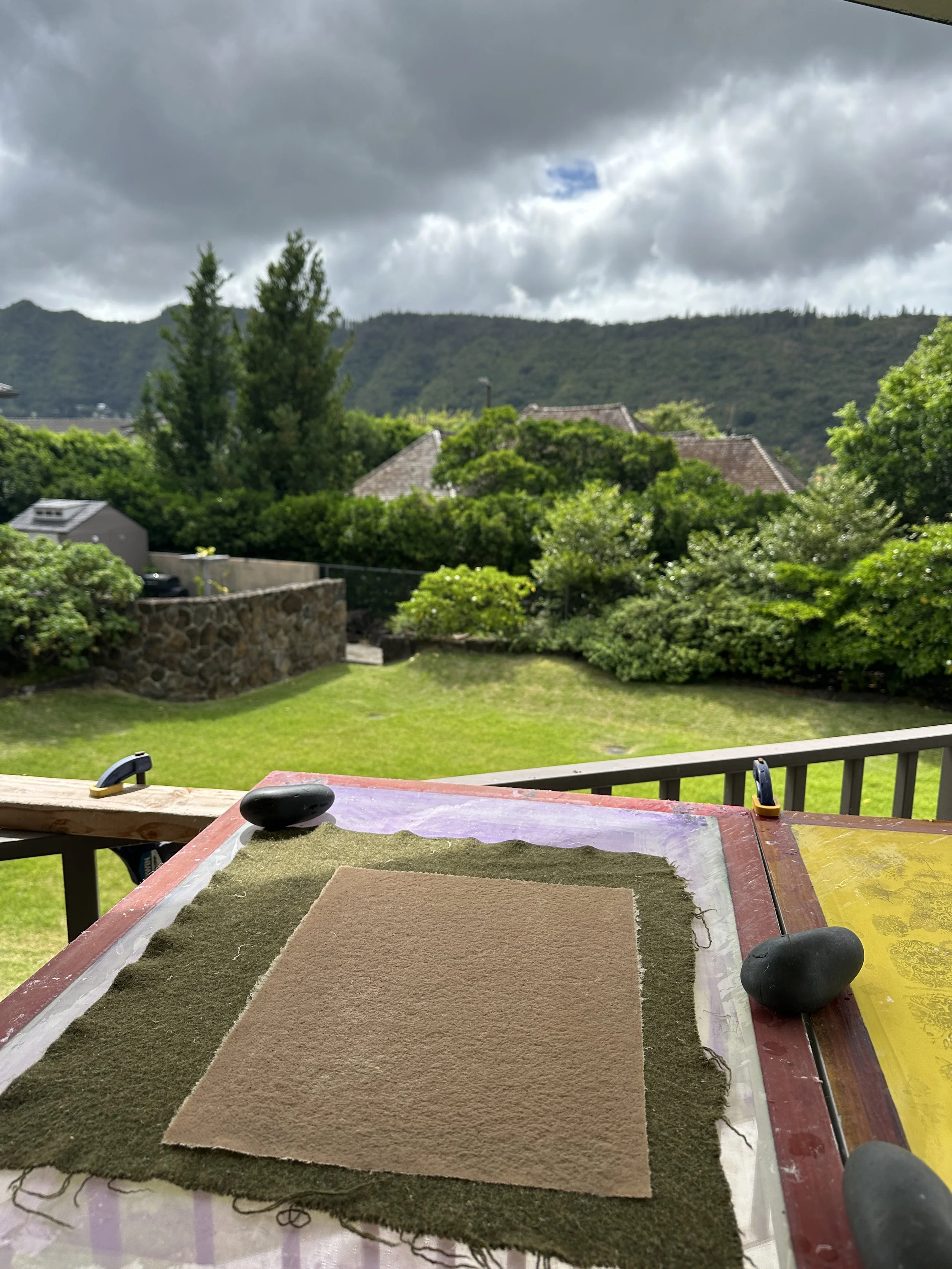
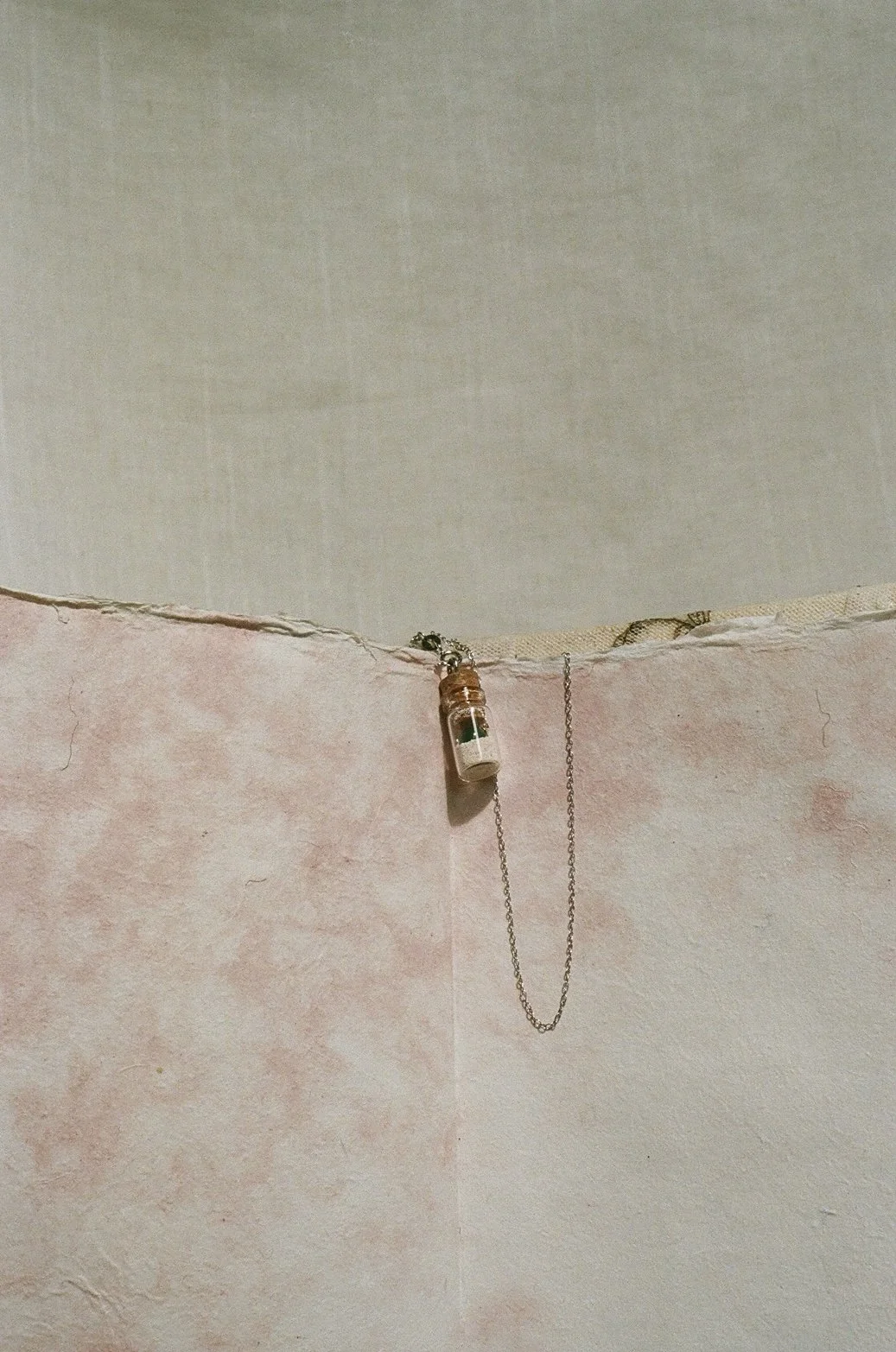
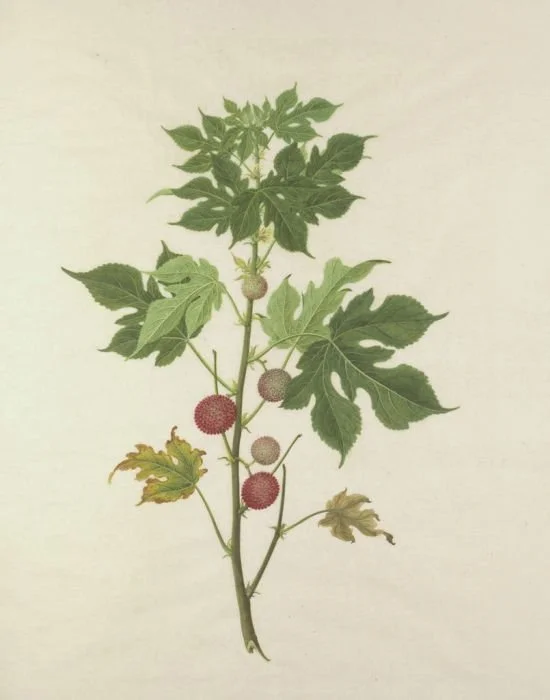
The true soul of this book rests upon its cover, sculpted from the inner bark of Wauke (Broussonetia papyrifera), known more commonly as the paper mulberry. In the hands of Hawaiian practitioners, these raw bast fibers undergo a rhythmic transformation—meticulously beaten, layered, and fused into Kapa, a traditional textile born from patience and profound reverence for the land. While I did not craft this particular sheet myself, its lineage is deeply personal. I had the distinct honor of attending a workshop at the Manoa Heritage Center in Honolulu, where I met Hawaiian teacher Kumu Wes. Watching him breathe life into the fiber was a masterclass in history; being gifted a sheet of his Kapa felt like holding a piece of living heritage. To honor its raw, textured elegance, I chose to adorn it delicately with pressed bougainvillea flowers and fine lace. These additions rest softly on the surface, ensuring that the intricate, organic flow of Kapa’s ancient fibers remains the true guide for your eyes.
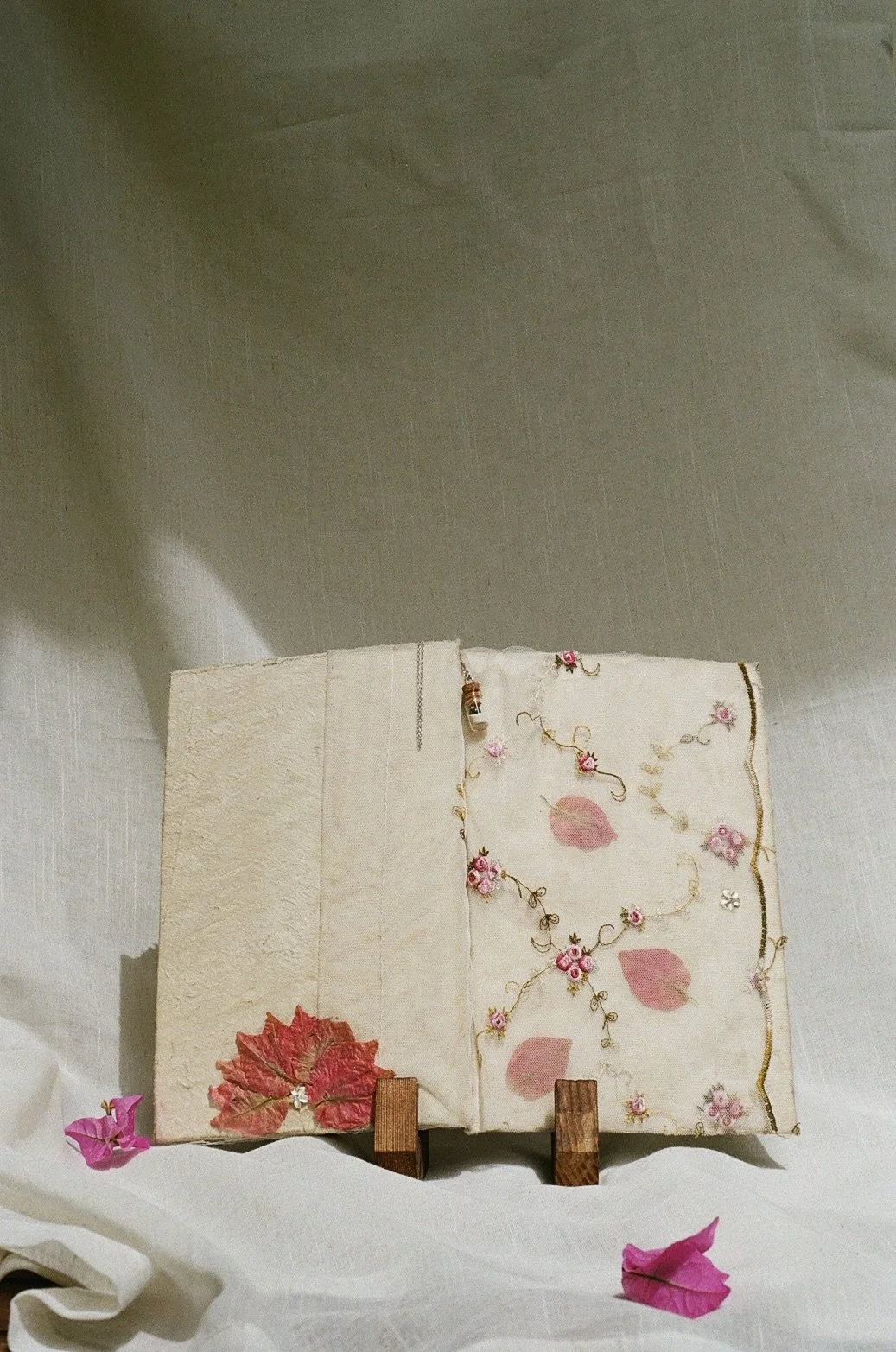
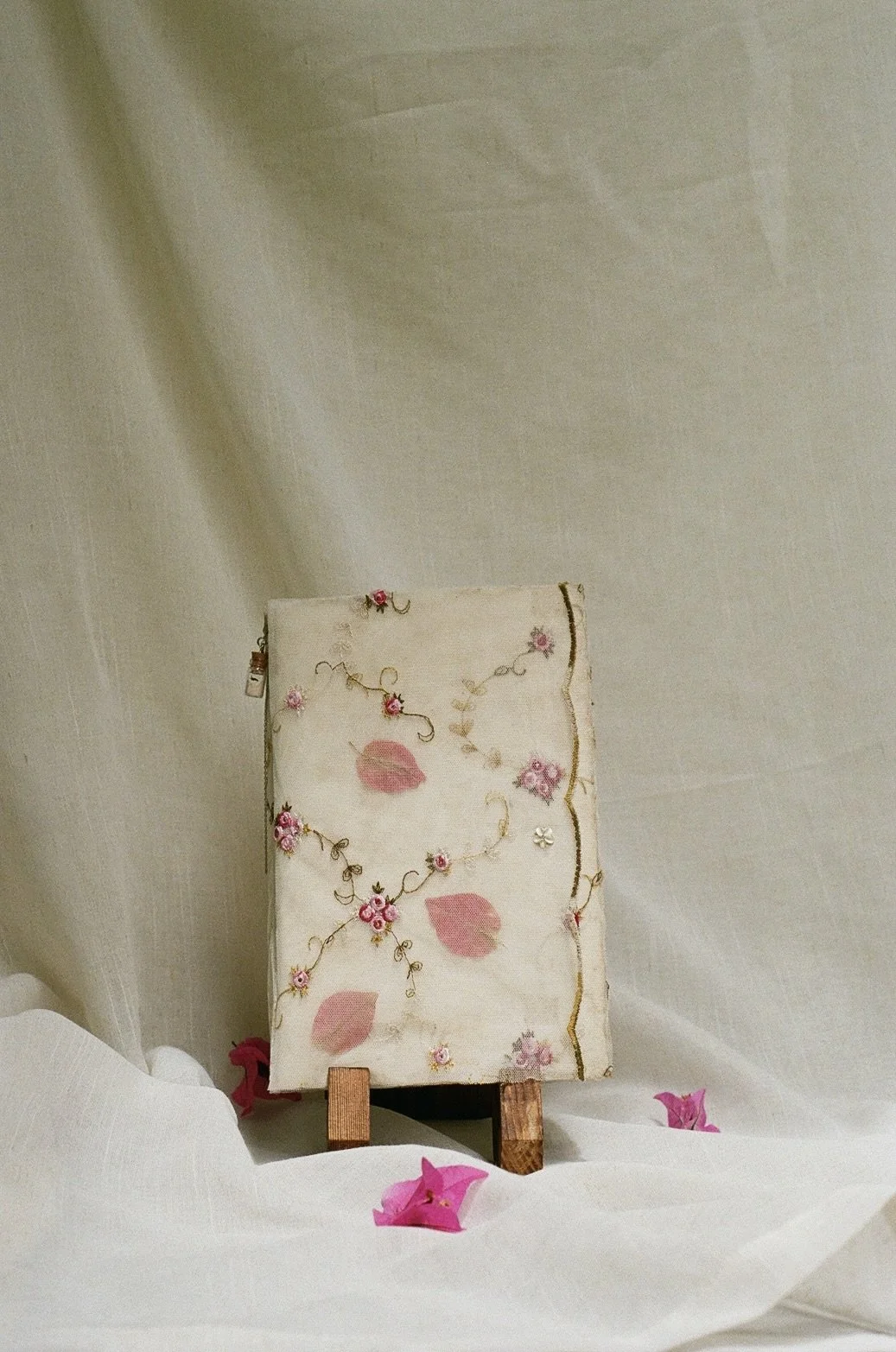
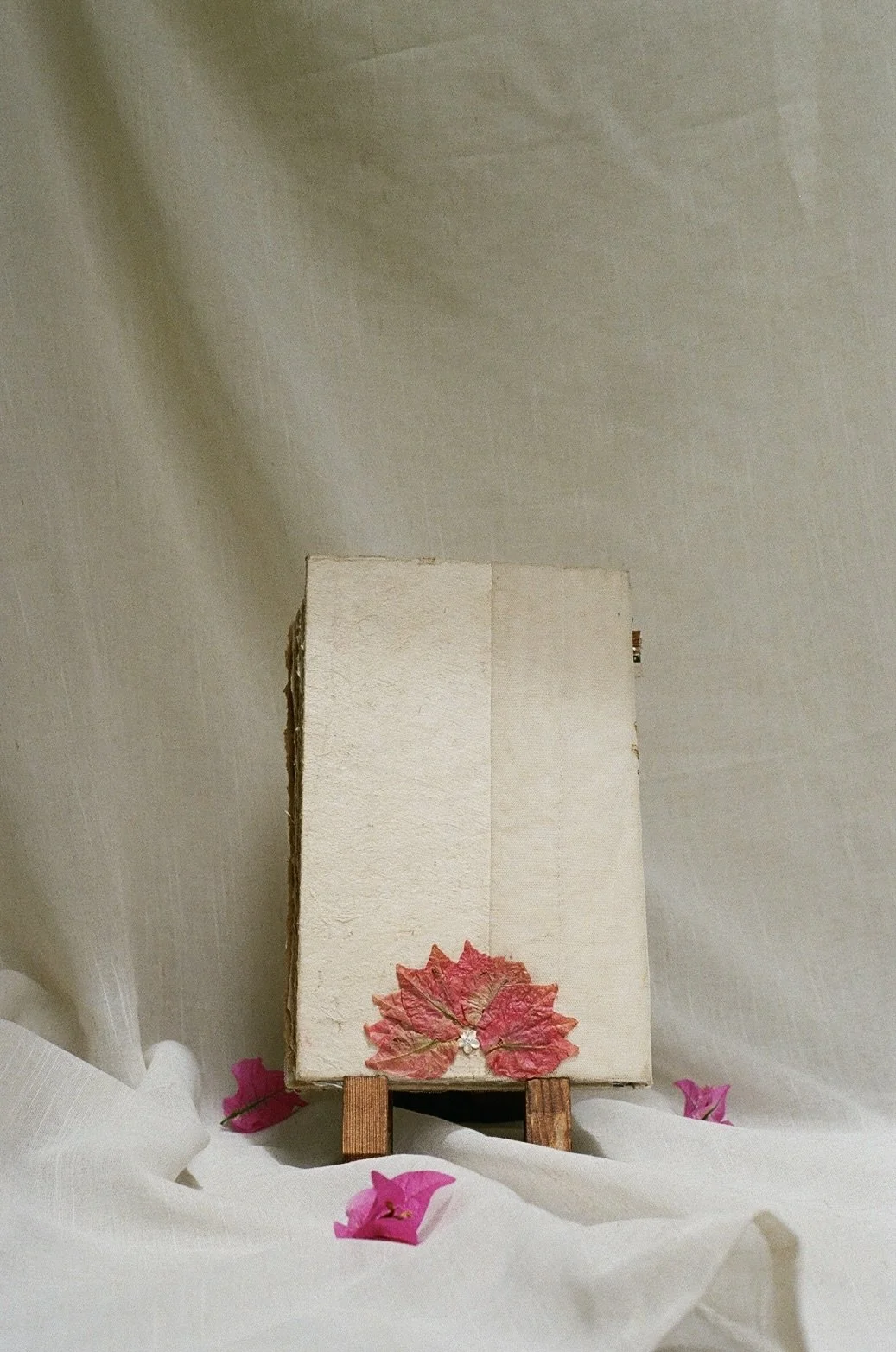
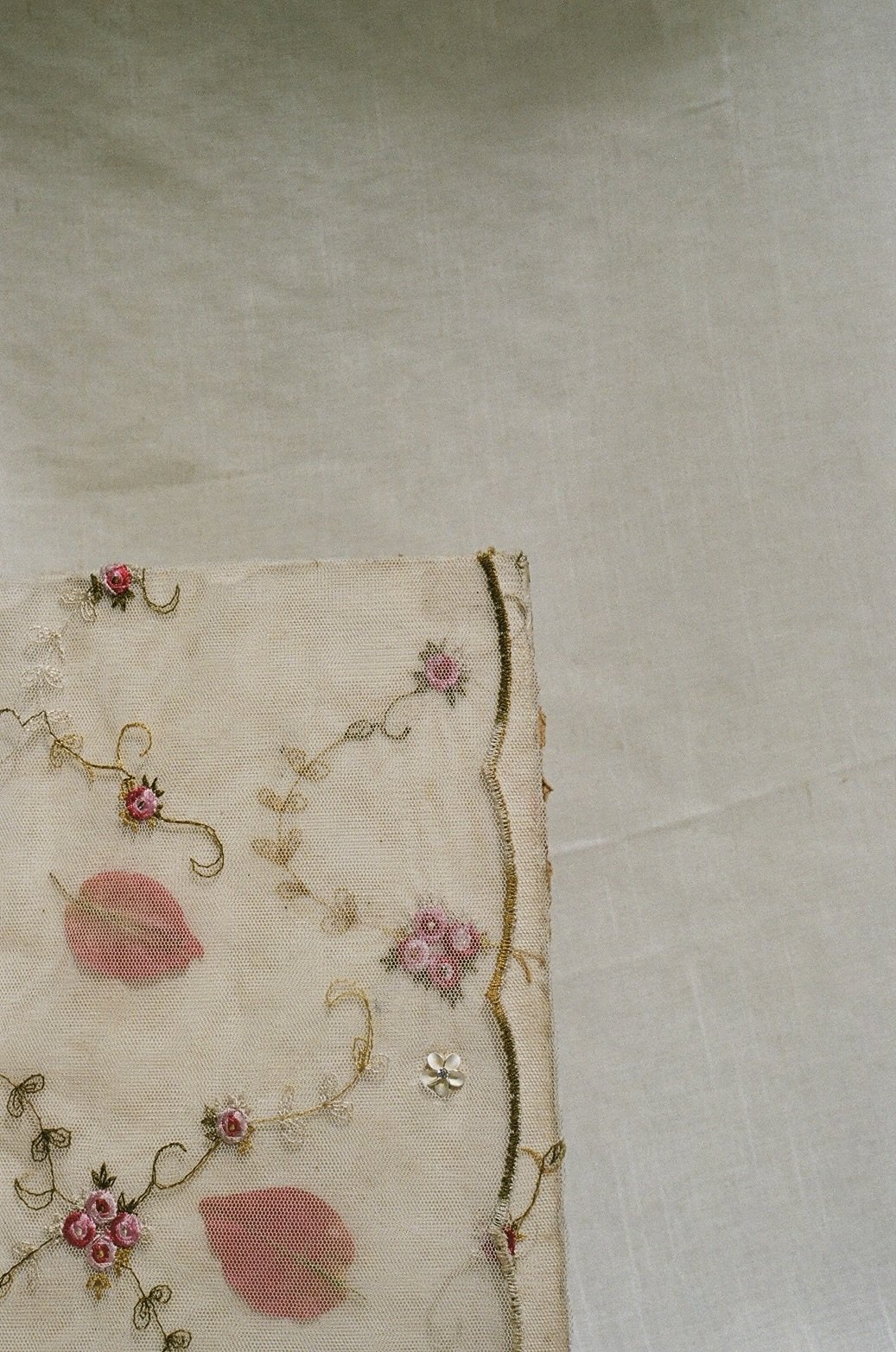
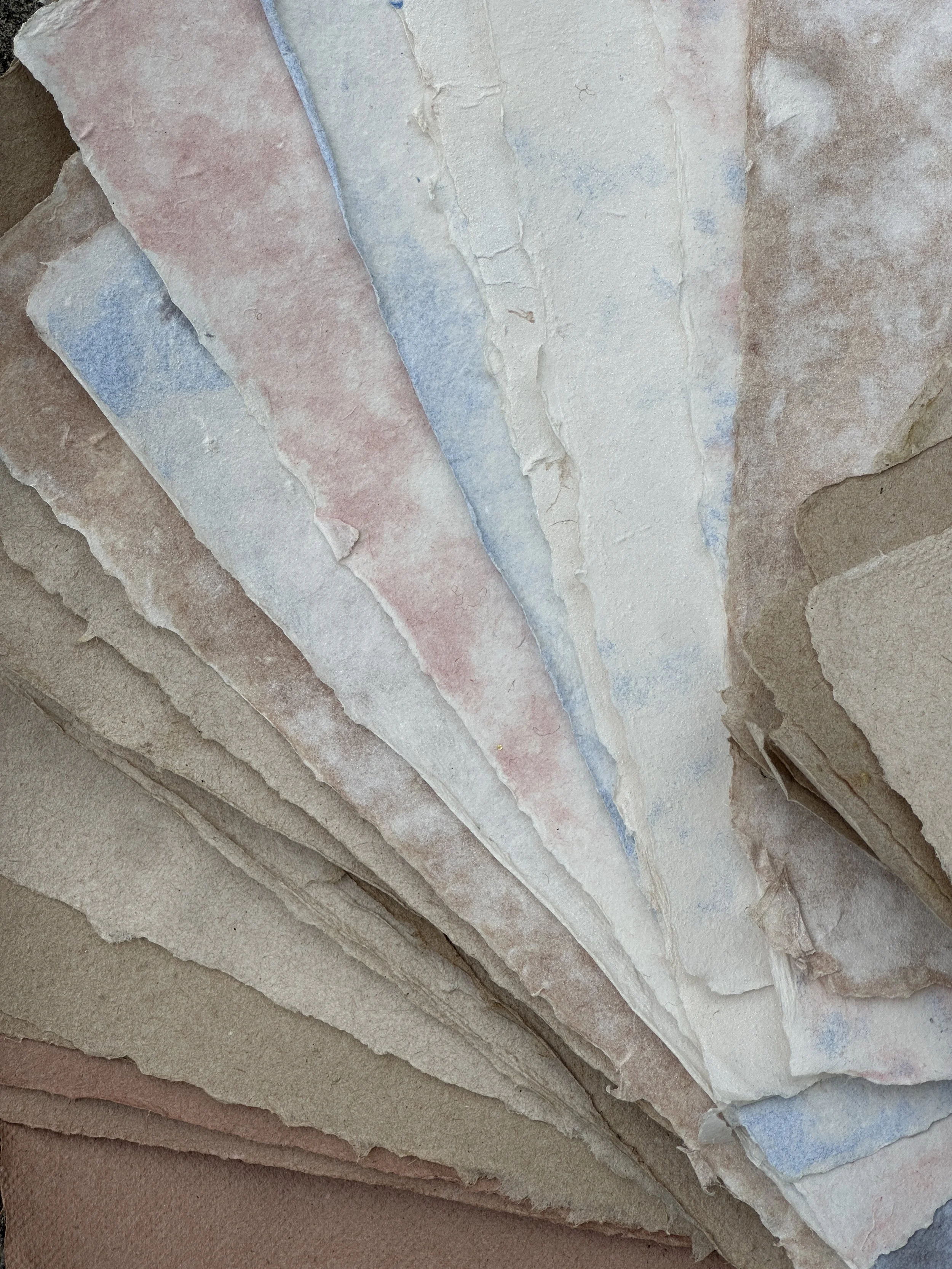
In the end, this book is far more than a collection of bound pages—it is a mirage of color and texture, reflecting the very beginnings of my papermaking journey. Each sheet has been altered to hold its own distinct character, capturing a palette pulled straight from nature. Your eyes will wander through soft blues and delicate pinks, passing into earthy light browns, before grounding in rich, dark browns with subtle hints of red. From the rustic warmth of recycled paper bags to the delicately painted cotton and abaca sheets, culminating in the ancestral presence of true hibiscus paper, this collection of pages stands alone.