Living in Sync
Our spaces can serve greater purposes in our fast-changing, climate-disruptive world. For too long, we have treated urban greenery as an afterthought—a decorative patch of lawn or a neat row of street trees meant solely for human aesthetics. But a truly high-functioning civic space cannot just be open, and it cannot just be green; it must be regenerative, biodiverse, and deeply equitable. To achieve this, we have to look closely at the overlooked landscapes right in front of us. By reframing cemeteries not as static vaults of the past, but as active, living ecosystems, we can begin to heal the fragmentation of our cities. This design journey moves from the broad, complex relationships of urban wildlife down to a tangible, localized intervention at Northgate and the Washelli Evergreen Cemetery. It is a prompt to embrace biophilic urbanism—the intentional integration of rich, biodiverse ecosystems into our city infrastructure—turning accidental sanctuaries into vital, thriving wildlife corridors that breathe life back into our concrete grid.
Fractured Ground: Healing the Separation Between Humans and Earth
The idea of "Living in Sync" started with a distinct feeling that we should be closer to nature. Over generations, a mental and physical separation from the natural world has quietly woven itself into our society. Our commercialized, urban environments favor impermeable, paved surfaces that offer easy access to products but completely alienate us from the earth. We surround our homes with ornamental, non-native plants and manicured lawns, steering ourselves further and further away from interaction with the other living things on our planet. This divide has exacted a steep human cost. We find ourselves facing a collective solastalgia—a profound emotional distress caused by the rapid, climate-driven degradation of our home environments. We feel the instability of extreme weather events, breathe poorer air, and watch our access to natural, unhurried spaces shrink.
Crucially, this human grief mirrors an environmental one. The damage we inflict on intact habitat cores directly echoes in our own lives; as wildlife populations suffer from altered dynamics, increased mortality, and physiological damage, we too lose our sense of place and well-being. To break this cycle, our homes and cities must adapt. "Living in Sync" brings forward a design philosophy where all living things can thrive together now and in the future. By rewilding our shared spaces, we create a dual-healing environment: as the land mends through native flora restoration, it simultaneously provides a quiet, authentic sanctuary for humans to process personal grief and climate anxiety side-by-side.
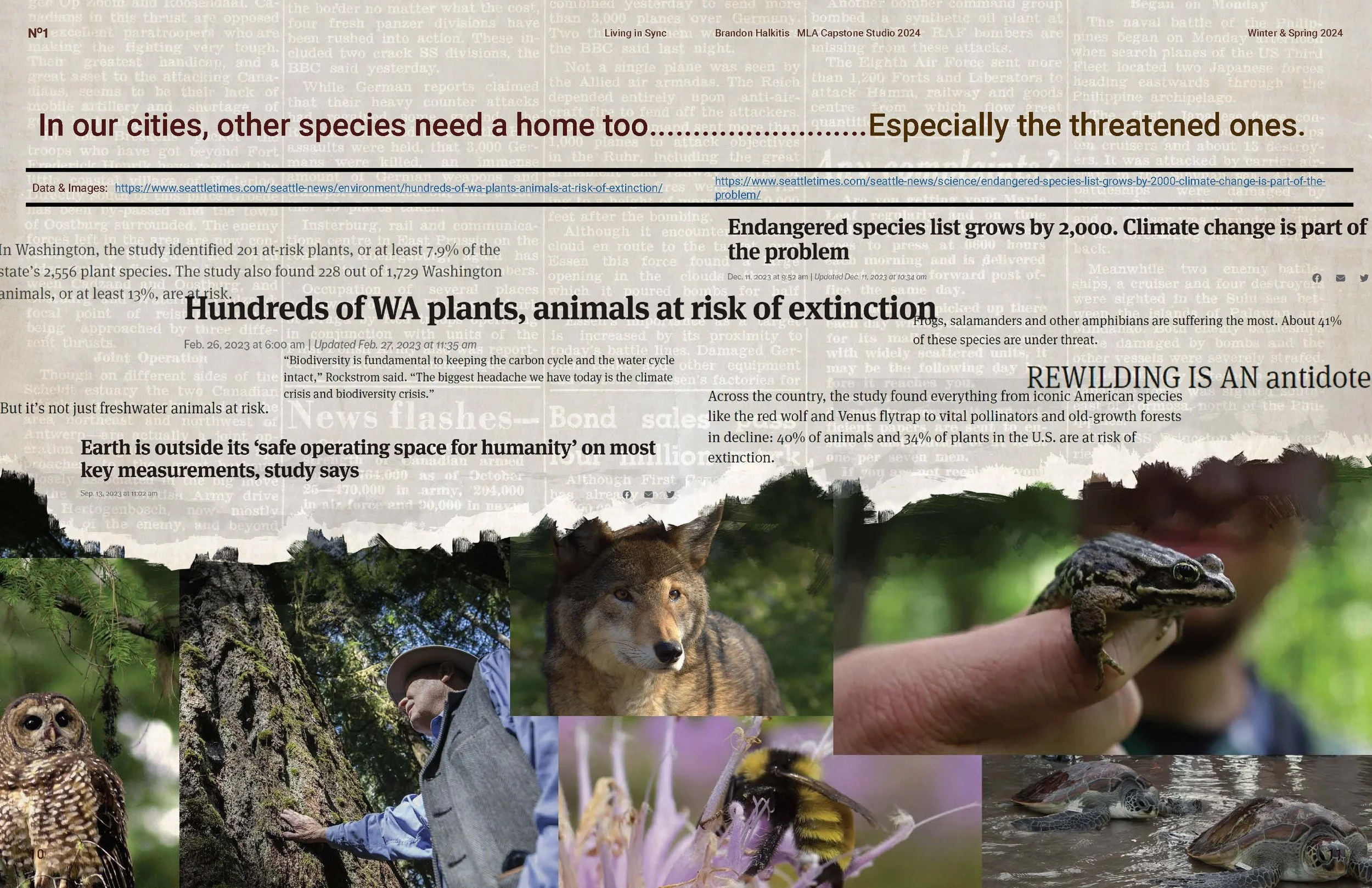
Collage highlighting quotes from various news articles in Seattle, Washington, expressing the urgency to realize that animals are facing extinction right under our noses.
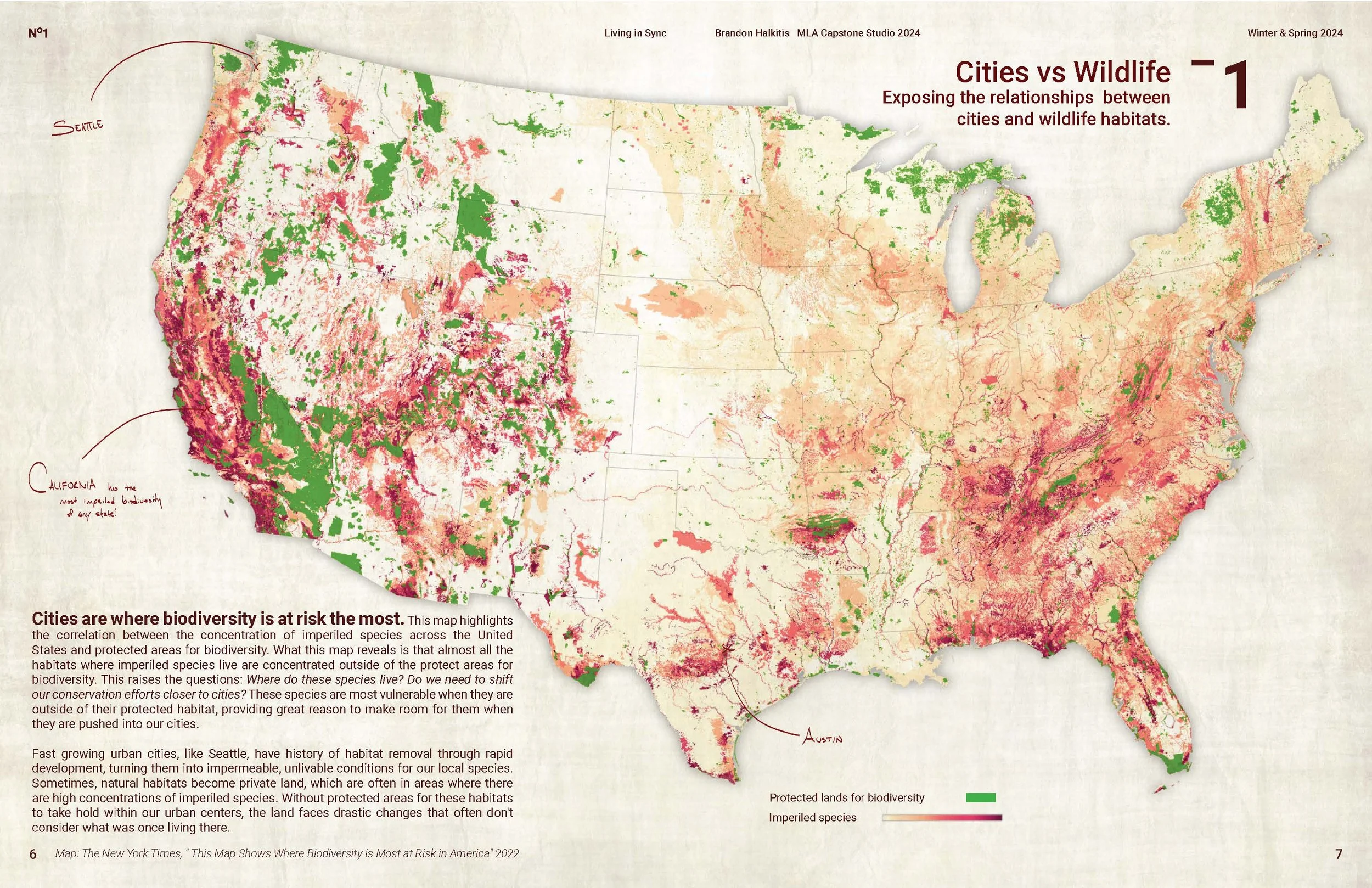
A map showing the saturation of threatened species across North America in comparison to where there are protected lands for them.
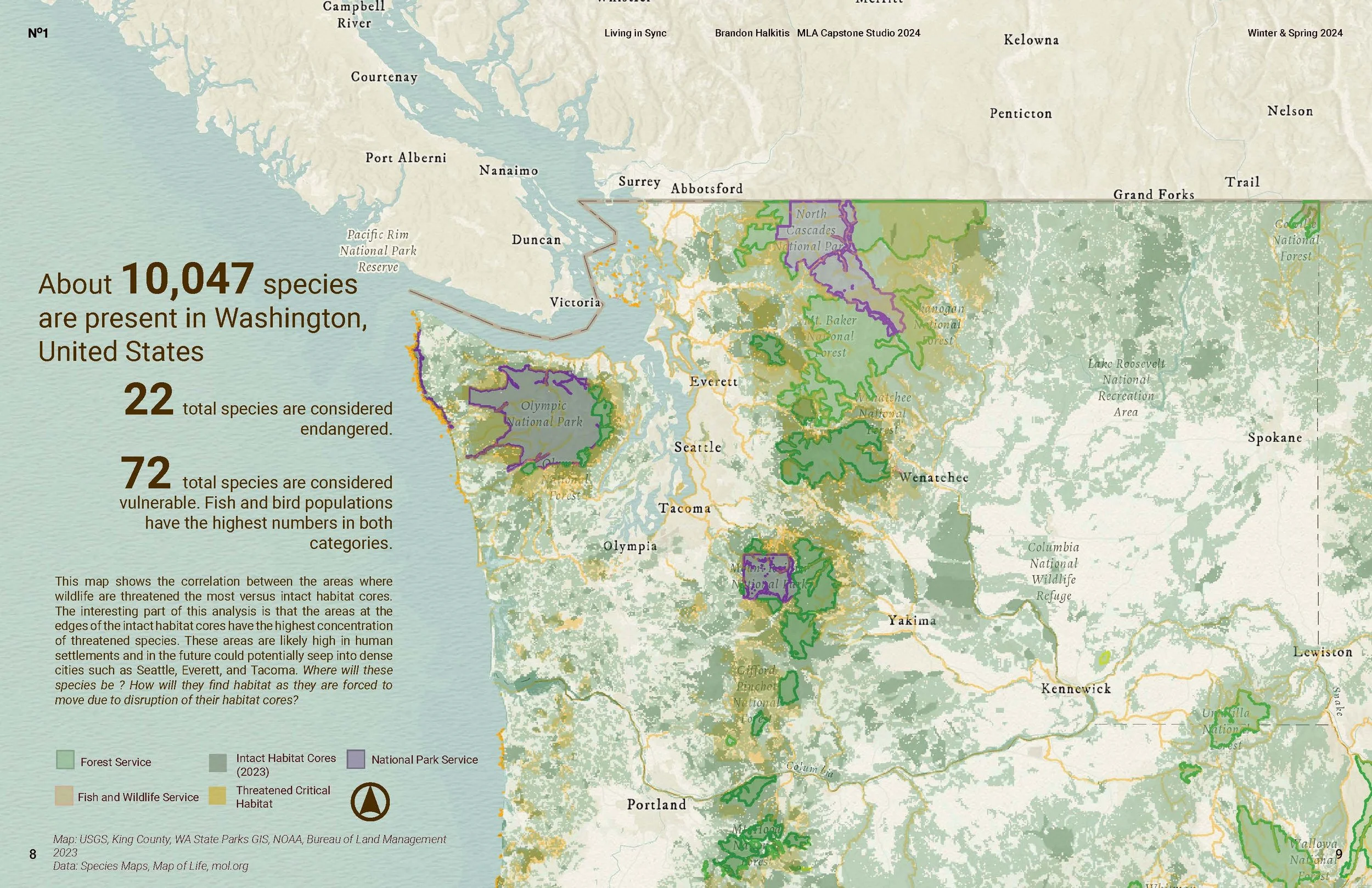
A map highlighting Washington’s protected land areas in correlation to the areas where threatened habitats are at risk.
Global Echoes: Mapping Ecological Fragmentation from Seattle to the Bahamas
When examining the concrete data behind our changing landscapes, it is easy to view ecological collapse through a purely local lens. My research into the rapid urbanization of Northgate and the shifting wildlife baseline at Washilli Evergreen Cemetery serves as a critical case study of this phenomenon. Traveling through the United States, the empirical data tells a stark story: intact habitat cores are being severed at unprecedented rates, forcing urban wildlife into highly altered population dynamics and creating physiological stress. This is not a localized glitch in Seattle's grid; it is a global pattern. We see these same fractures unfolding across Small Island Developing States (SIDS) like the Bahamas. In New Providence, rapid coastal development, commercial urbanization, and the dredging of inland canals have dismantled native pine forests, coastal coppices, and vital mangrove barriers. Whether it is an owl losing an ancient cedar canopy in Washington or a juvenile lemon shark losing its protective mangrove nurseries in North Bimini, the crisis remains identical: the systematic erasure of natural habitat.
This widespread fragmentation has triggered an equally universal human response. The deep-seated sense of ecological grief and solastalgia—the acute distress caused by the unwanted transformation of one's home environment—is rising rapidly on a global scale. In the Caribbean, communities are grappling with the slow-moving impacts of rising sea levels alongside the immediate, traumatic displacement of devastating hurricanes. These environmental upheavals do not just alter the physical landscape; they severely fracture human mental well-being, leading to undocumented surges in climate anxiety, helplessness, and a loss of community identity. By analyzing Northgate as a microcosm of global degradation, we realize that the antidote must be just as scalable. Rewilding our urban spaces and public sanctuaries is no longer an idealistic design choice; it is a critical, cross-border strategy to mend the shared trauma of a disconnected planet.
References
Cormier, E. C. (2024). Analysis of two decades of Landsat satellite images reveals long-term changes in aquatic and terrestrial vegetation in Bimini, The Bahamas with coastal development. Facets Journal.
Cited by: 1
Silver, J. M., Arkema, K. K., Griffin, R. M., Lashley, B., Lemay, M., Maldonado, S., Moultrie, S. H., Ruckelshaus, M., Schill, S., Thomas, A., Wyatt, K., & Verutes, G. (2019). Advancing Coastal Risk Reduction Science and Implementation by Accounting for Climate, Ecosystems, and People. Frontiers in Marine Science, 6. https://doi.org/10.3389/fmars.2019.00556
Cited by: 106
Welsh, K., & Gustave, W. (2025). Building Climate Resilience in The Bahamas: A Framework for Enhancing Soil and Water Resource Management amidst Saltwater Intrusion. International Journal of Bahamian Studies, 31.
Anchoring the Vision: Transforming Washelli and Northgate into Living Corridors
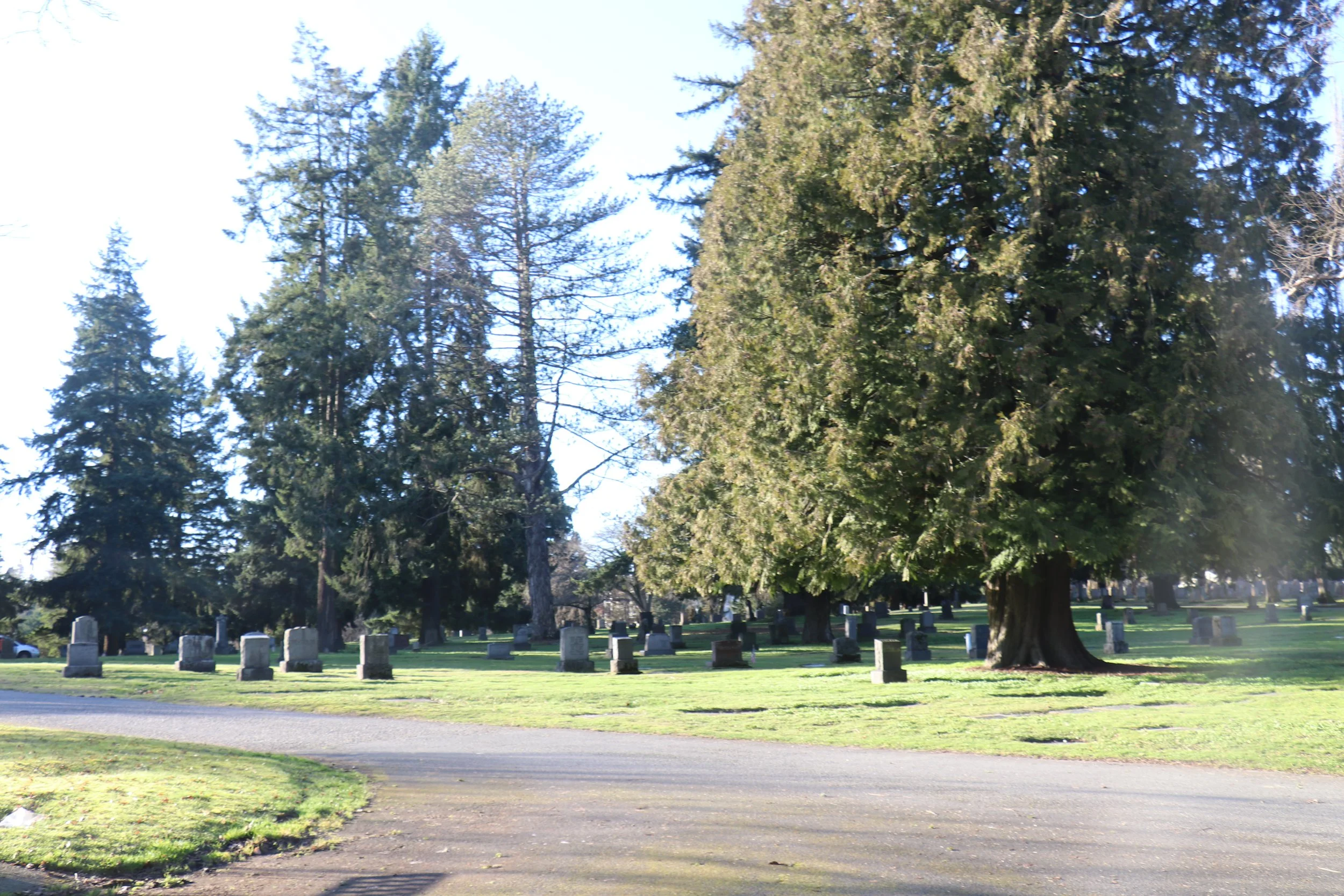
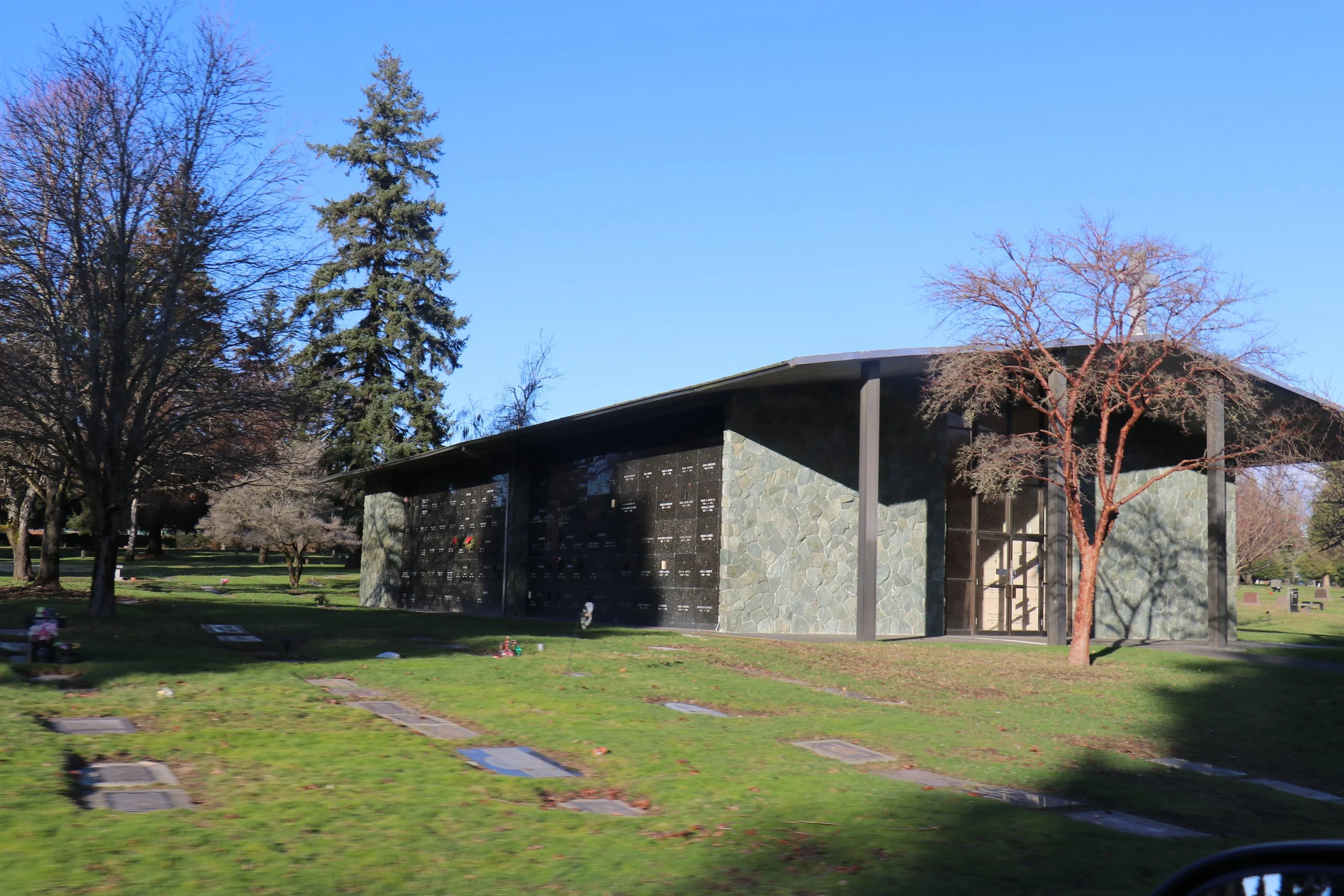
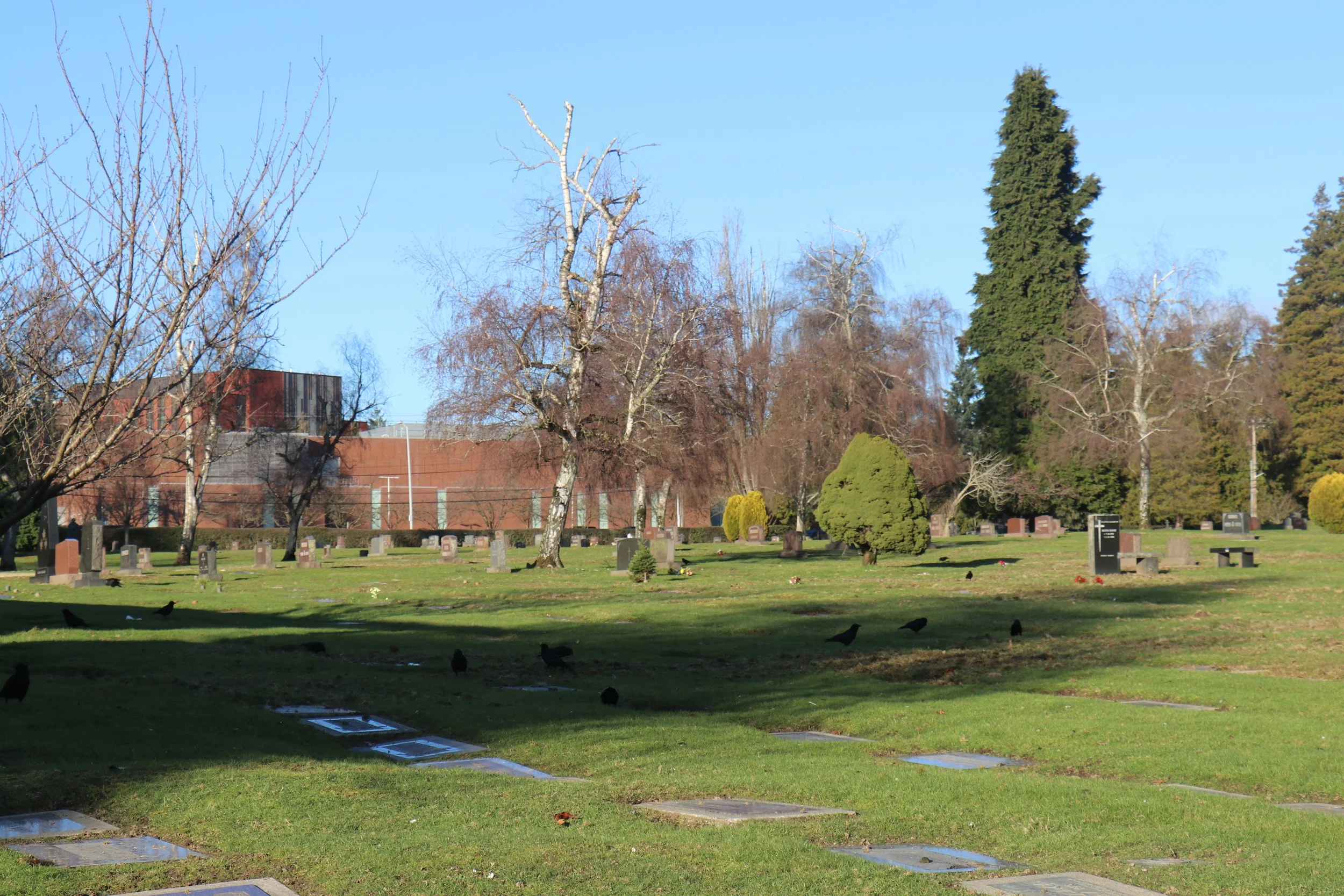
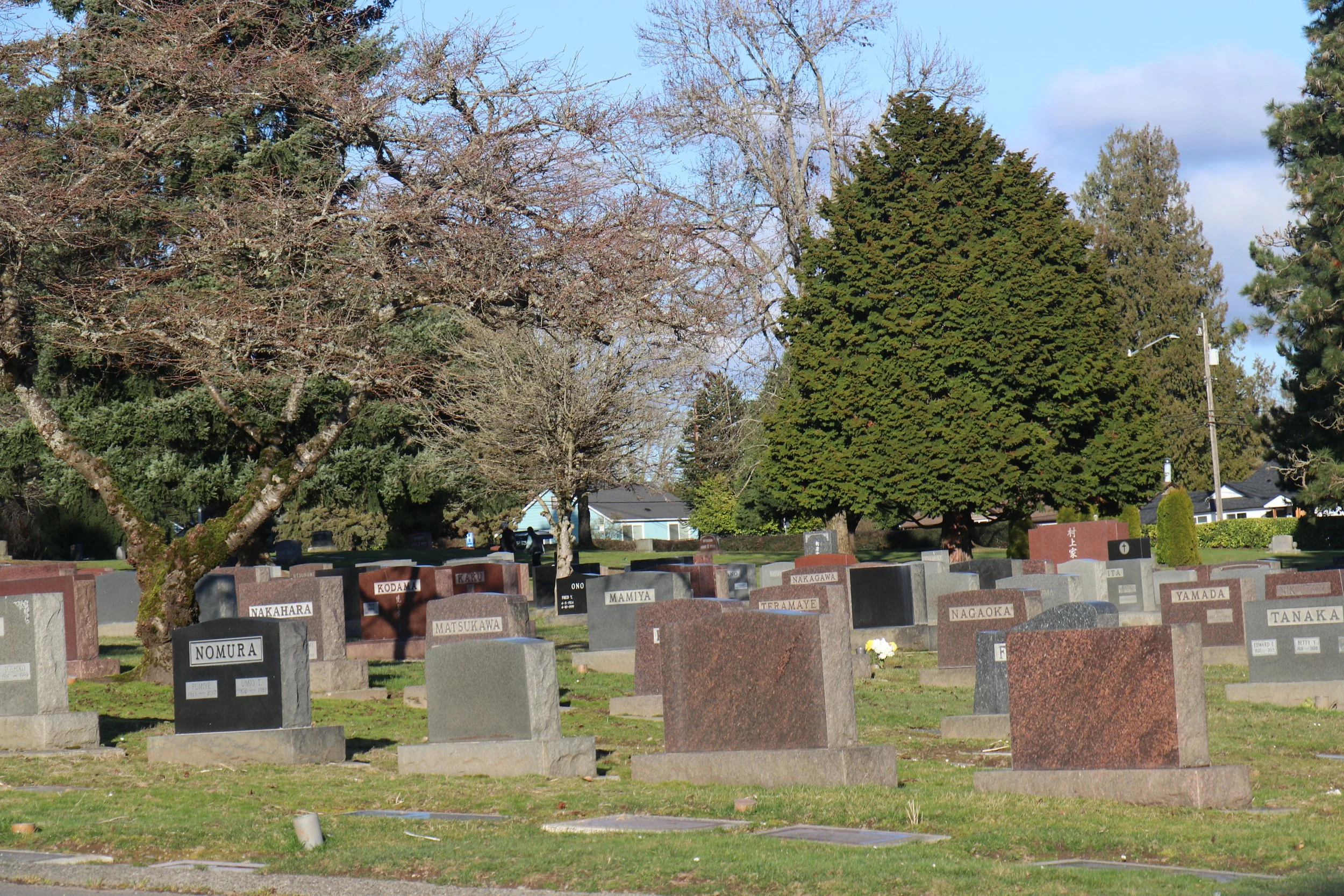
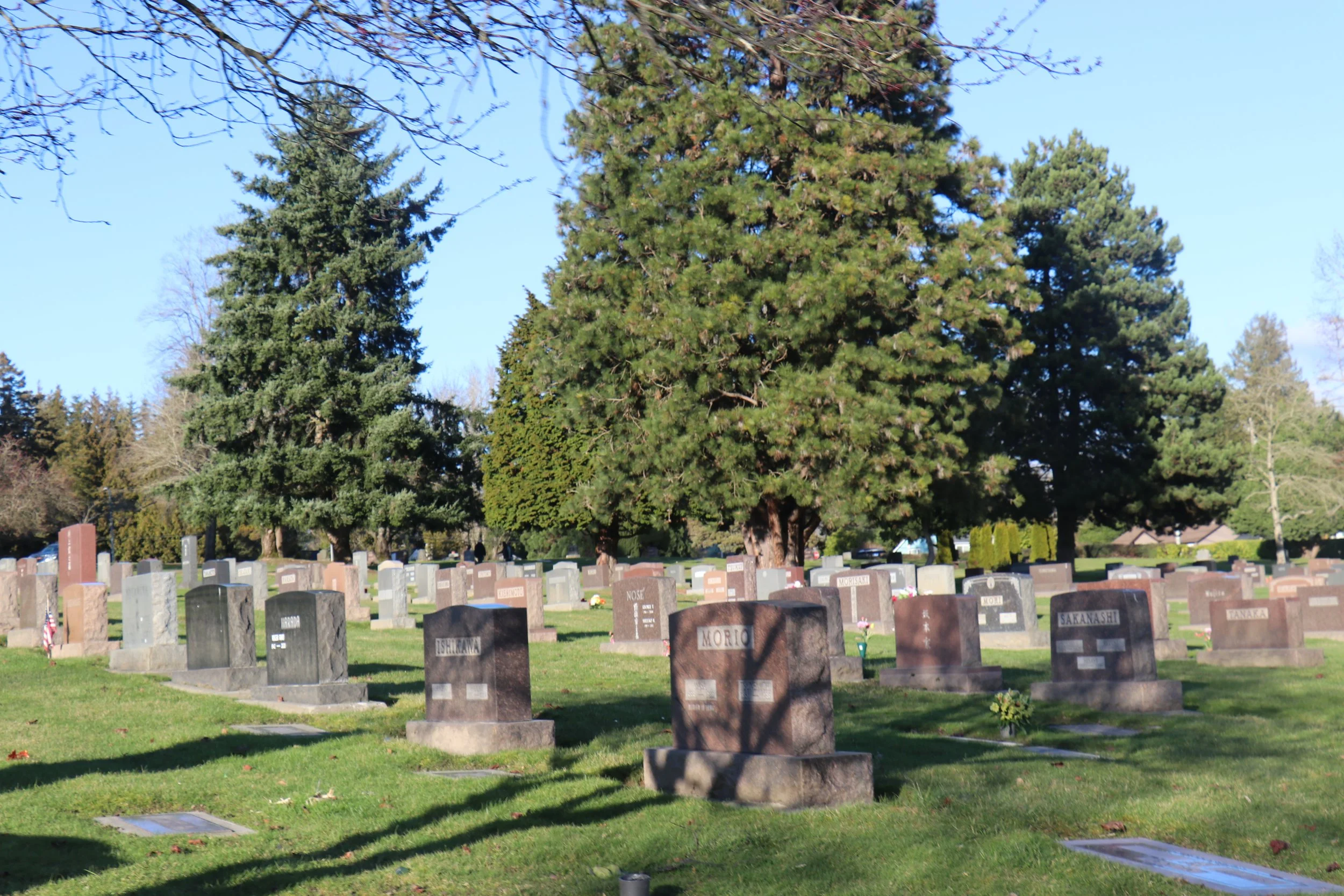
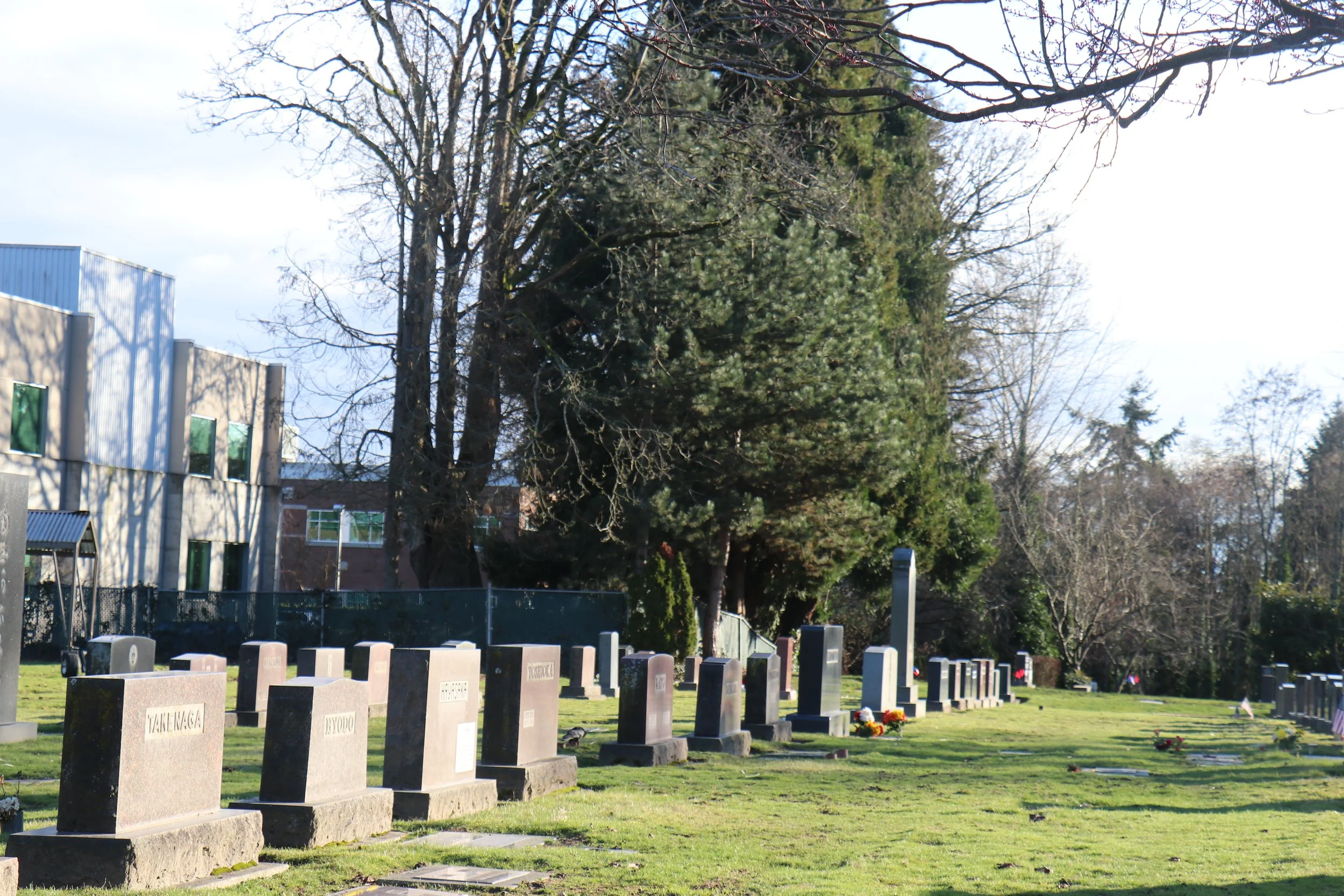
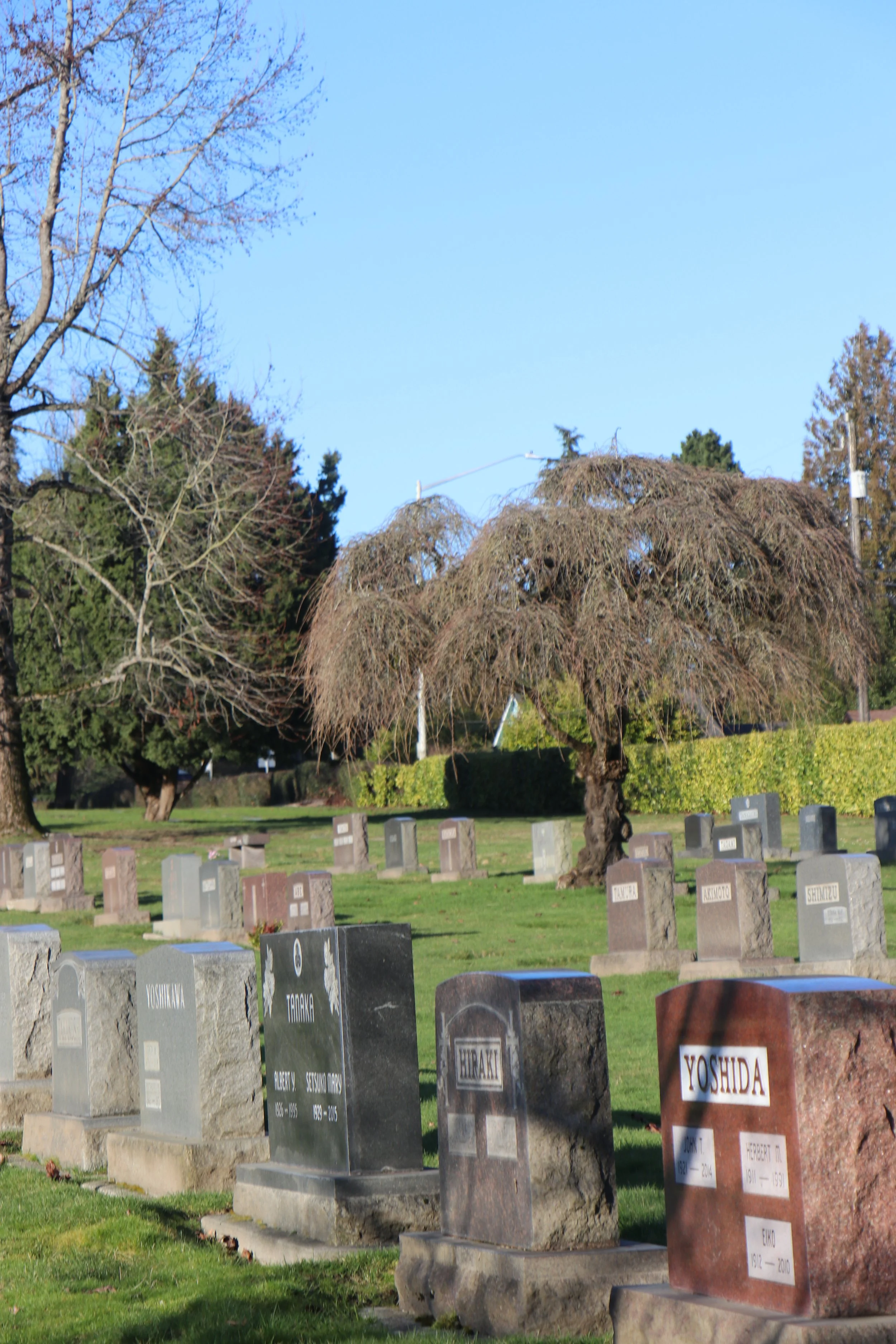
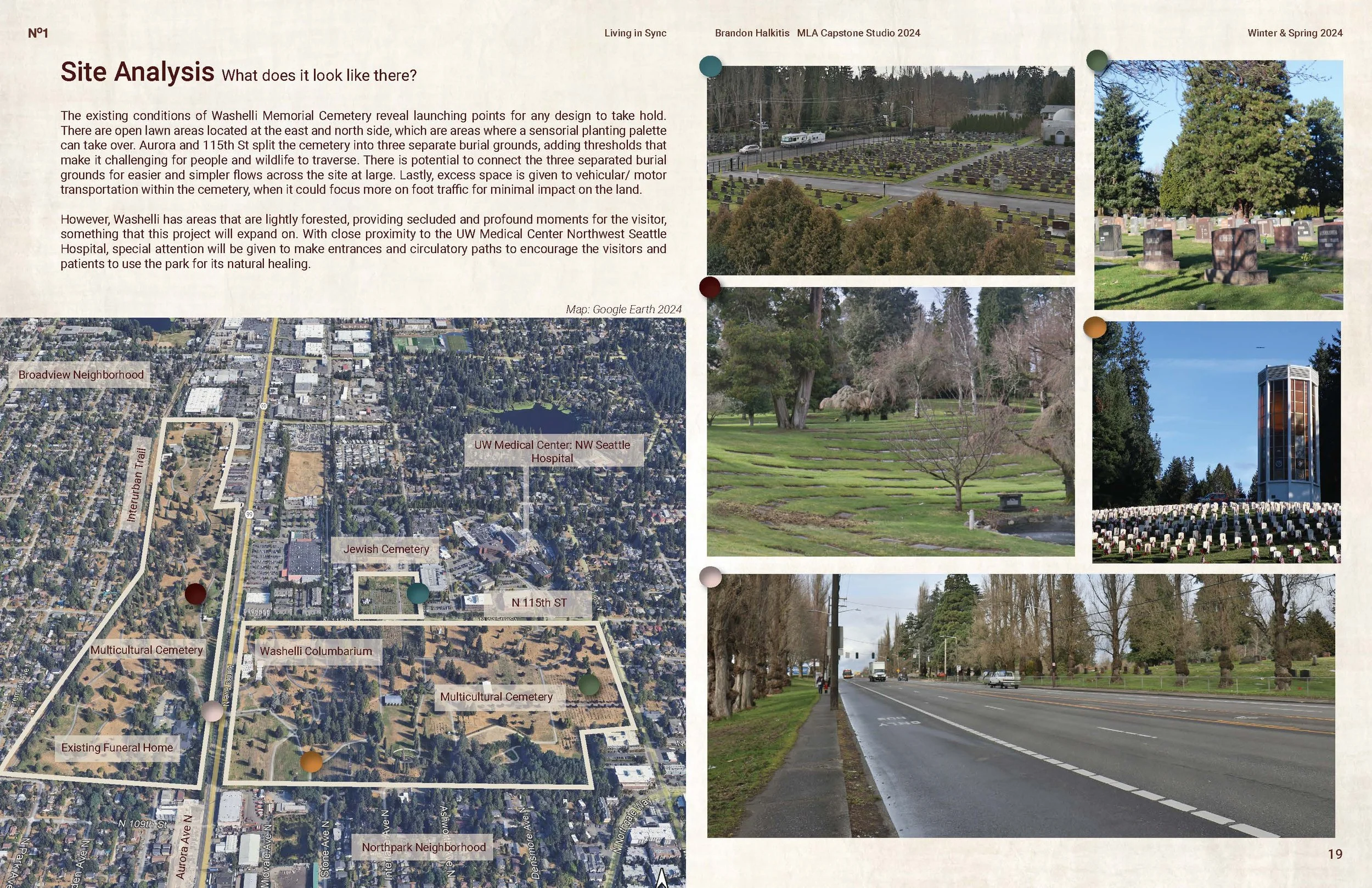
When we look closely at the green infrastructure of Seattle's northern neighborhoods, it is easy to see that we aren’t starting our ecological work from scratch; rather, we are standing on a foundation of incredible potential. The Northgate area—a bustling urban hub known to locals for its transit center and retail history—actually harbors pockets of vital, hidden green spaces. Places like Thornton Creek, Barton Woods, and Maple Leaf P-Patch play a significant role in ensuring the well-being of the surrounding community, providing clean, natural leisure spaces amidst the city's paved grid. Right at the heart of this network sits the Evergreen Washelli Memorial Park. Established in 1885, this prominent 144-acre landscape is the largest cemetery in Seattle. Currently, this historic space functions beautifully as a peaceful civic anchor, accommodating deeply necessary human traditions from traditional burials to quiet, everyday recreational activities like dog walking, biking, and hiking. It is a place already rich with memory and community presence, making it the perfect, stable launching point to introduce even higher-functioning, regenerative habitats to the neighborhood.
The opportunity before us is to take this existing sanctuary and weave it more deeply into the surrounding urban fabric, bridging the gap between human healing and ecological vitality. By acknowledging the unique placement of Washelli directly adjacent to the Northwest Hospital and UW Medical Center campus, we can re-envision the cemetery as an imaginative extension of healthcare itself—a place meant to heal the living while honoring those who have passed. By leaning into its historical roots, including its connection to the Coast Salish peoples and the Makah name "Washelli" (meaning westerly winds), the design honors the deeper heritage of the land while steering its future toward a resilient, biodiverse ecosystem. This transformation builds gently upon the cemetery's current role, introducing native flora restoration that supports urban wildlife corridors while maintaining the quiet, comforting sanctuary that Seattleites have relied on for generations.
Into the Framework: The Architecture of an Ecosystem
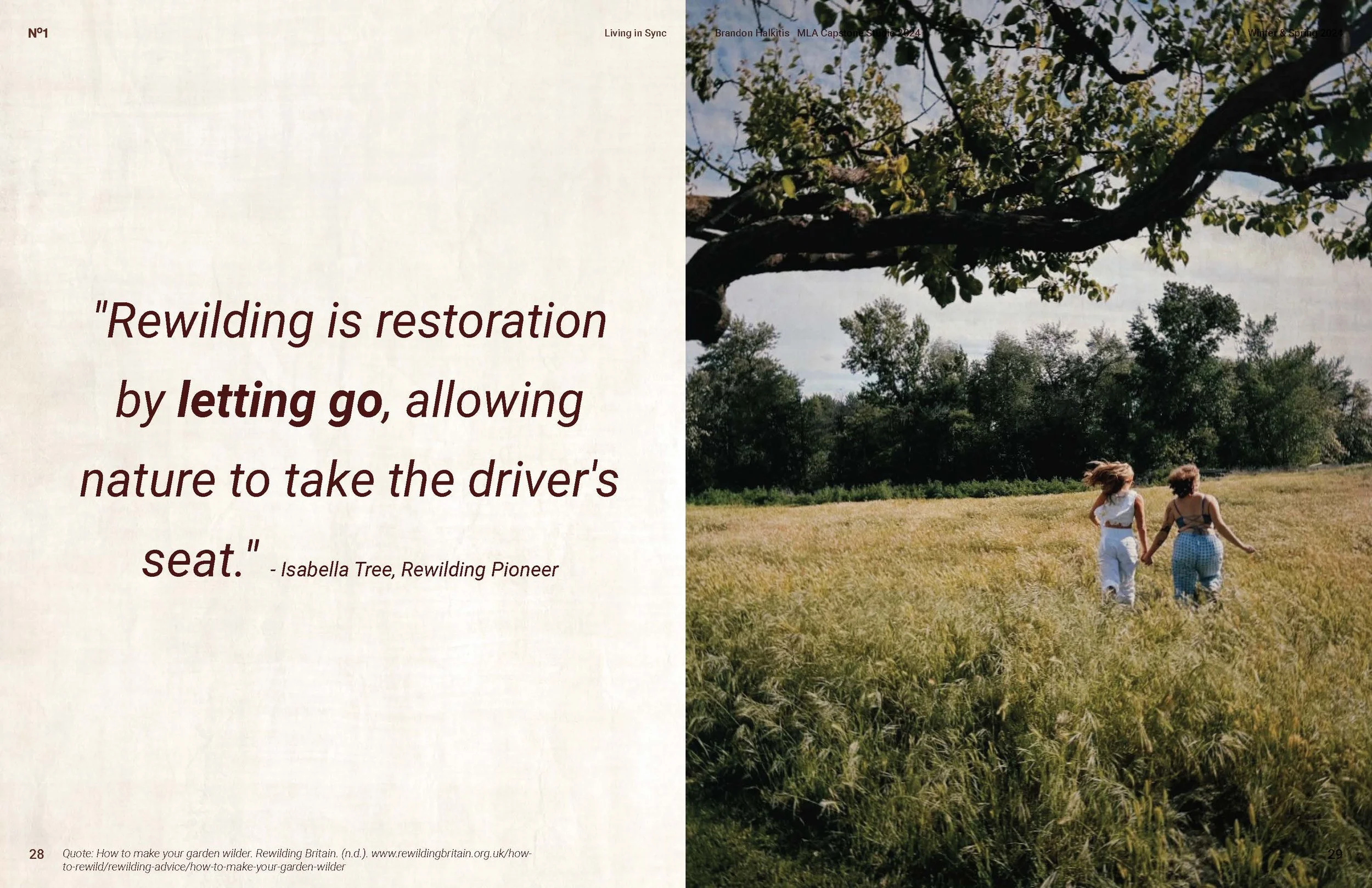
As we move deeper into the physical layout of the project, the focus shifts from a high-level concept to a concrete design reality. Rewilding is fundamentally defined here as a conscious act of restoration accomplished by letting go—intentionally stepping back to allow nature to take the driver’s seat. At Evergreen Washelli, this philosophy translates into a masterful spatial reorganization divided into massive, highly functional ecological zones. The overwhelming majority of the site—83% of the space, spanning 119 acres—is reclaimed and dedicated entirely to lowland forest ecosystems that act as protected, wild habitat cores. Flanking these forests, 16% of the land (approximately 25 acres) is transformed into vibrant wildflower pollinator gardens and native grass mixes. The final 1% is reserved for the precise, minimalist path networks that weave everything together, demonstrating how human infrastructure can gently step aside to let a thriving ecosystem dominate.
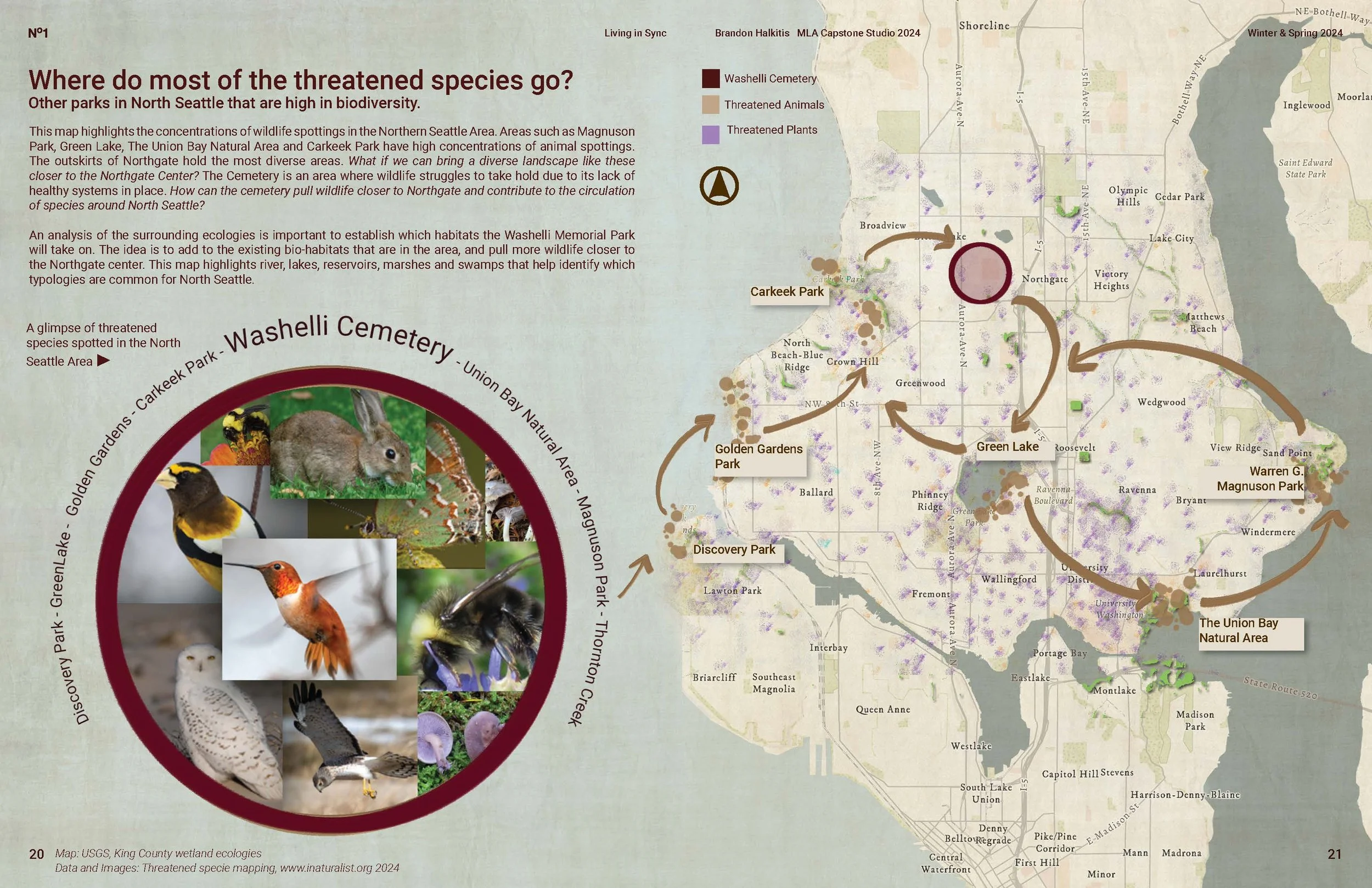
A map showing that threatened species are concentrated mostly in Seattle largest parks. The Washelli can join his community of spaces meant people and animals to coexist.
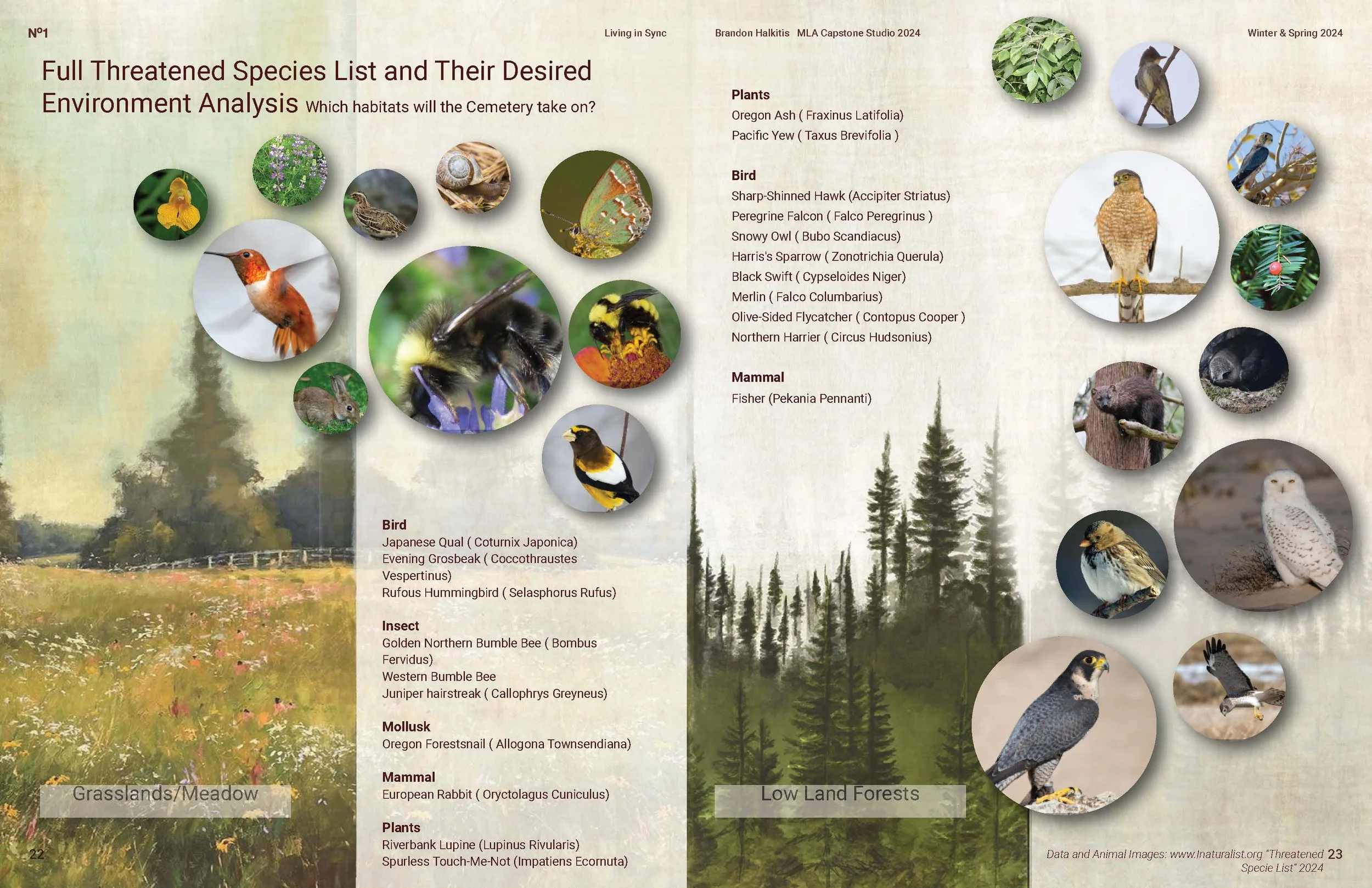
A diagram showing the types of species that currently call Grassland Meadows and low Land Forests home.
The Design Move: Meadow Nodes and Topographical Berms
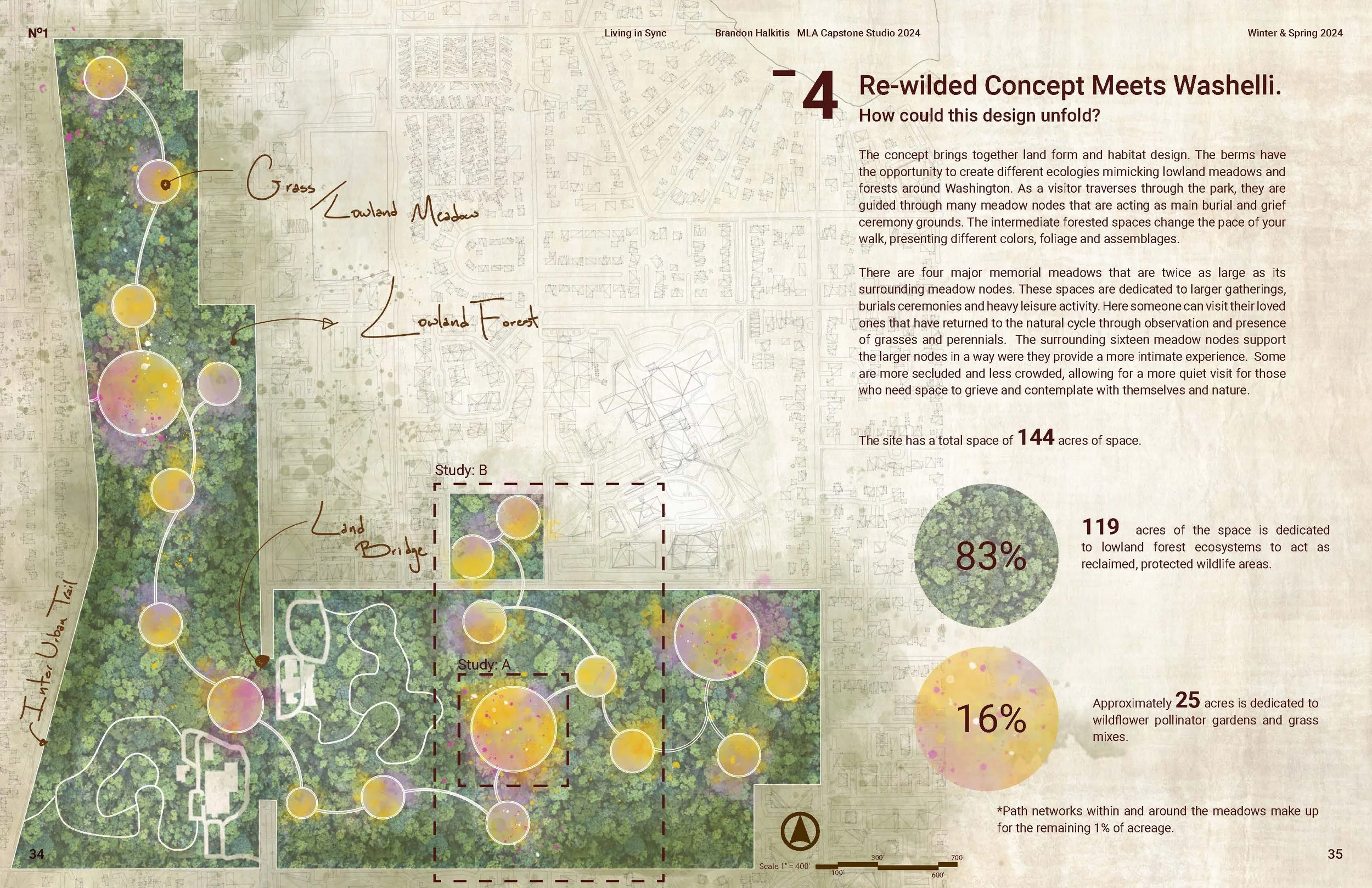
Site plan highlighting the percentages of grassland meadows and low land forests the Washelli cemetery will have in this study.
A design is only as successful as its accessibility, and the project carefully maps out exactly how different communities will interface with these rewilded spaces. Rather than keeping the cemetery isolated, the design identifies and activates high-traffic pedestrian and vehicular thresholds surrounding Washelli, turning them into welcoming community gateways:
The Civic & Ceremonial Edges: Major entry points near the existing historic buildings, the Funeral Home, and the Columbarium are prioritized. Specifically, the node at Aurora Ave N and N 115th St is designed to welcome all modes of transportation, acting as a vivid, green front door that instantly transitions commuters from a busy transit corridor into a natural world.
The Healthcare Integration (The Healing Node): In a brilliant contextual move, a key eastern entrance is established directly adjacent to the Northwest Hospital and UW Medical Center campus. This "Healing Node" is designed with hospital patients, visitors, and medical staff in mind, providing a direct, accessible escape for lunch breaks or quiet decompression. The cemetery is reframed here as a literal extension of the healthcare environment—a place where Mother Earth cares for both human recovery and ecological health side-by-side.
The Commuter & Trail Connection: On the western boundary, the design seamlessly integrates with the Interurban Trail—a popular north-south, off-road bike and pedestrian path. By creating inviting trail-side entrances, the design captures curious commuters, encouraging cyclists and walkers to take a restorative detour through the wild meadow loops.
The final reward of these connectivity moves is a beautifully articulated pedestrian journey. Whether someone is entering from the hospital for a brief walk or traversing the entire length of the cemetery, the landscape rewards them with a sense of wonder. A complete walk from the UW Medical Center entrance to the northernmost gateway extends across a gentle, 2.7-mile trail network.
Because the paths twist organically around the berms and sink into the lowland forests, the view is never static. Visitors are rewarded with an unfolding sequence of hidden meadows, shifting light, and wildlife sightings. This design ensures that the first feeling a person experiences when entering Washelli is not one of somber stagnation, but the refreshing, awe-inspiring sensation of stepping cleanly into a "wild," living, and breathing natural world.Our Cemeteries.
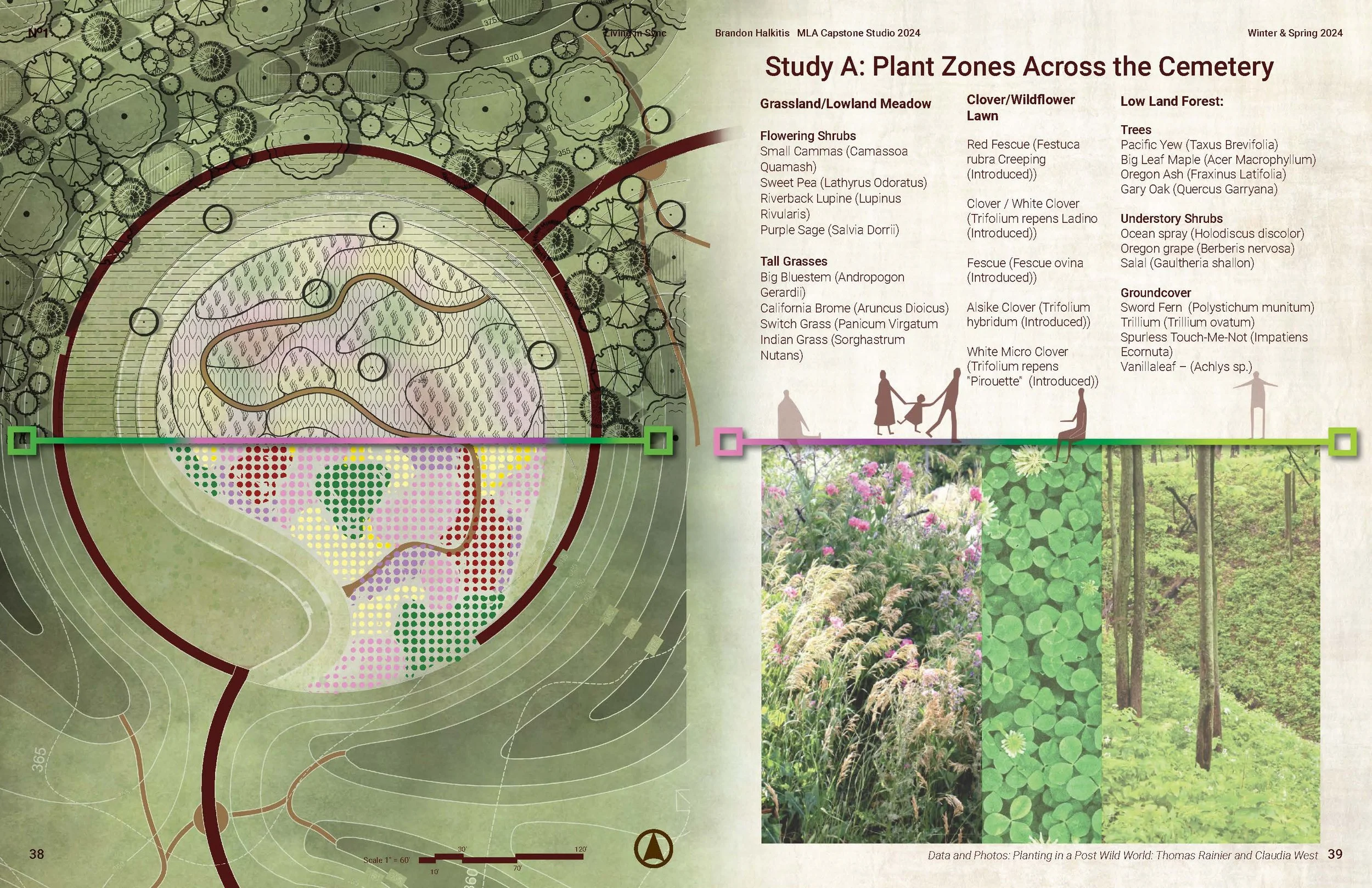
A planting plan that shows how the lowland forests hug the native meadow nodes with Pacific Northwest plant trees, shrubs and groundcovers.
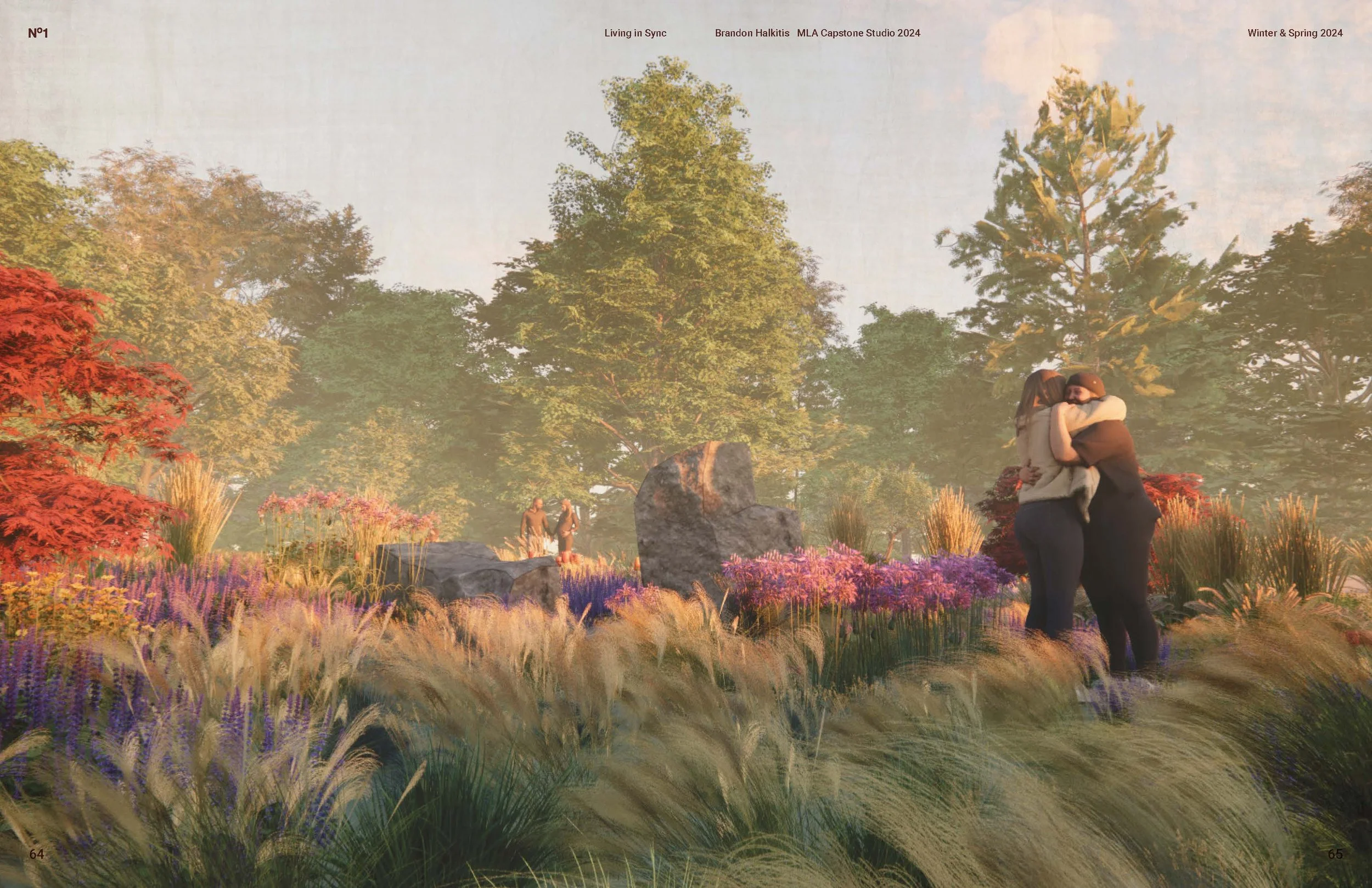
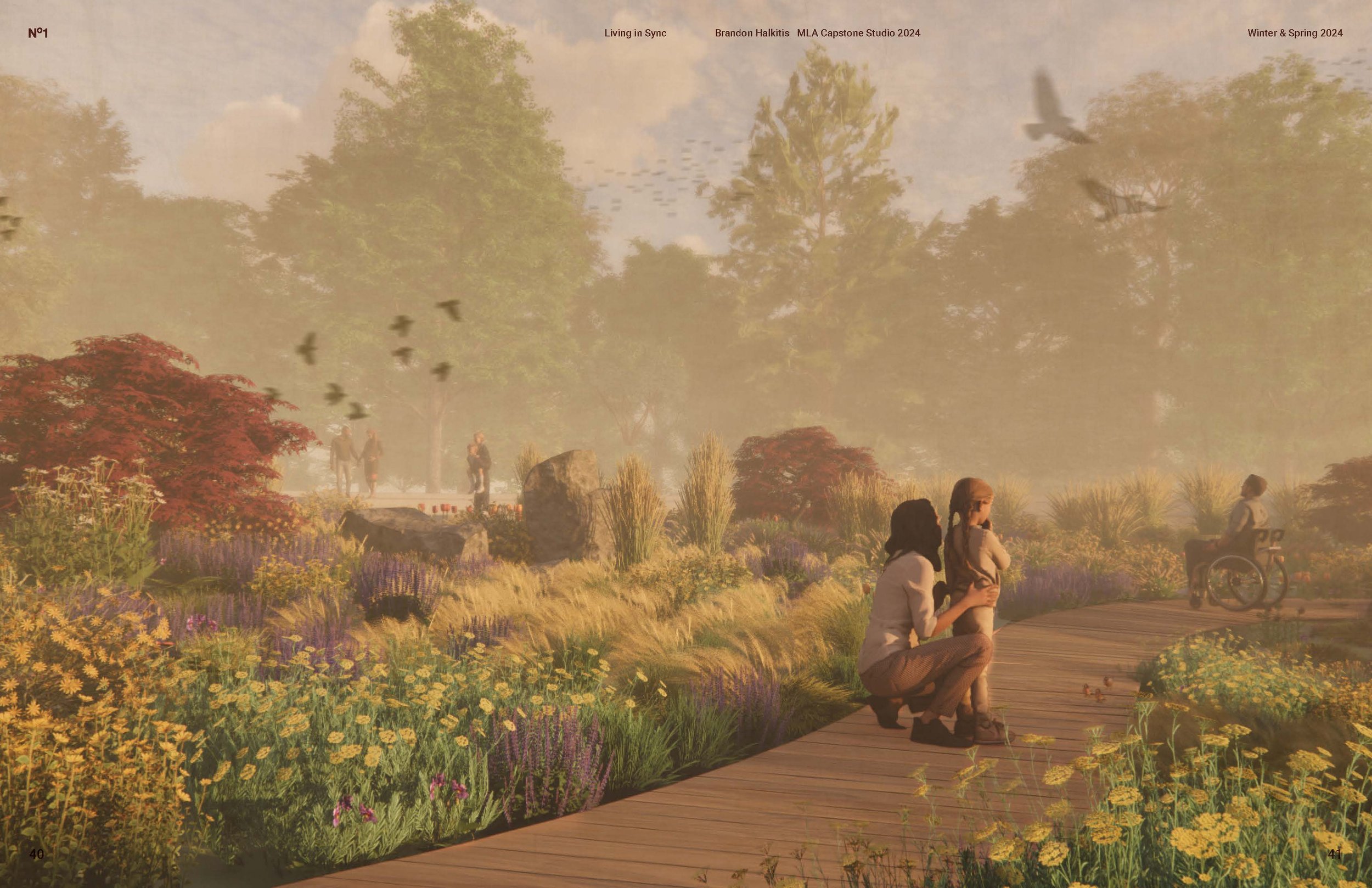
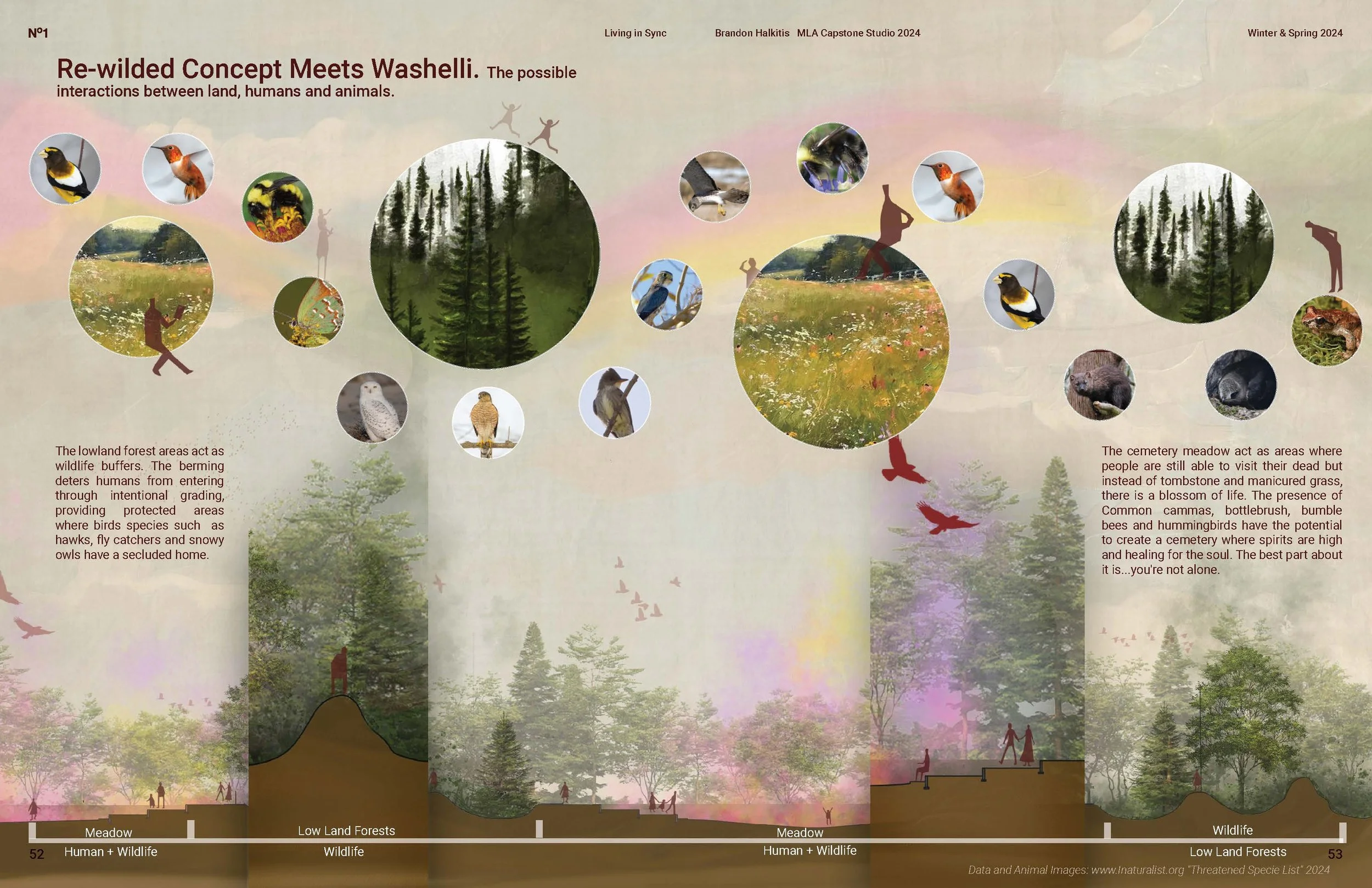
A section showing how the different animal and plant species will change as one traverses between a cemetery full of nodes and forests.
The reward of this specific spatial strategy is a profound shift in the human experience of the landscape. The intermediate forested spaces between the meadows are designed to intentionally break the pace of your walk. As you move from an open, sunlit meadow into the dense canopy of a lowland forest, the abrupt changes in color, foliage texture, and light assemblages force you to slow down.
This creates a sense of immersive enclosure and separation from the surrounding city. By using the natural growth of trees and the physical elevation of the berms, the design effectively blocks out the visual and auditory noise of the urban grid. The reward is a sanctuary that feels entirely removed from the bustle of Seattle, replacing urban static with a sensory-rich, calming environment where the living can find true peace.
The 50-Year Horizon: How the Dead Build Up the Living Land
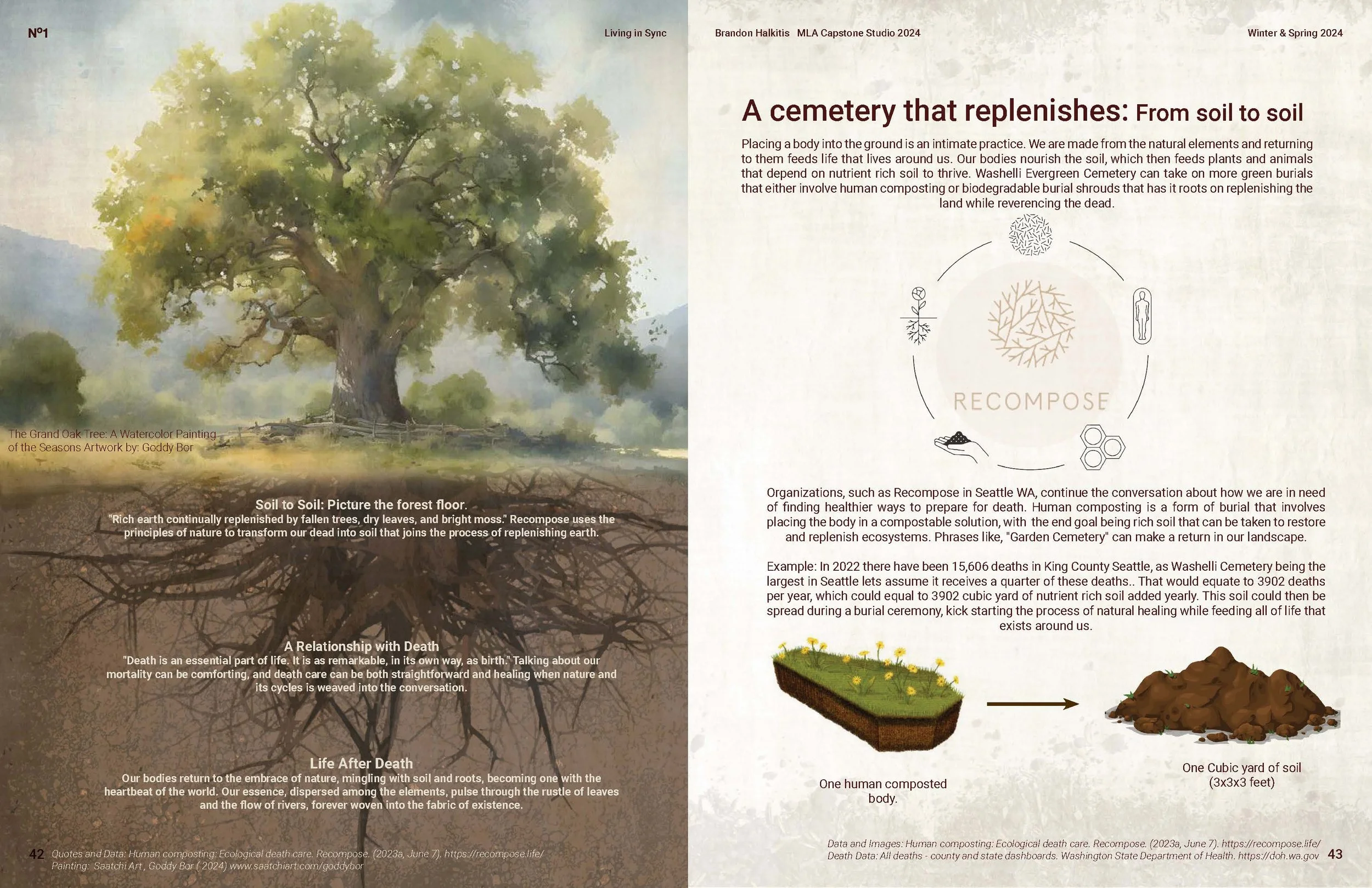
This return is not merely symbolic; it is a tangible, generative architectural force that will reshape the physical landscape of Washelli over the next half-century. Imagine the forest floor of a grand oak grove, rich with the dark, nutrient-dense soil built from fallen trees, dry leaves, and bright moss. By introducing human composting to the cemetery, we kick-start this exact process of natural healing on a massive scale. Data shows that in 2022 alone, there were 15,606 deaths in King County, Seattle. Because Evergreen Washelli is the largest cemetery in the city, let’s assume it receives just a quarter of these individuals. That single choice would yield approximately 3,902 deaths per year returning to the earth, transforming into 3,902 cubic yards of rich, living soil added back to the landscape annually.
To visualize the impact of a single human life in this system, consider that one human-composted body yields exactly one cubic yard of soil, which equates to a physical block measuring 3x3x3 feet.
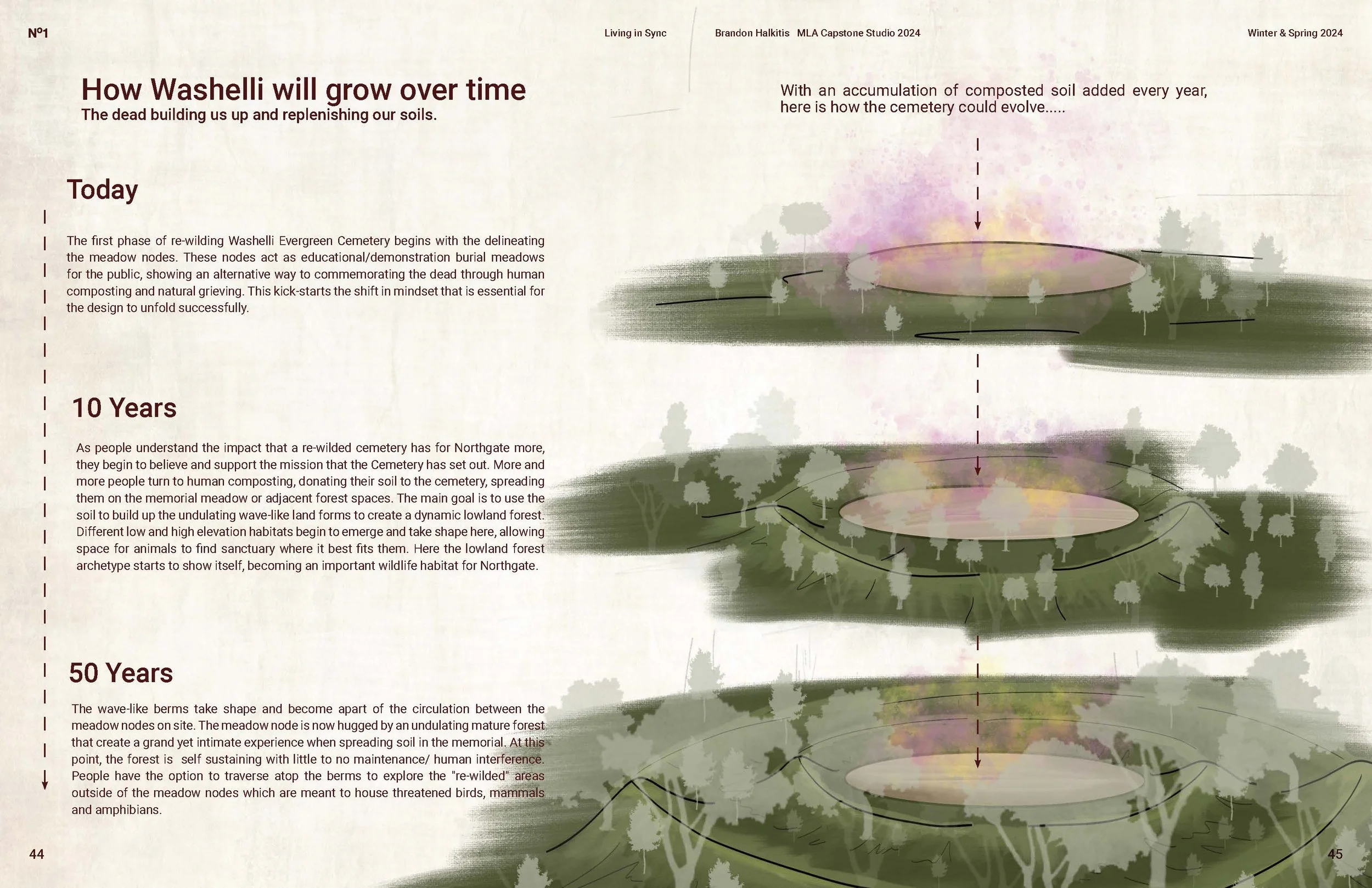
Over a timeline of 10 to 50 years, this steady accumulation of composted soil becomes the literal foundation of our design. This sacred soil will be used to build up the undulating, wave-like earthwork berms that define the landscape. The dead are quite literally building up the living land, raising the terrain to create a dynamic lowland forest. As the years progress, different microclimates and varied elevations take shape, allowing space for native animals to find an uninterrupted sanctuary. The architecture of the cemetery becomes an evolving testament to those who passed, with their physical legacy providing the exact blocks of earth needed for a wild canopy to rise.
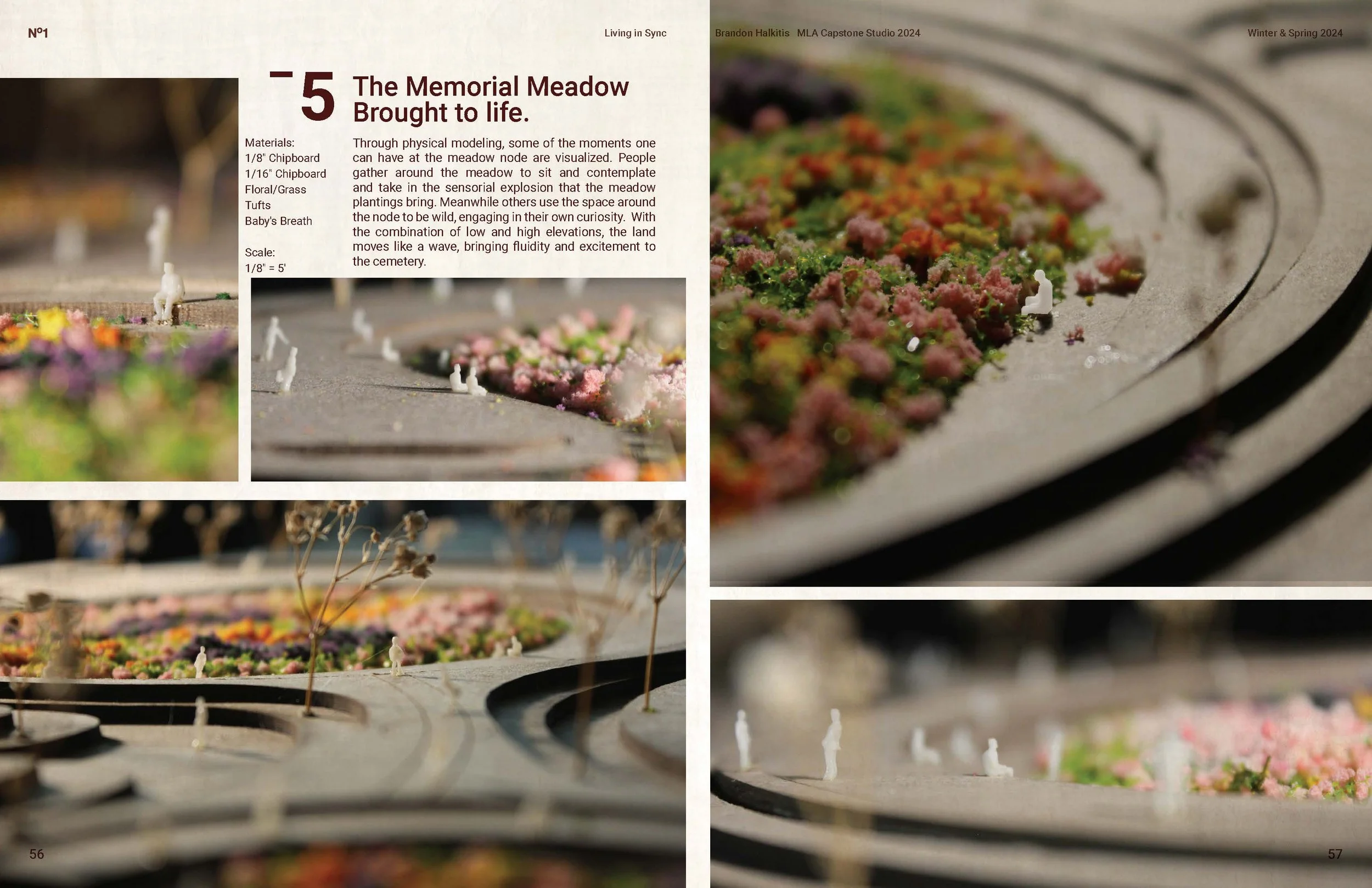
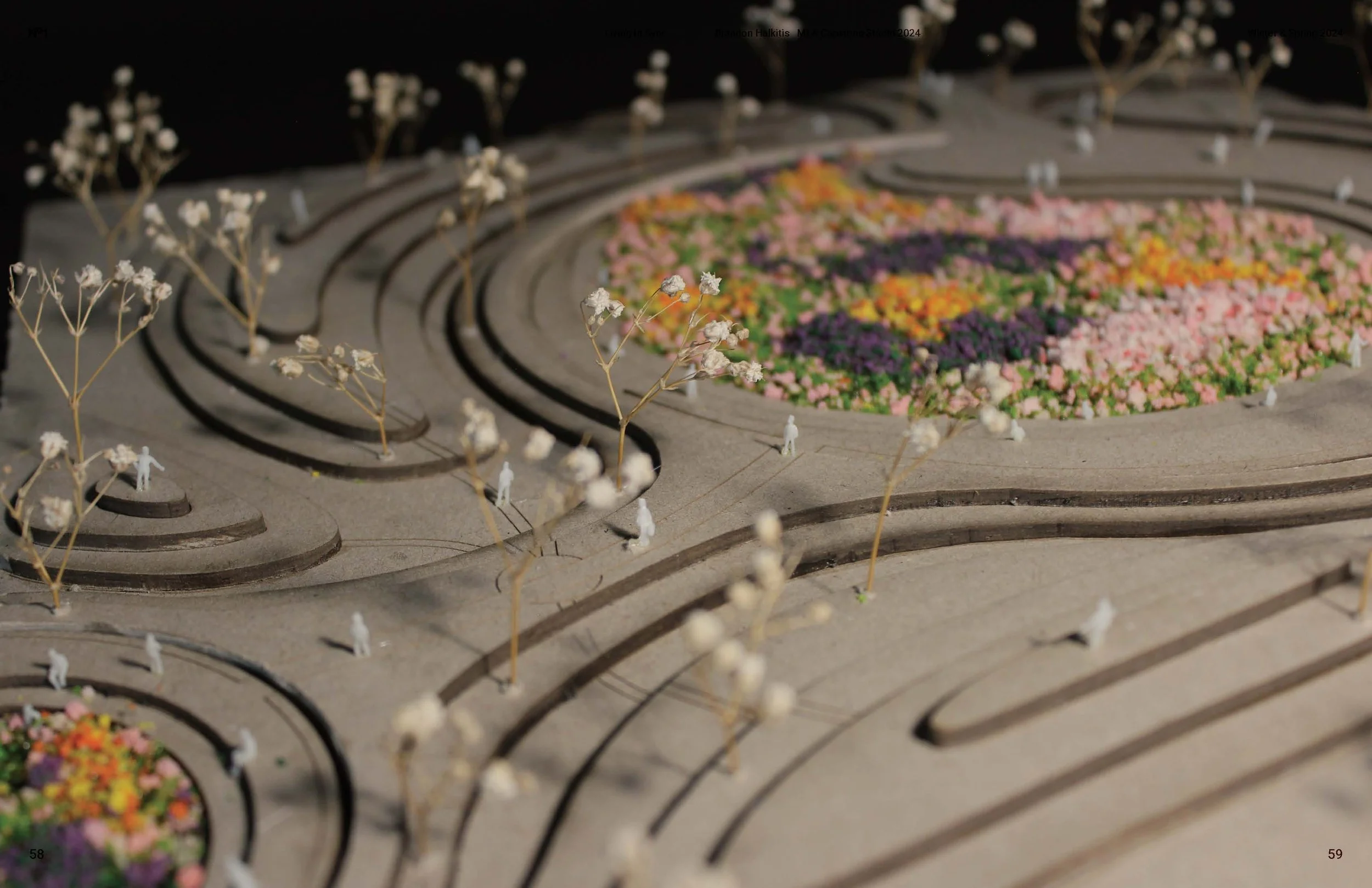
The core architectural intervention of this project relies on a brilliant design move: the creation of distinct "Meadow Nodes" interconnected by sculptural earthwork. By bringing together landform and habitat design, the project utilizes strategic earthen berms to shape the physical terrain. These berms serve a dual purpose: they create varied microclimates that mimic the diverse lowland meadows and forests found across Washington, while structurally defining the boundaries of different ecological rooms.
As a visitor traverses the landscape, these berms guide them through four major, expansive memorial meadows. These primary nodes are twice the size of their surroundings, designed specifically for larger community gatherings, burial ceremonies, and active leisure. Branching off from these central hubs are sixteen smaller, highly secluded meadow nodes. These intimate pockets support smaller gatherings, offering a quiet, deeply private, and less crowded experience for individuals who need space to contemplate, process grief, and connect seamlessly with the natural world.
The Ancient Pulse: Re-enchanting the Cycle of Life
The idea of living in sync with the earth is not a novel design trend; it is an ancient thought that has pulsed through human consciousness for centuries. For generations, our ancestors understood what we are only just beginning to remember: that we are not separate from nature, but entirely born of it. By transforming Evergreen Washelli into a rewilded sanctuary, we are stepping backward into this timeless wisdom. Death ceases to be a sterile, hidden end and becomes, once again, a profound celebration of continuity. It is an acknowledgment that when a life ends, its energy does not vanish—it is simply redistributed into the grand, living tapestry of the world.
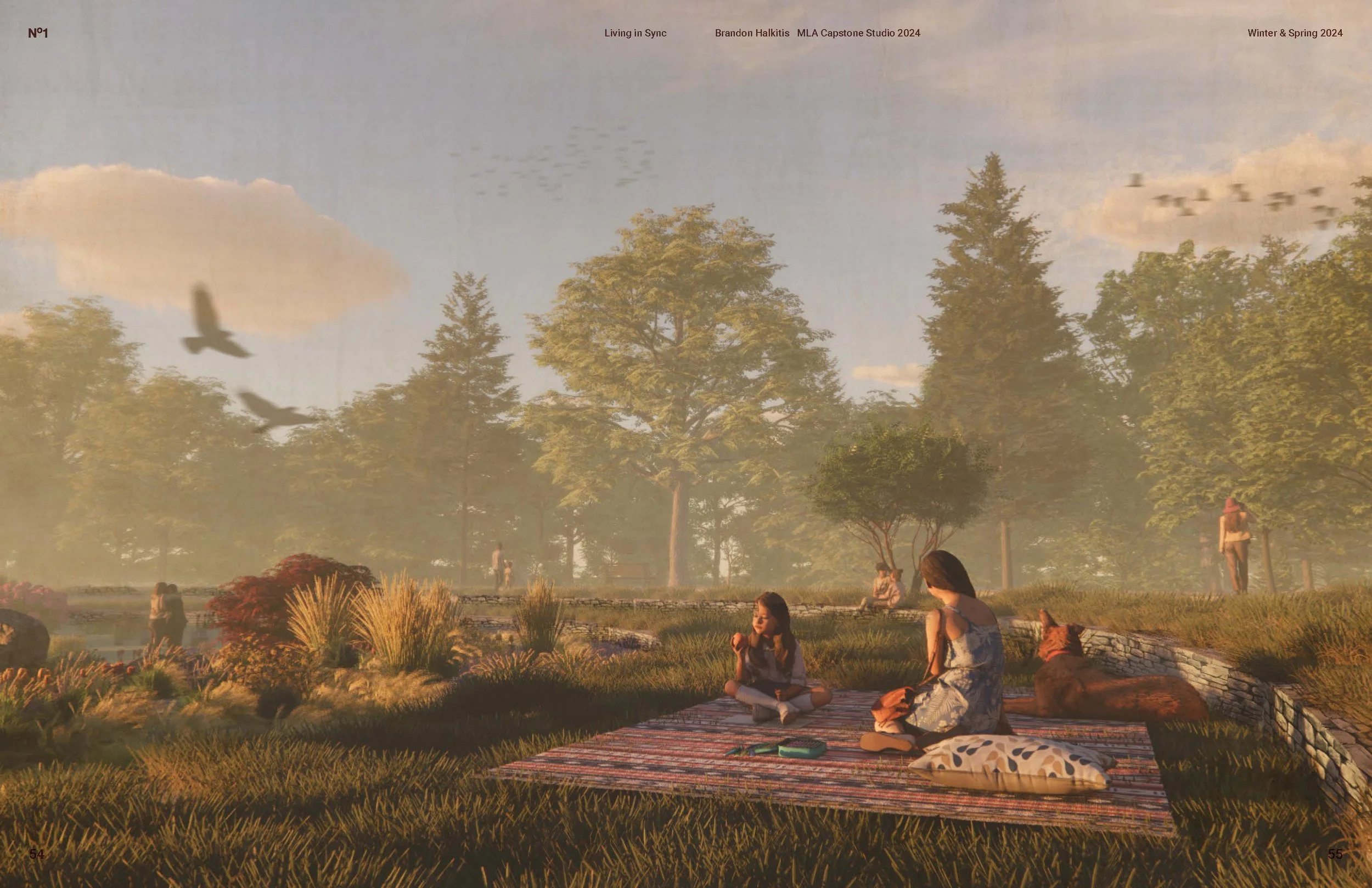
Imagine standing within one of the quiet, sun-dappled meadow nodes you have built with your own hands. You are there to return someone you love to the earth, gently spreading the nutrient-rich, living soil that their body has become. In that moment of acute grief, the heavy silence of a traditional cemetery is replaced by the rustle of native ferns and the song of urban birds. As you release the final handful of earth, a butterfly—attracted to the very wildflower pollinator mixes planted to heal this ground—flutters down and perches nearby. It rests for a fleeting moment, a quiet witness to your goodbye, before catching the westerly winds to fly upward into the rising canopy of the lowland forest.
This is the ultimate reward of a rewilded world. It teaches us that grief does not have to be an isolated, lonely corridor. When we design our civic spaces to let nature back through the door, we are reminded of a beautiful, grounding truth: in life, in death, and in the quiet spaces in between, you are never truly alone.