Books for a Butterfly
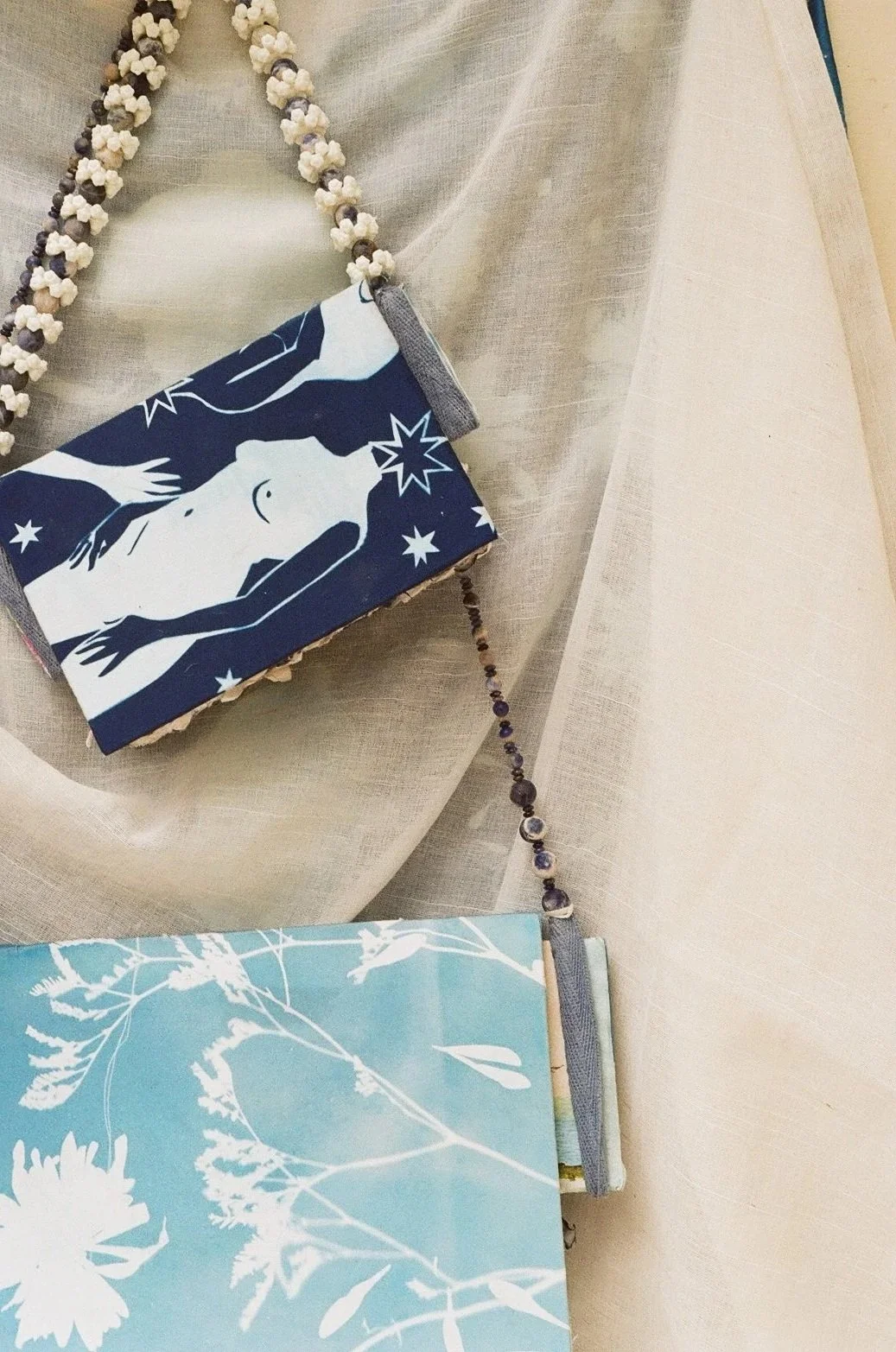
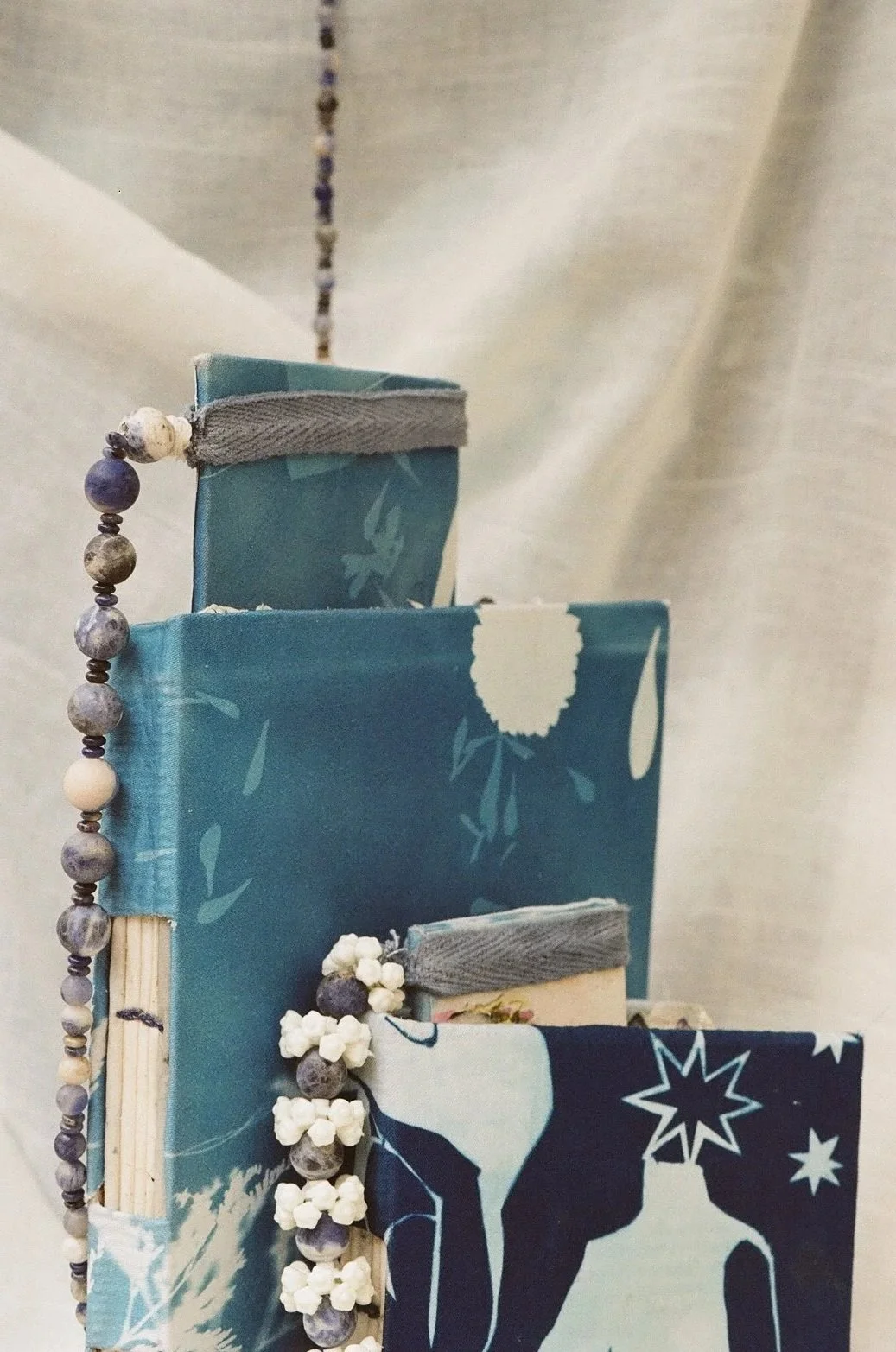
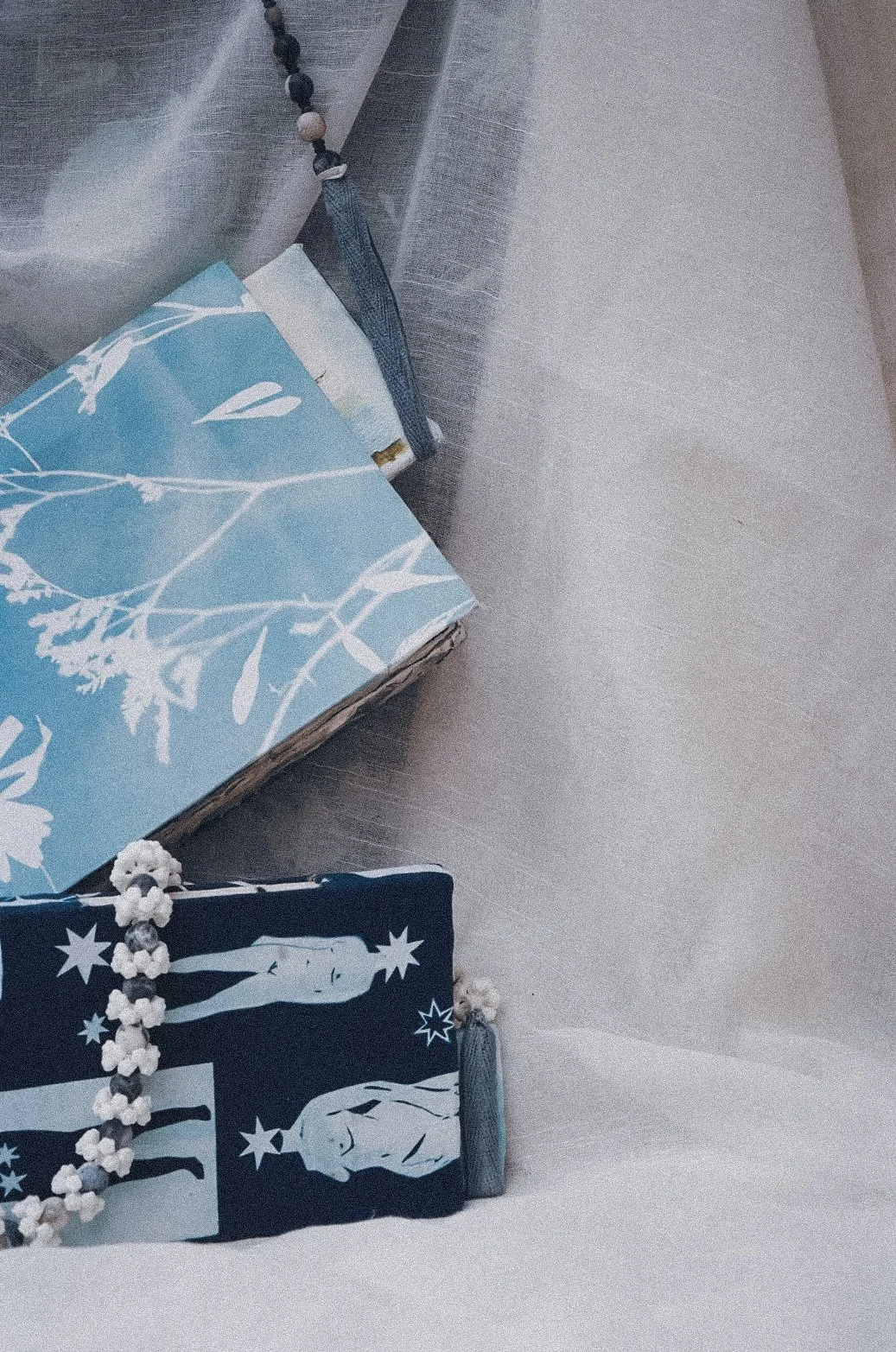
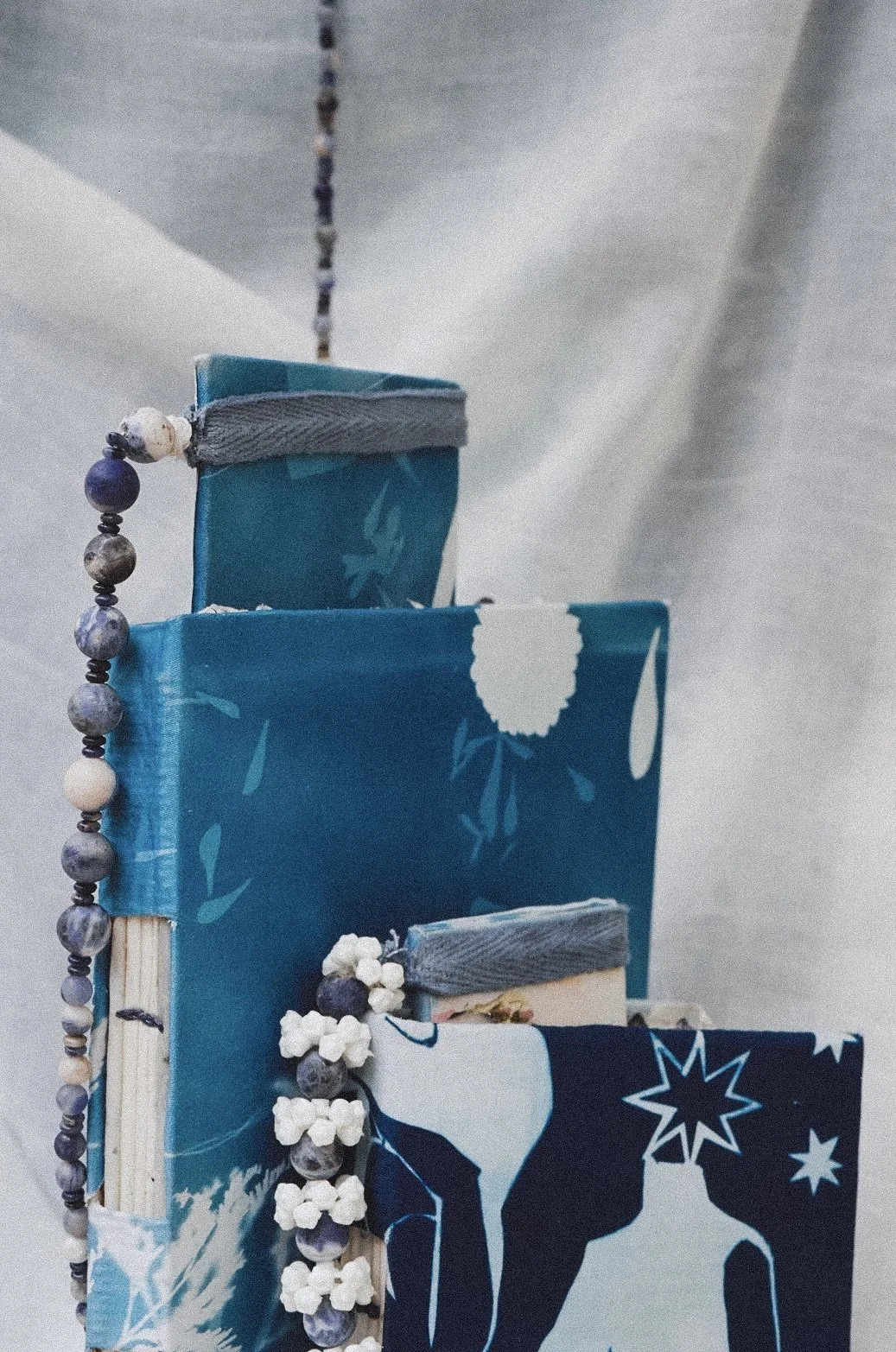
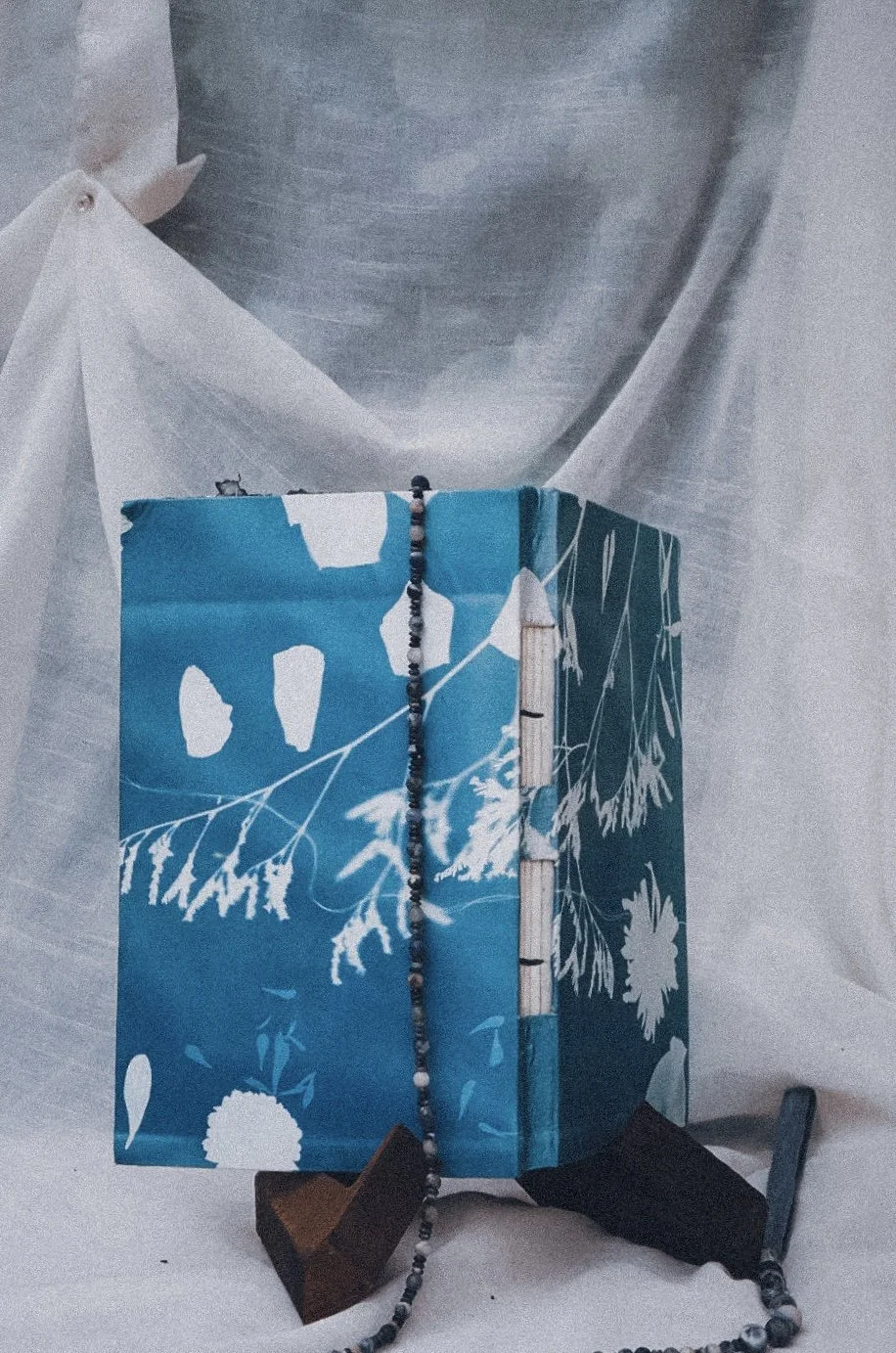
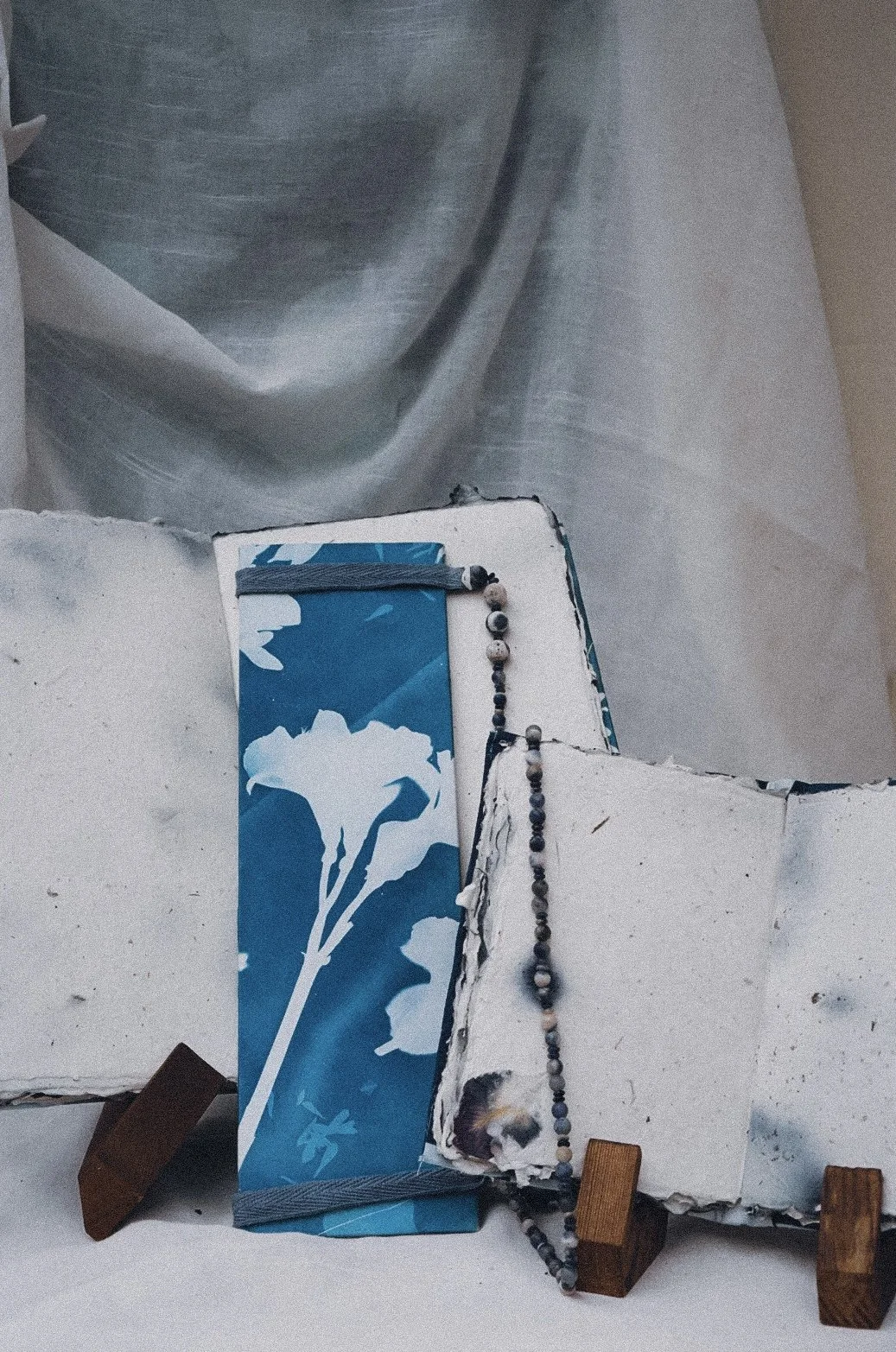
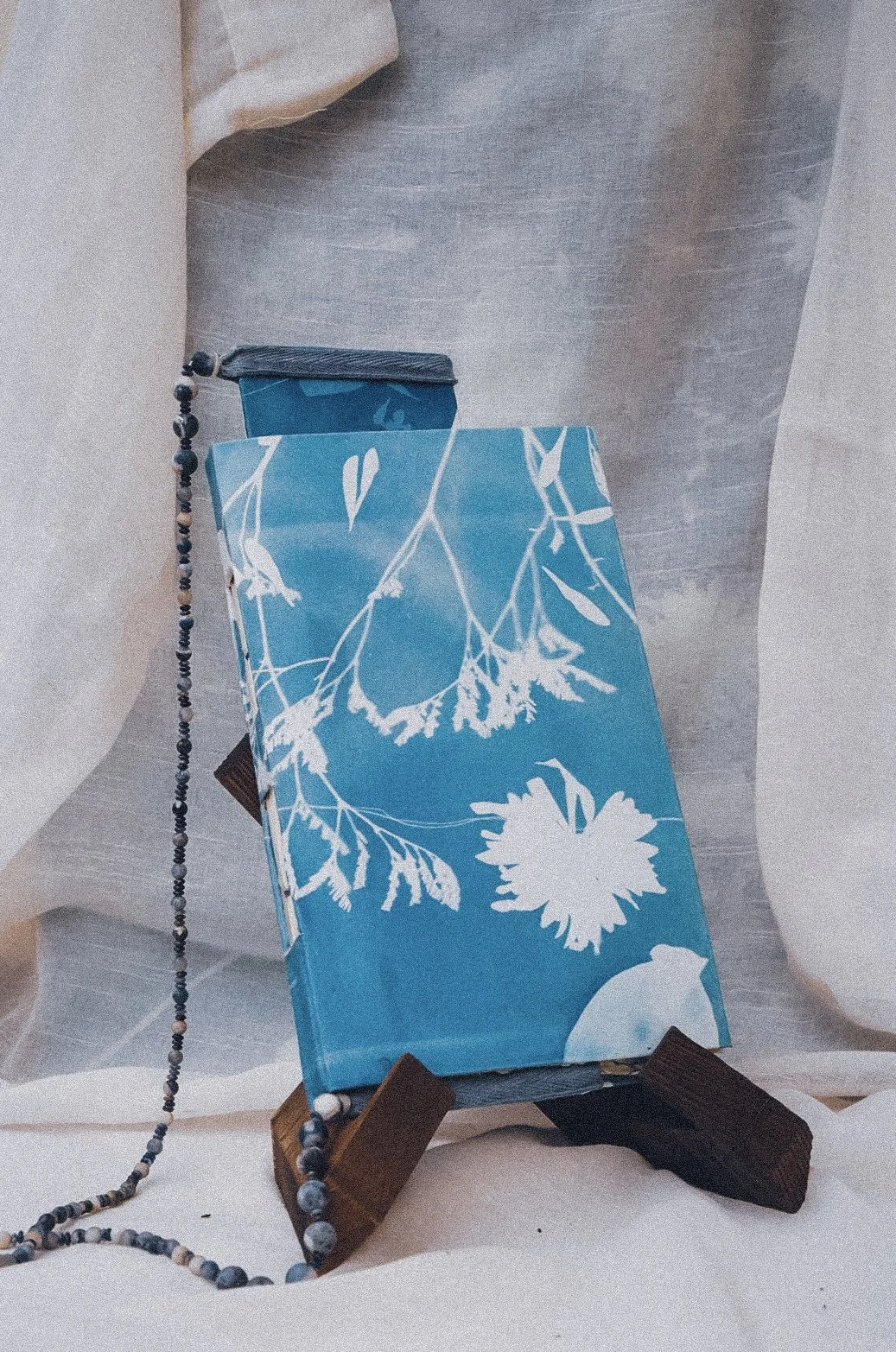
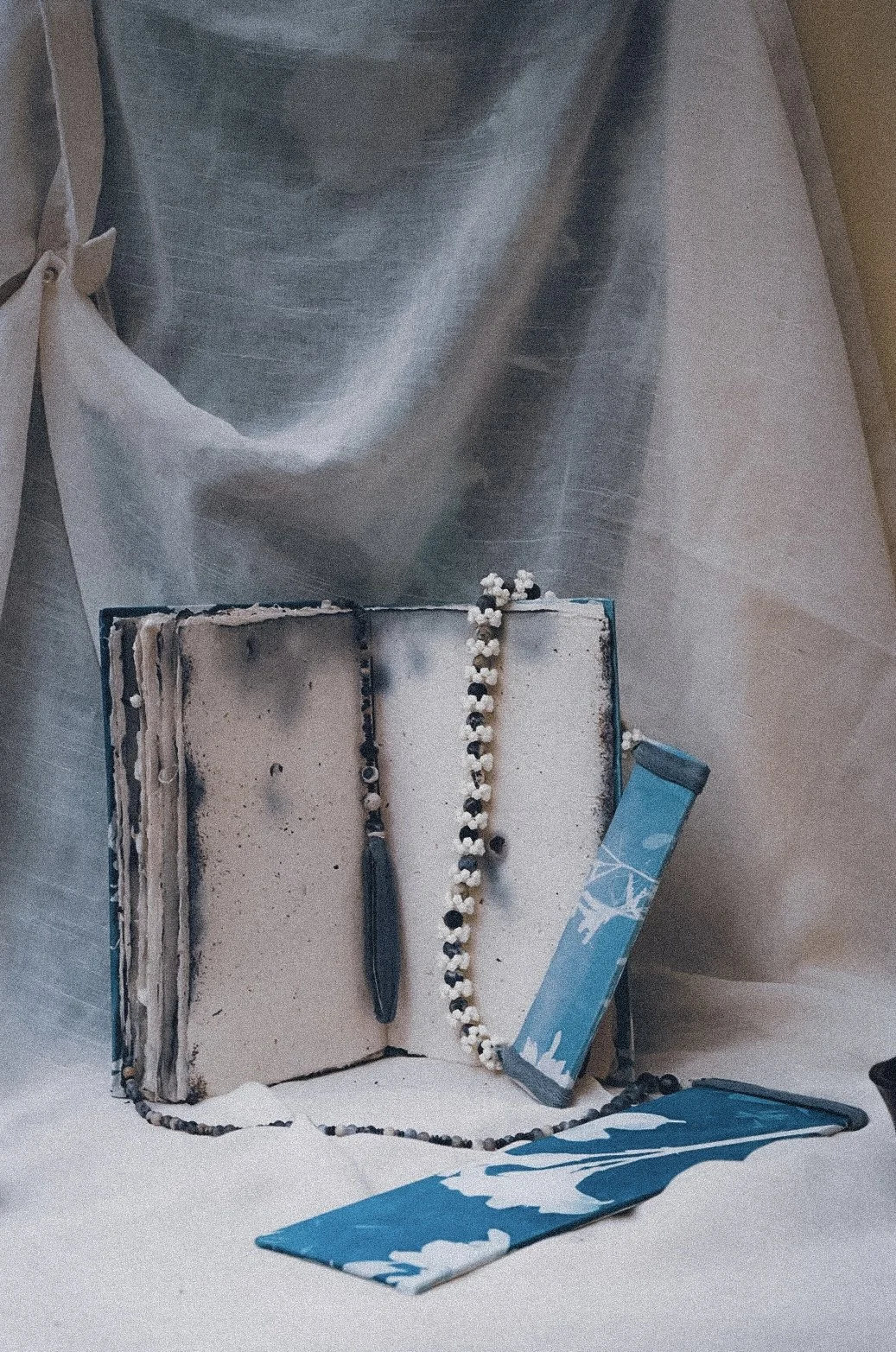
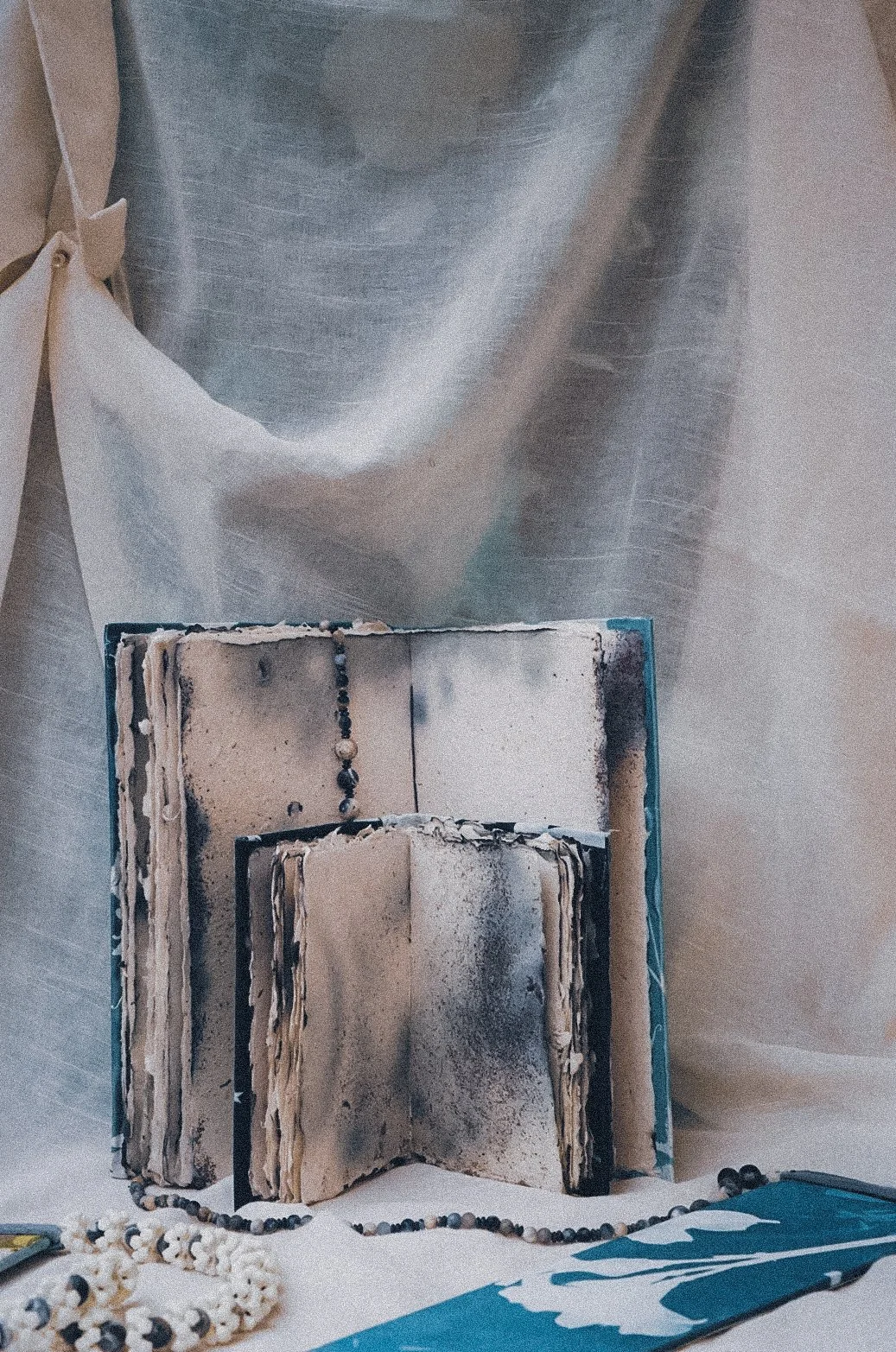
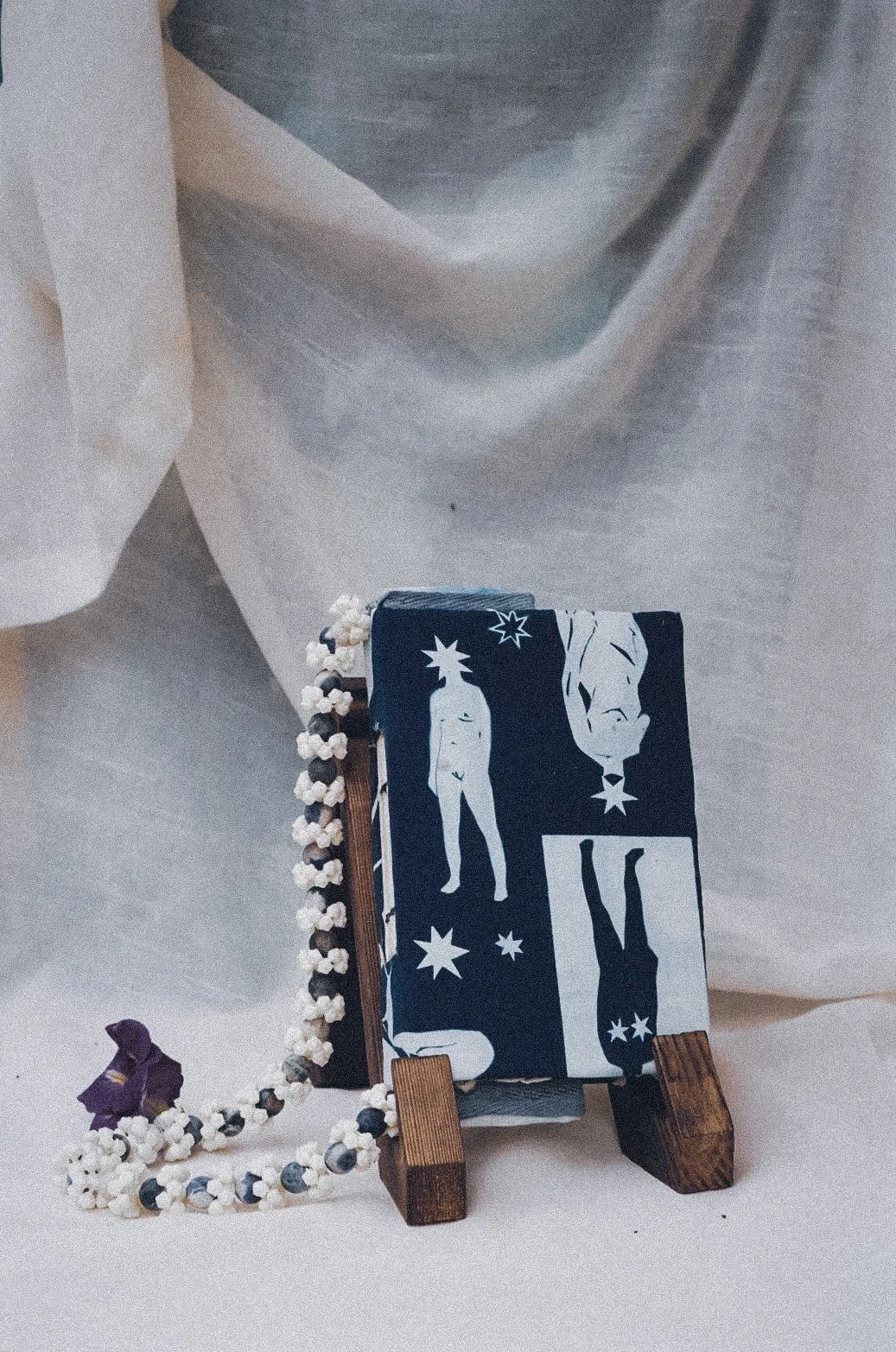
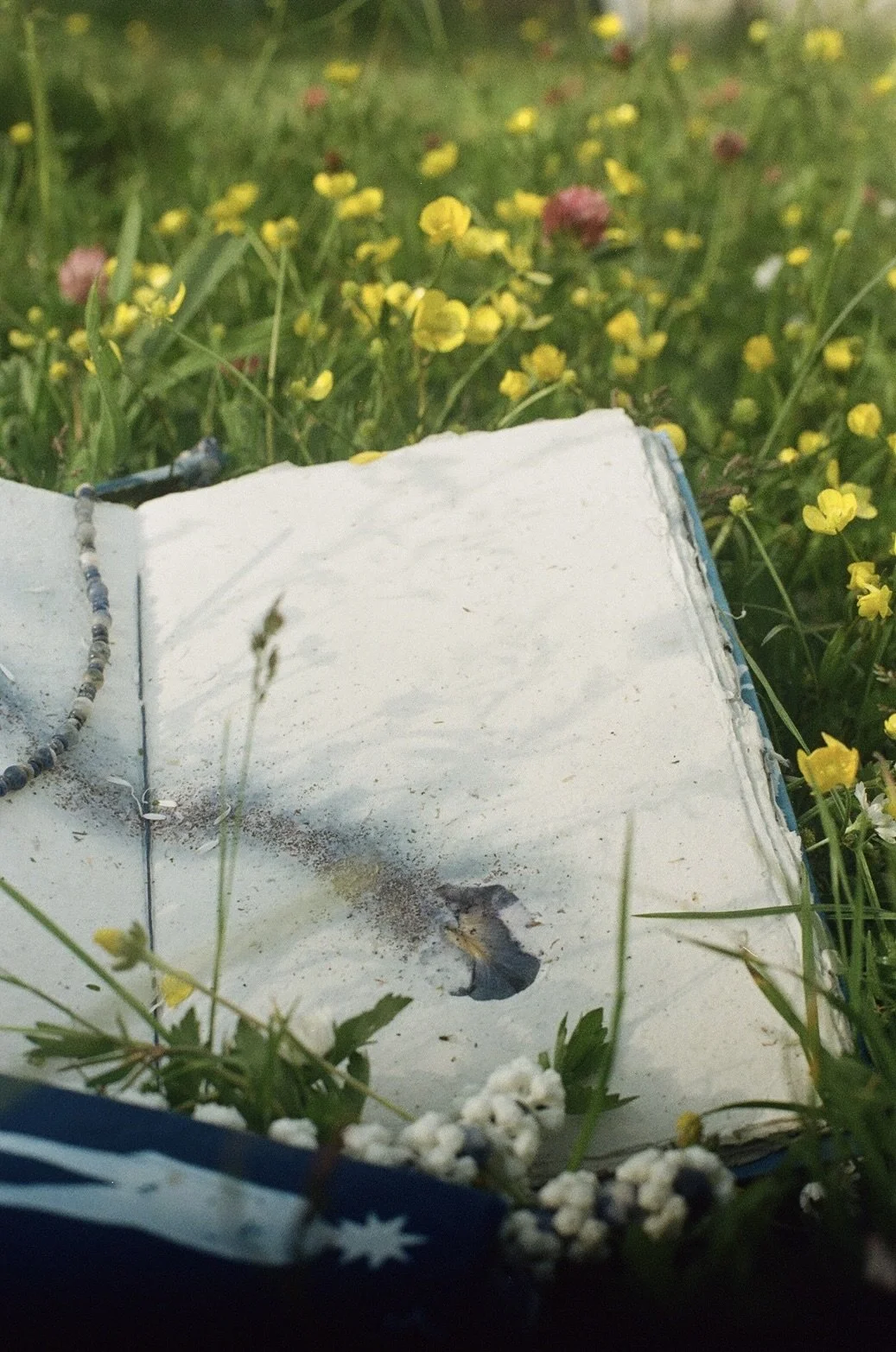
The Cyanobooks fell from the skies and landed in the lush spring meadows. They mark a stunning collaboration of Kitis’s and Josefine’s studios, blending the magic of book binding and cyanotype. If this book was a girl, her name would be Clitoria, born under the spring sun, in a basket full of the garden’s harvests.
Ingredients:
Esparto, Jute, Premium Abaca Fibers
Common Milkweed Fluffs
Ground, Pressed amd Steeped Butterfly Pea
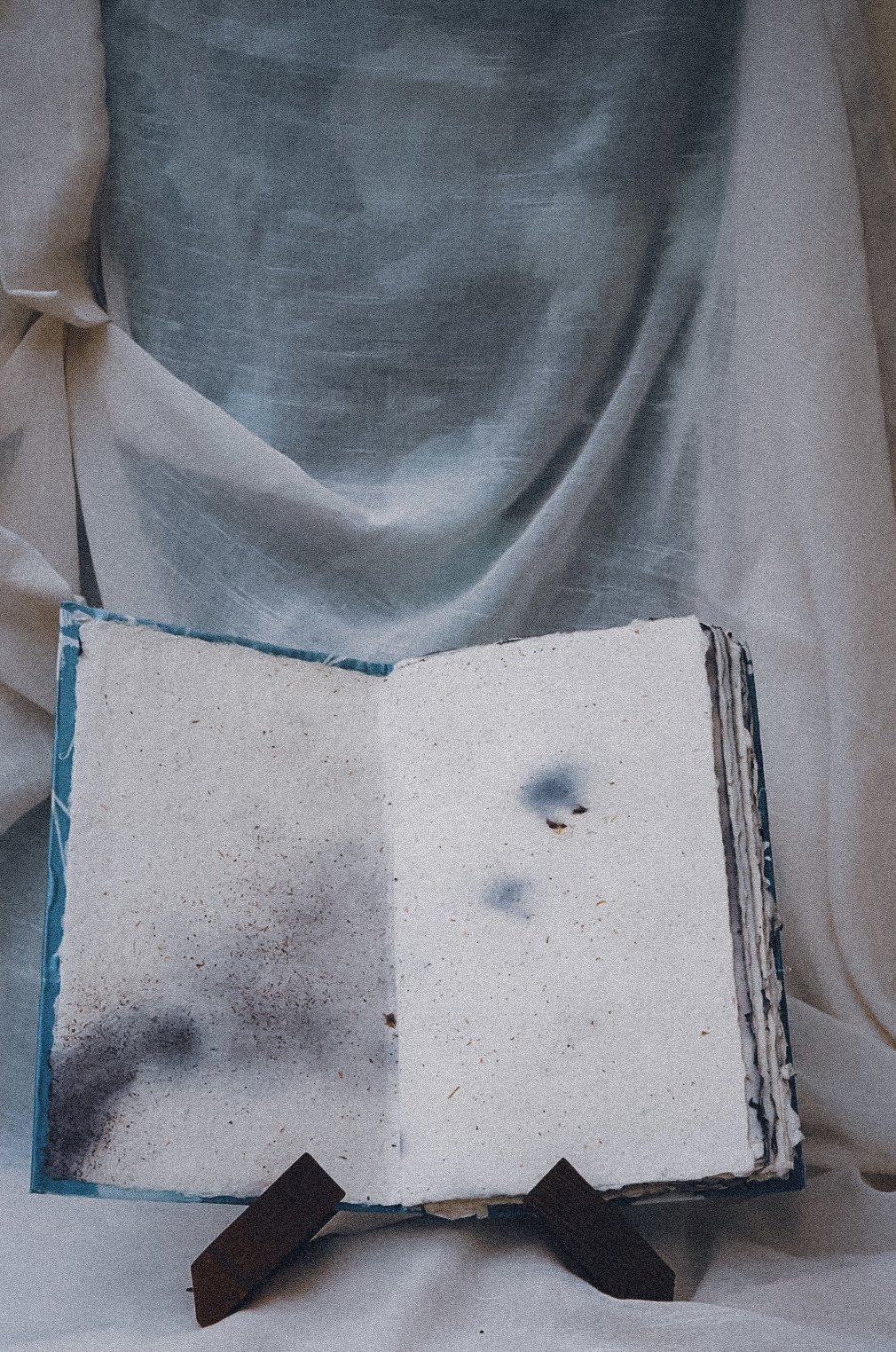
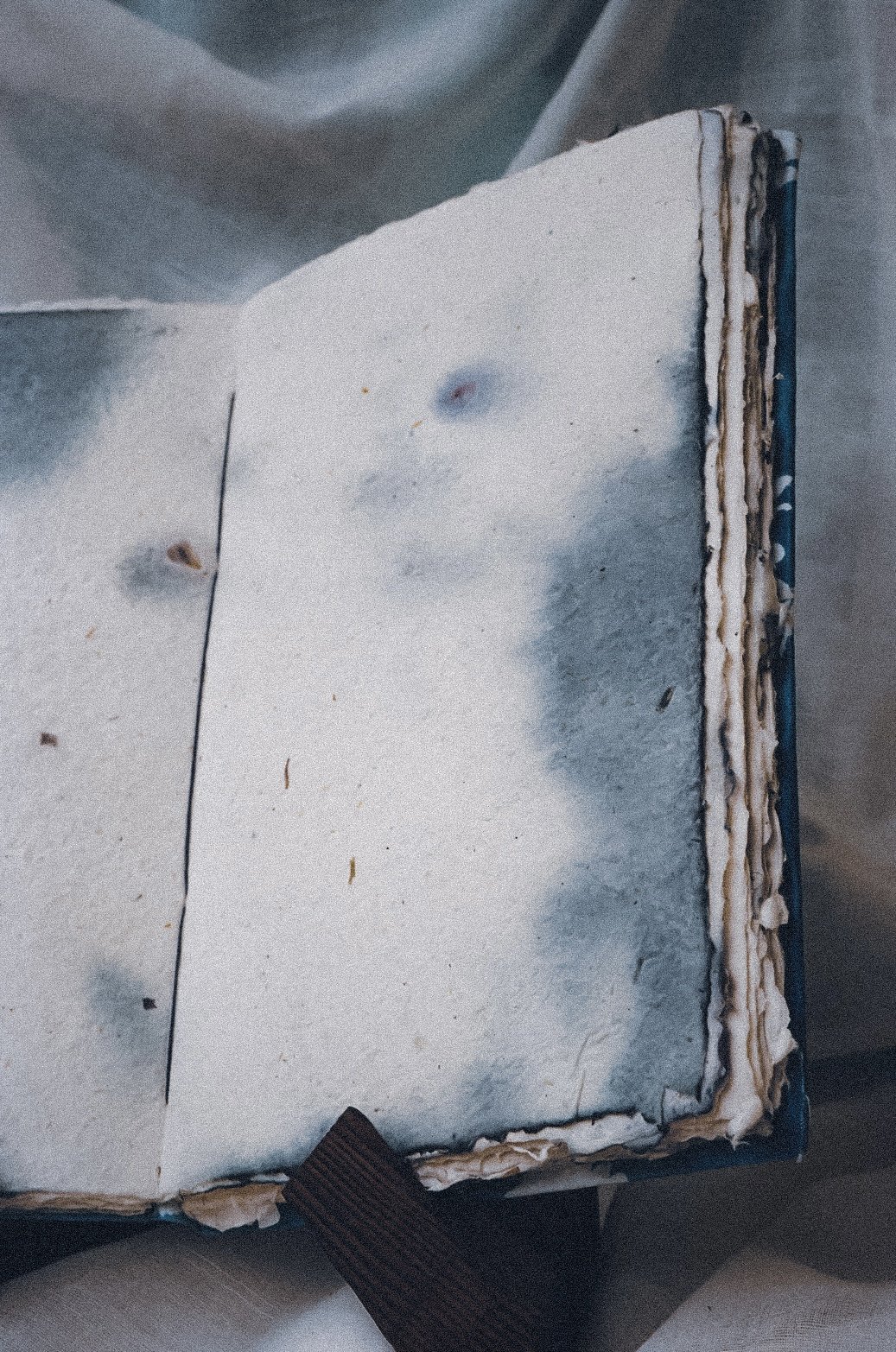
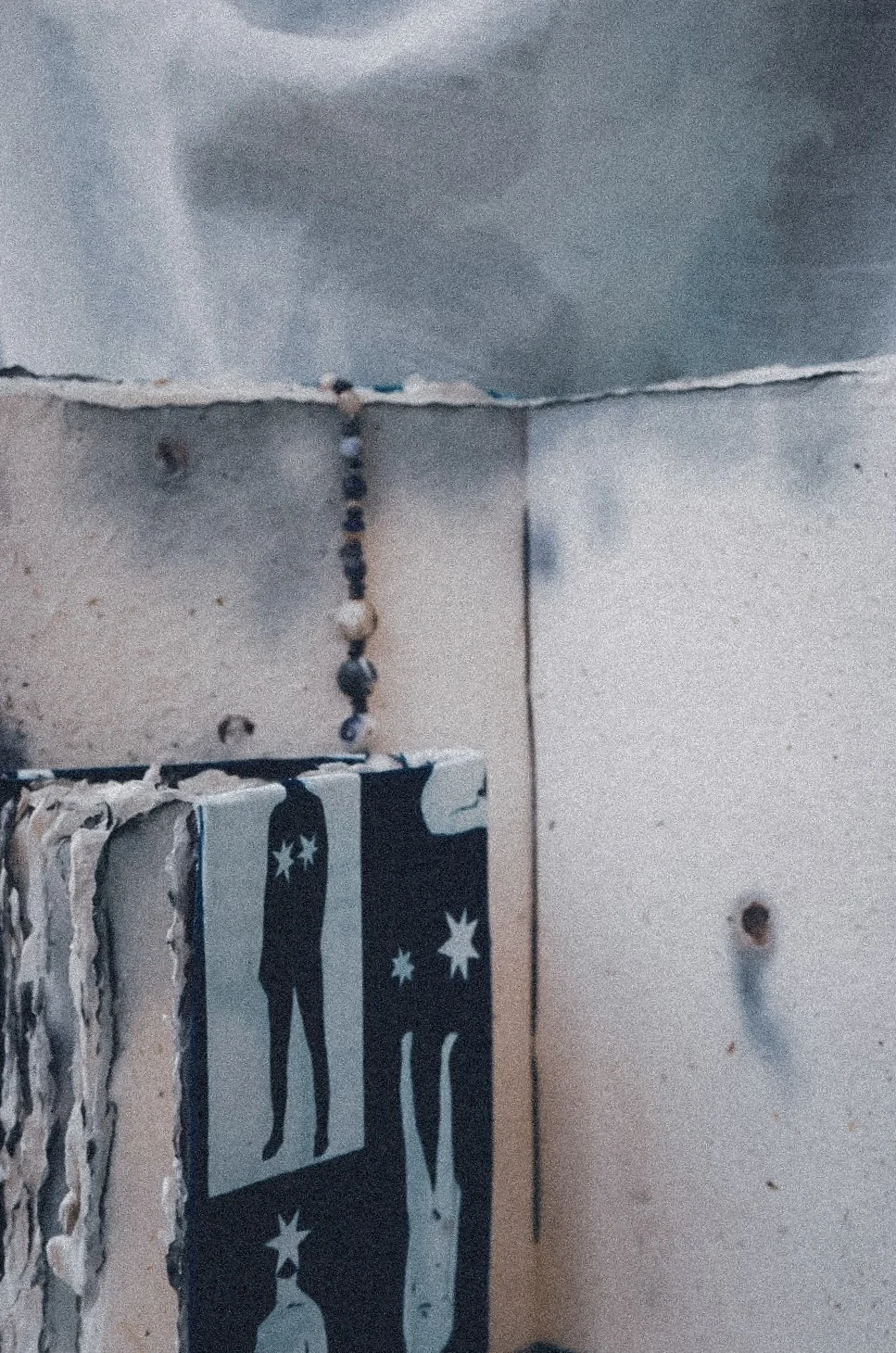
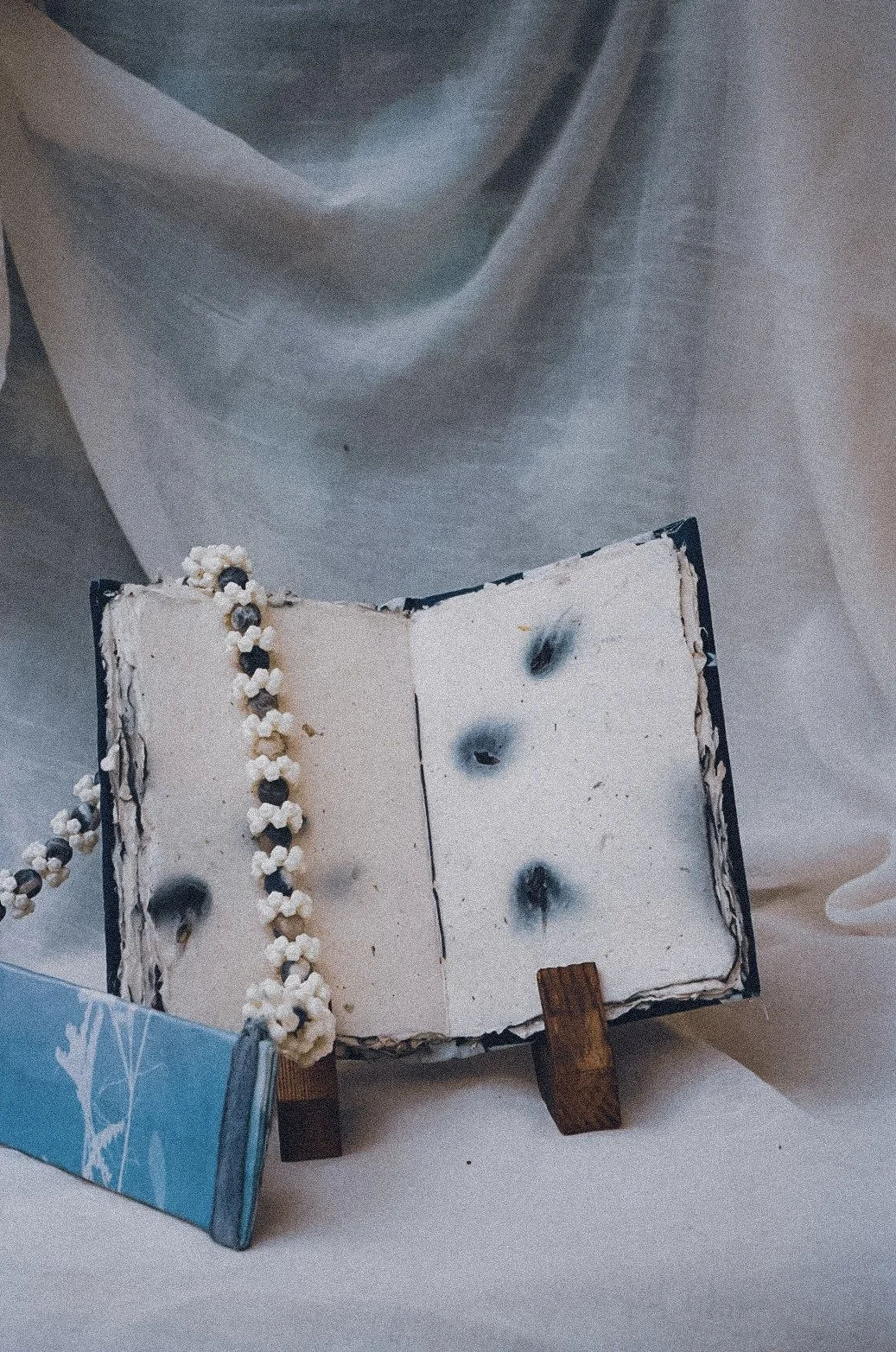
Cyanotype books showing dyed pages.
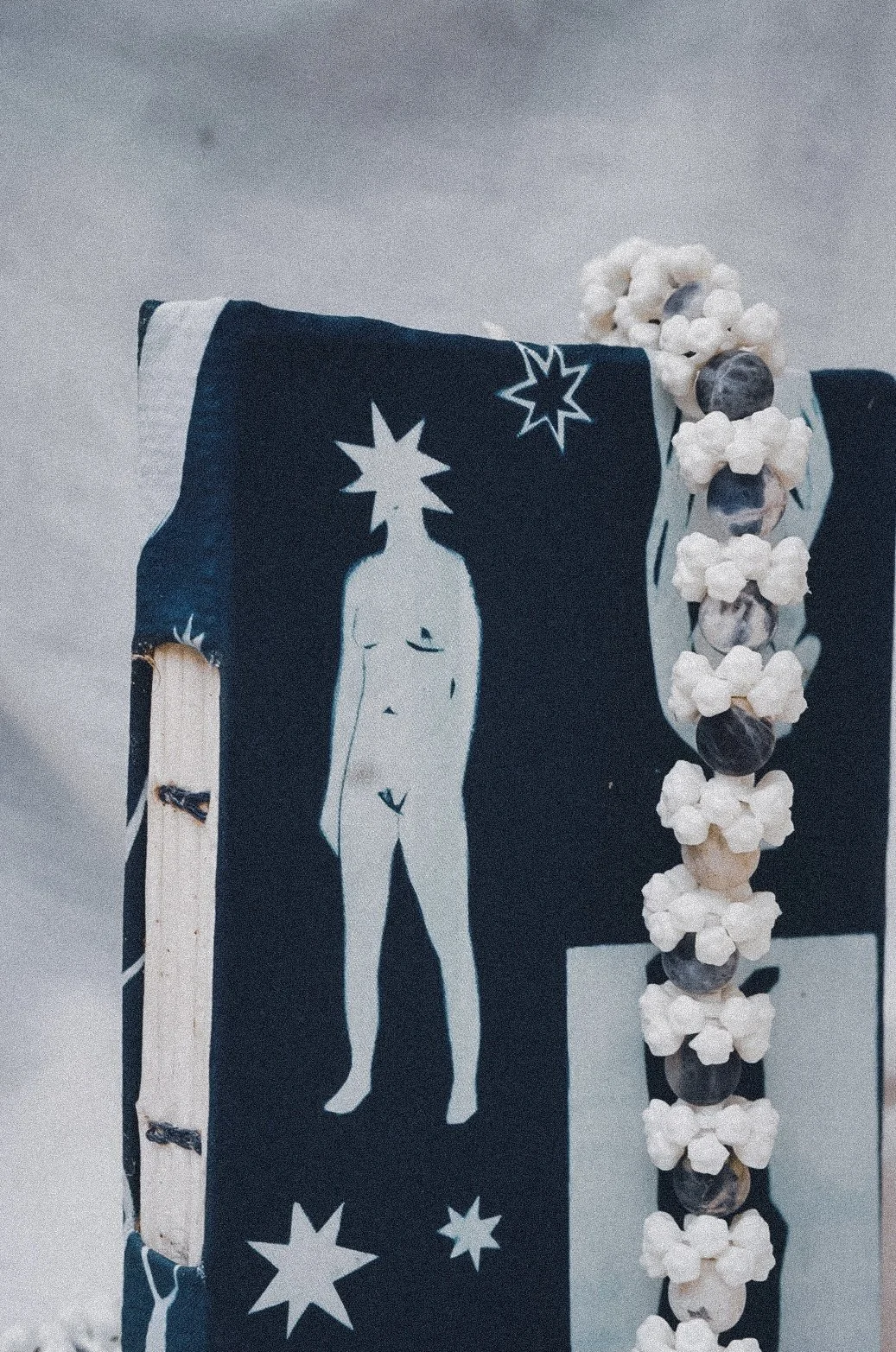
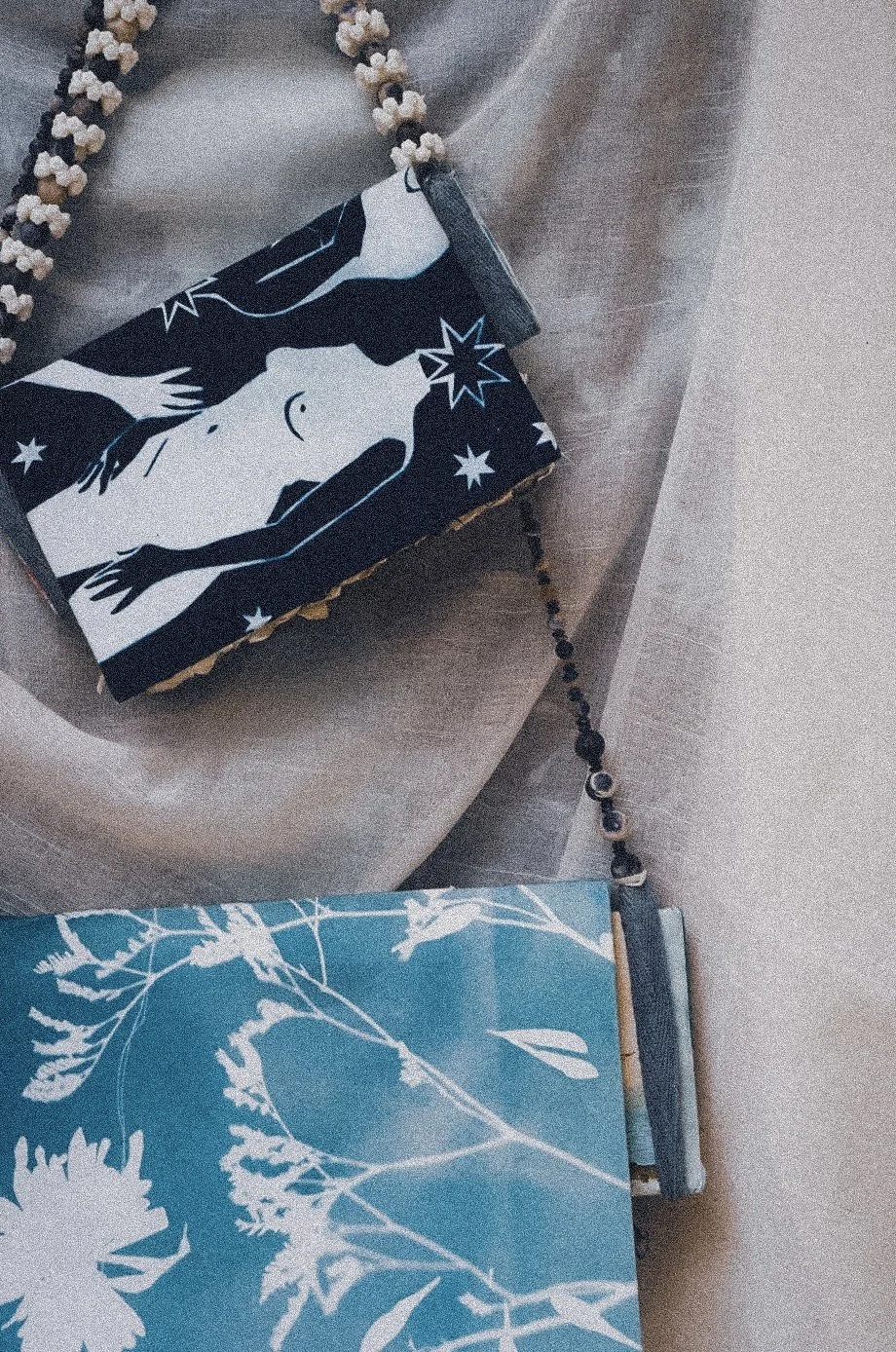
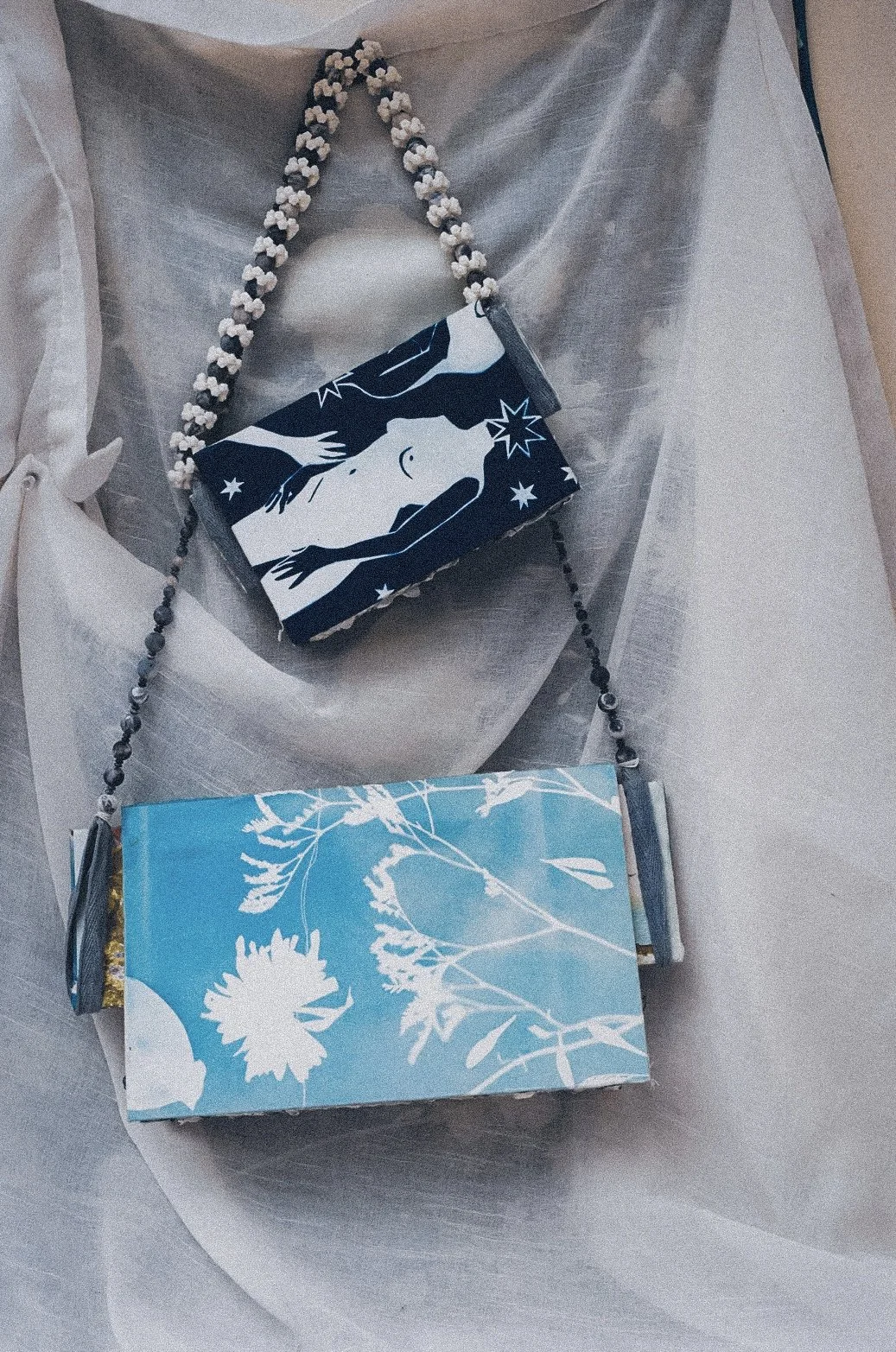
These Cyanobooks were forged from two creatives studios. That of Josie’s and that of Kitis’s. I want you to picture these books, riding a billowy cloud down into the alpine meadows of central Europe, landing softly in the wildflowers. This collection sprouted from Josie’s creative mind - exploring the intricacy of nature through the medium - cyanotype. This medium focuses on photographic printing, relying on the mixtures of two solutions, ammonium citrate and potassium ferricyanide. When applied to fabric and exposed to sunlight or concentrated UV rays, a chemical reaction occurs, turning the solution to a deep blue. As you see in her process clips below, after exposing the fabric to sunlight with flowers, stems and or handmade stencils laid over the fabric, a “ghost print” is made, which is essentially a negative print silhouette. The beautiful part of Josie’s art is that it is wild and organic. Not only do natural elements follow itself into her art but also her wild imagination. She explores the magic of human connection and its many ways of interacting with the Earth’s children. Outside of these books, she’s brewed wonderous cyano creations. To see more of her work, follow the link to her instagram page: Josefiinebug
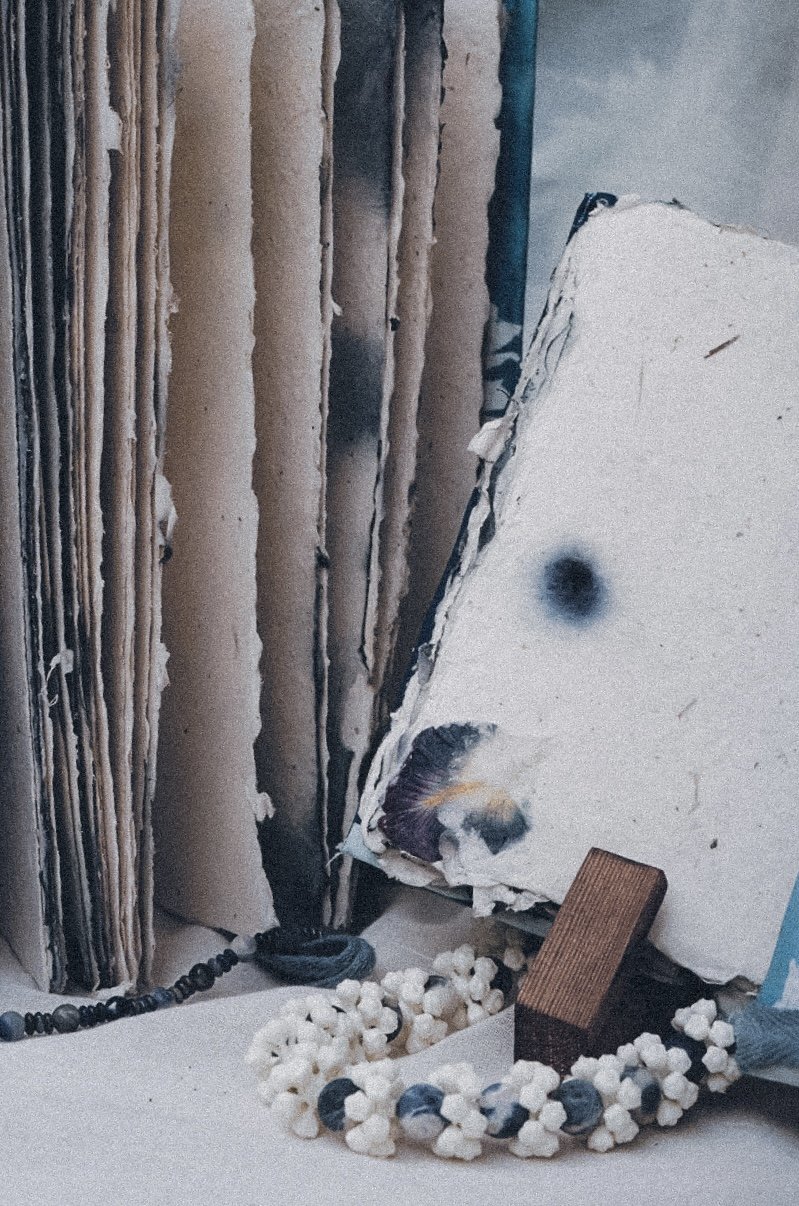
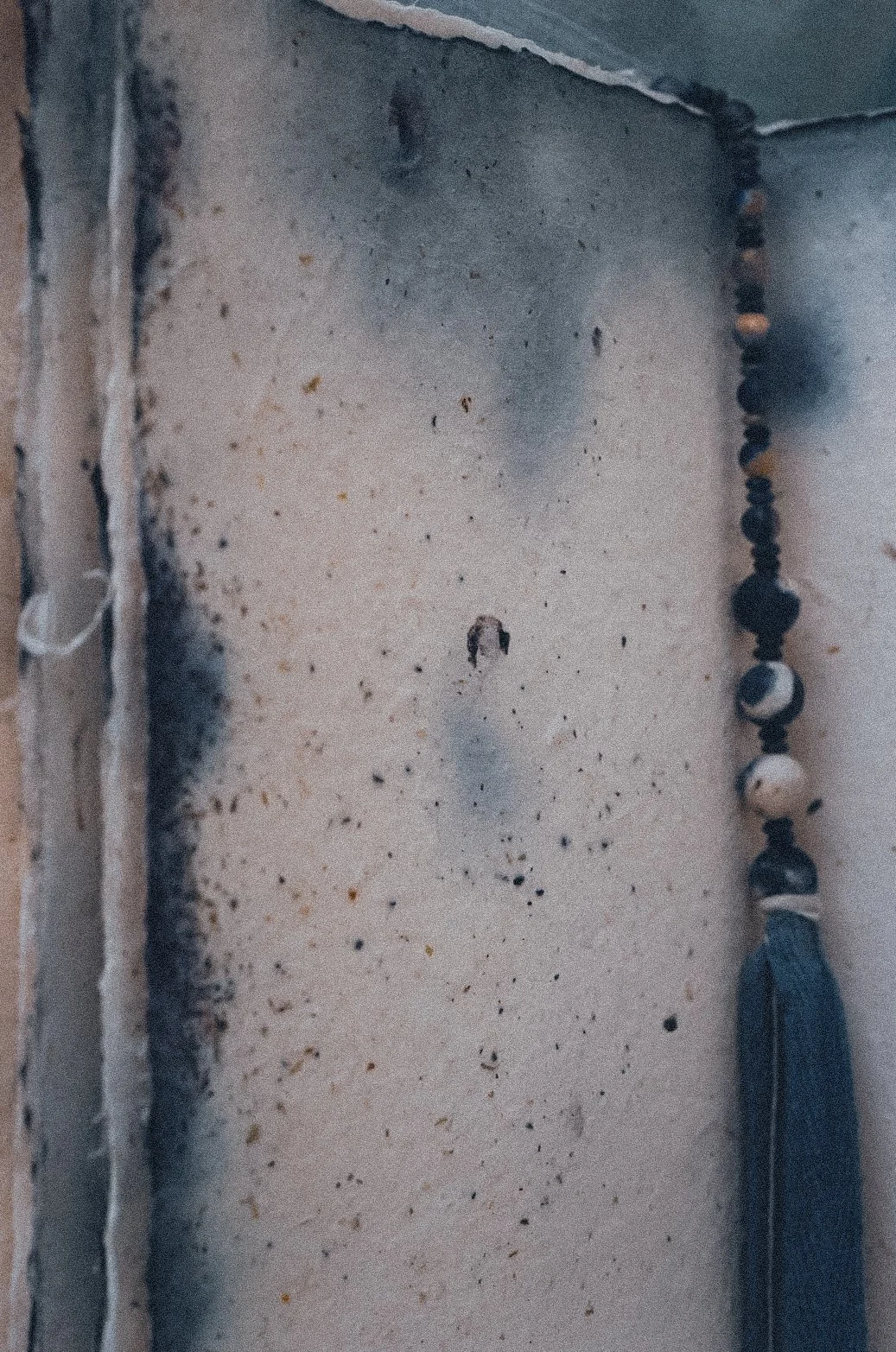
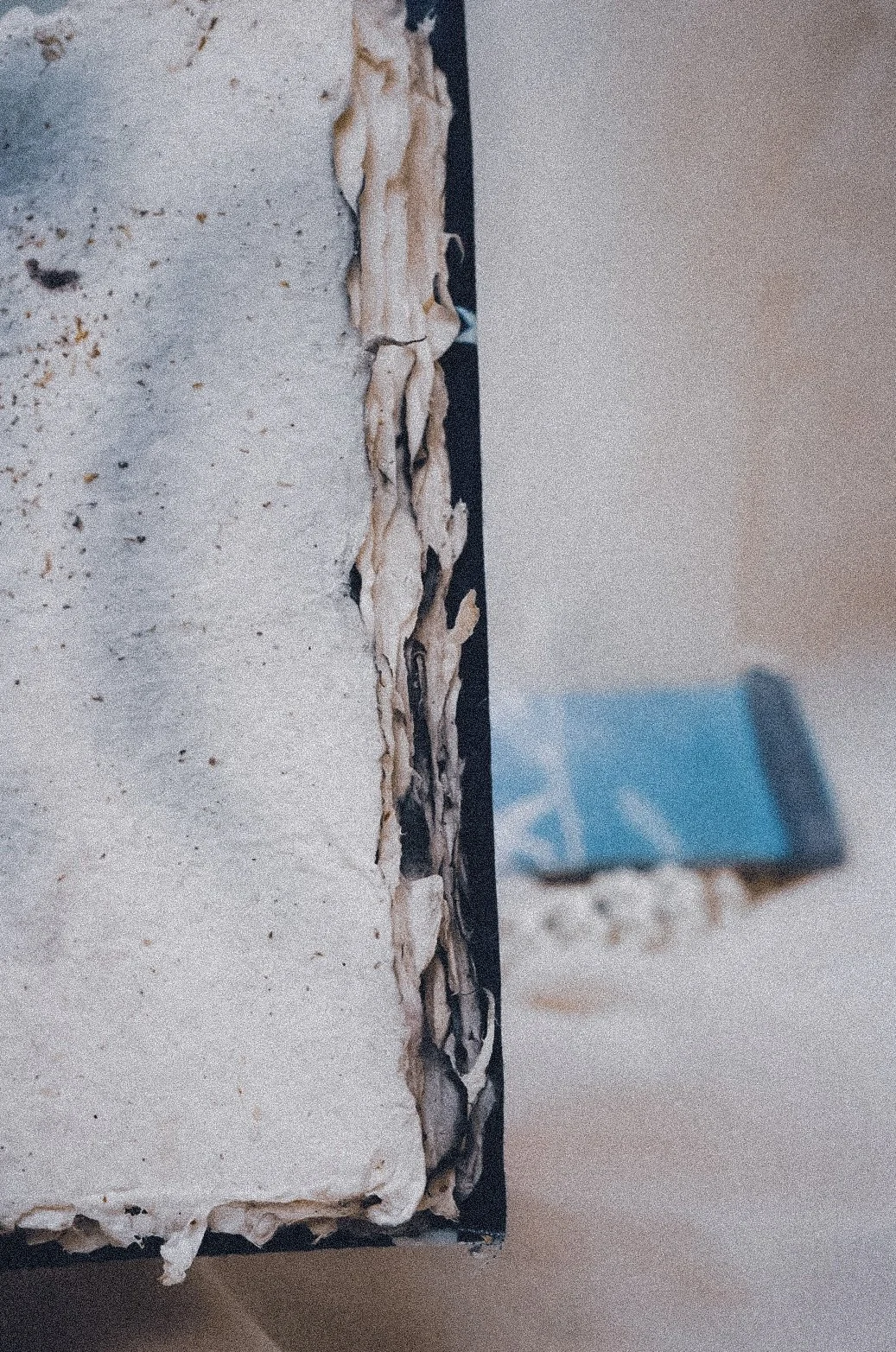
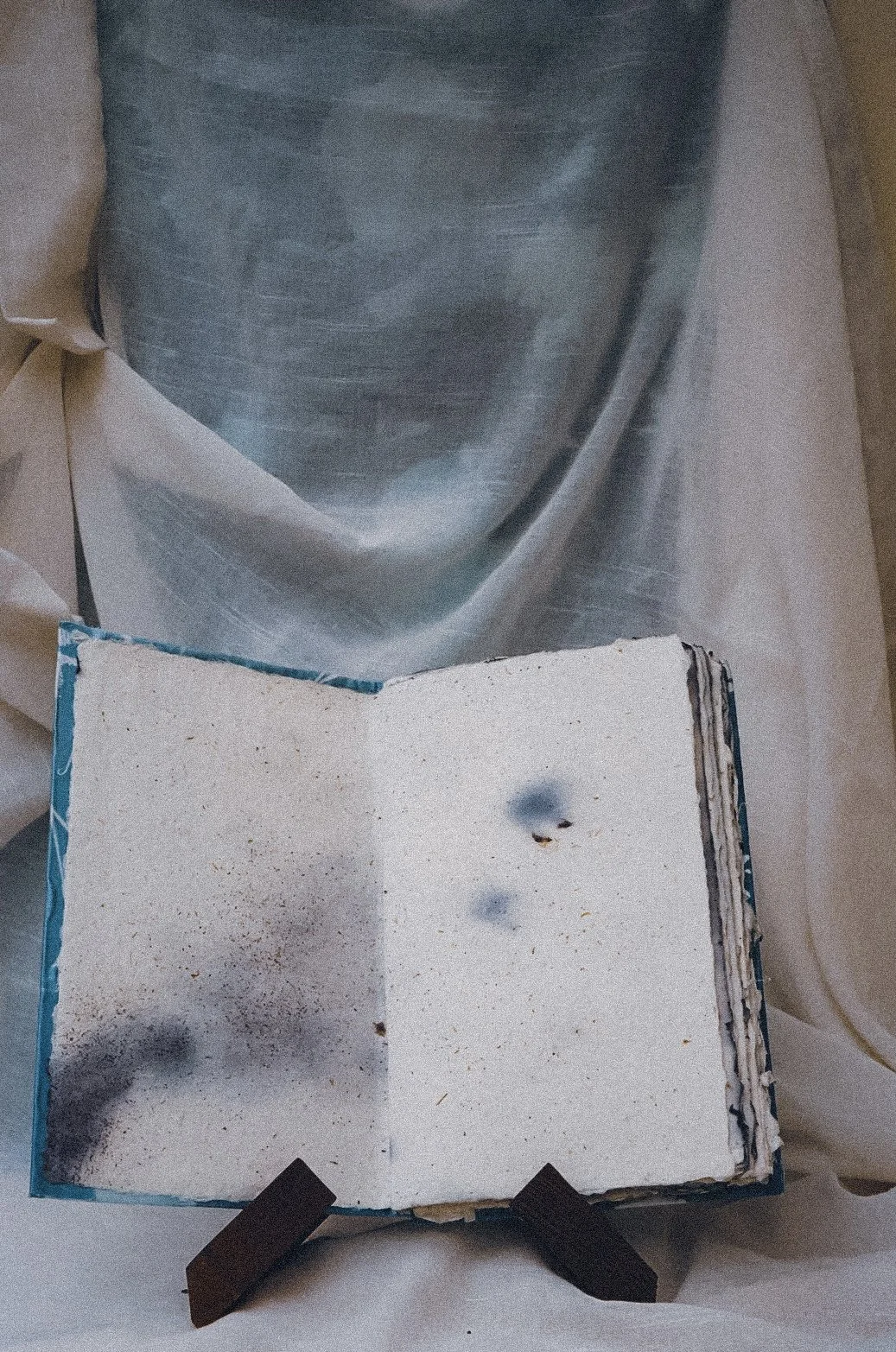
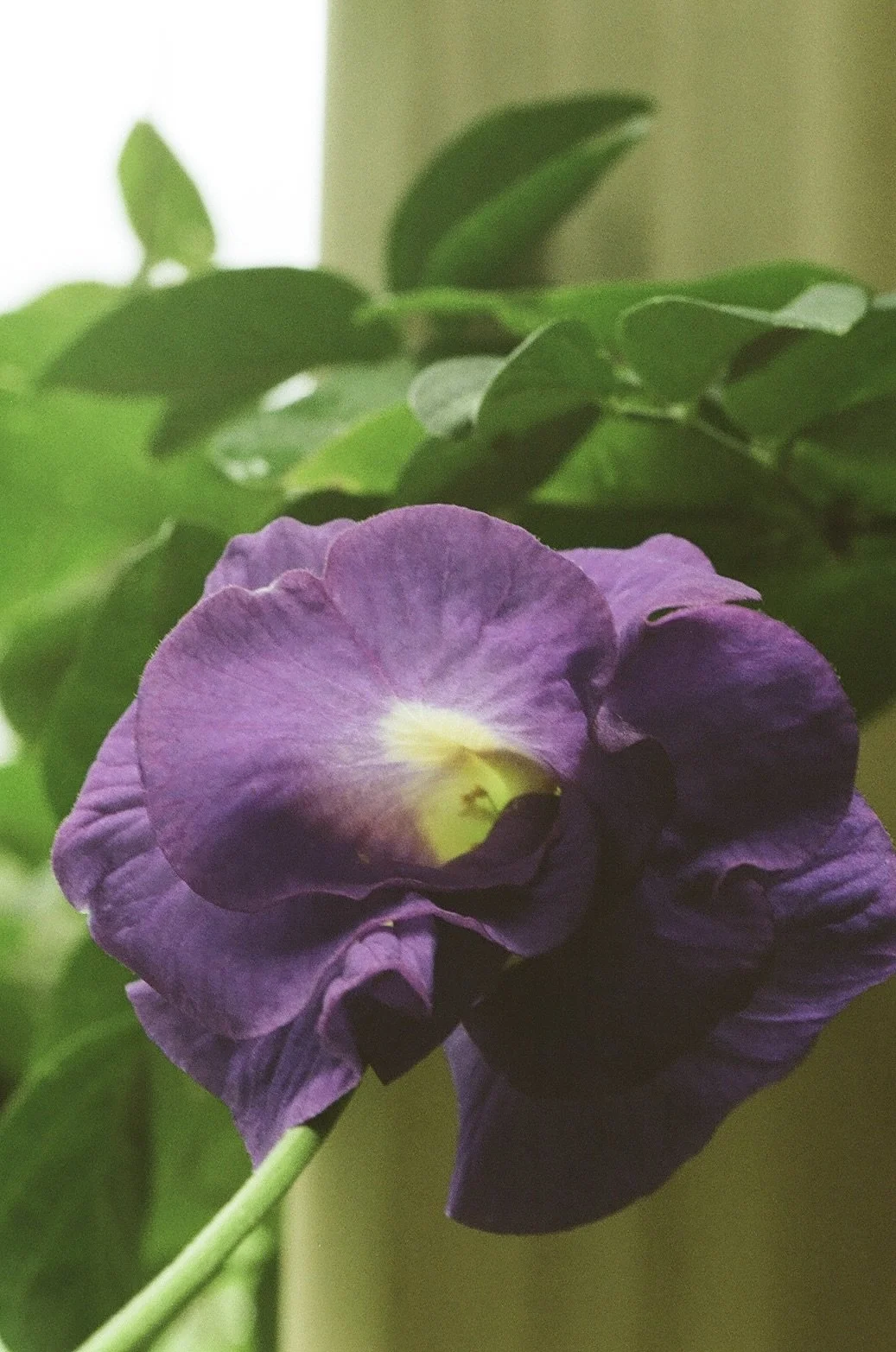
The butterfly pea became the perfect center to create pages to match the depth of the cyanotype fabric. Butterfly pea ( Clitoria ternatea) is a beautiful vining plant that is apart of the pea family. The variety that I have and used from my garden is the double butterfly pea - which means double the fun and colour. These flowers contain anthocyanins that create a dazzling blue that is often used in teas and tinctures. I knew that it is a common food dye but I wanted to test the dye on paper. I’ve realized this flower falls into the stain category - where it’s doesn’t really penetrate the paper fiber, instead, sits on the surface like a stain, that can be played with later if desired. It’s best as a last finish after the paper has been pulled. I find that stains make the paper more dynamic when it’s being used , I like to call them active papers - meaning if you put water on the pages or decide to paint using watercolors, the stains will bleed into your work. For these books, I wanted to seal the stain into the paper, so in the end, I bruched a layer of gesso to seal the paper and prevent too much feathering and spilling of the stain. So not only is the paper ready to receive any medium, the ingredients inside remain intact.
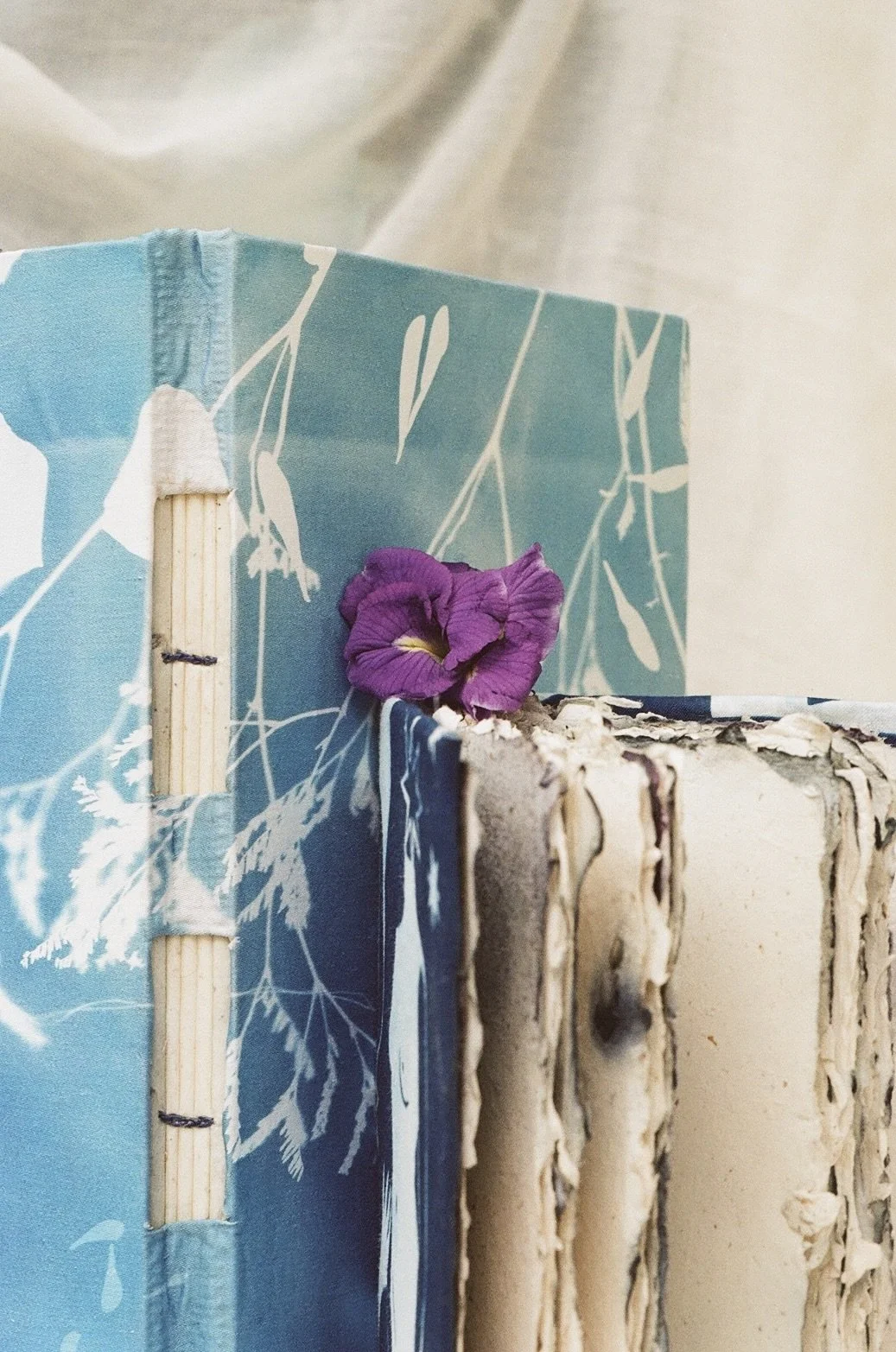
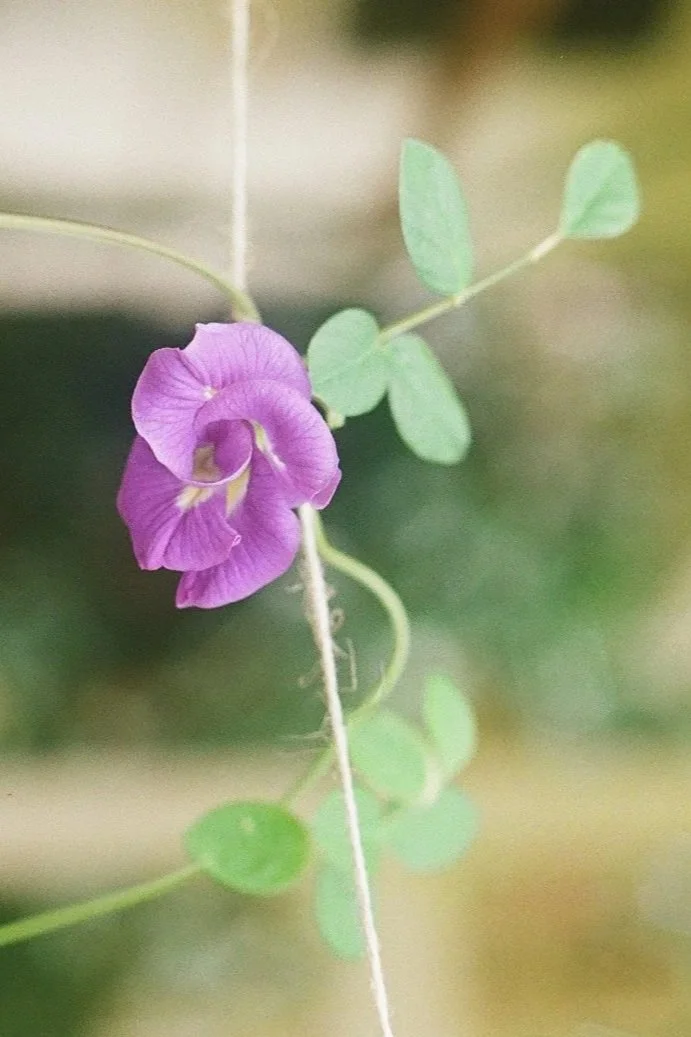
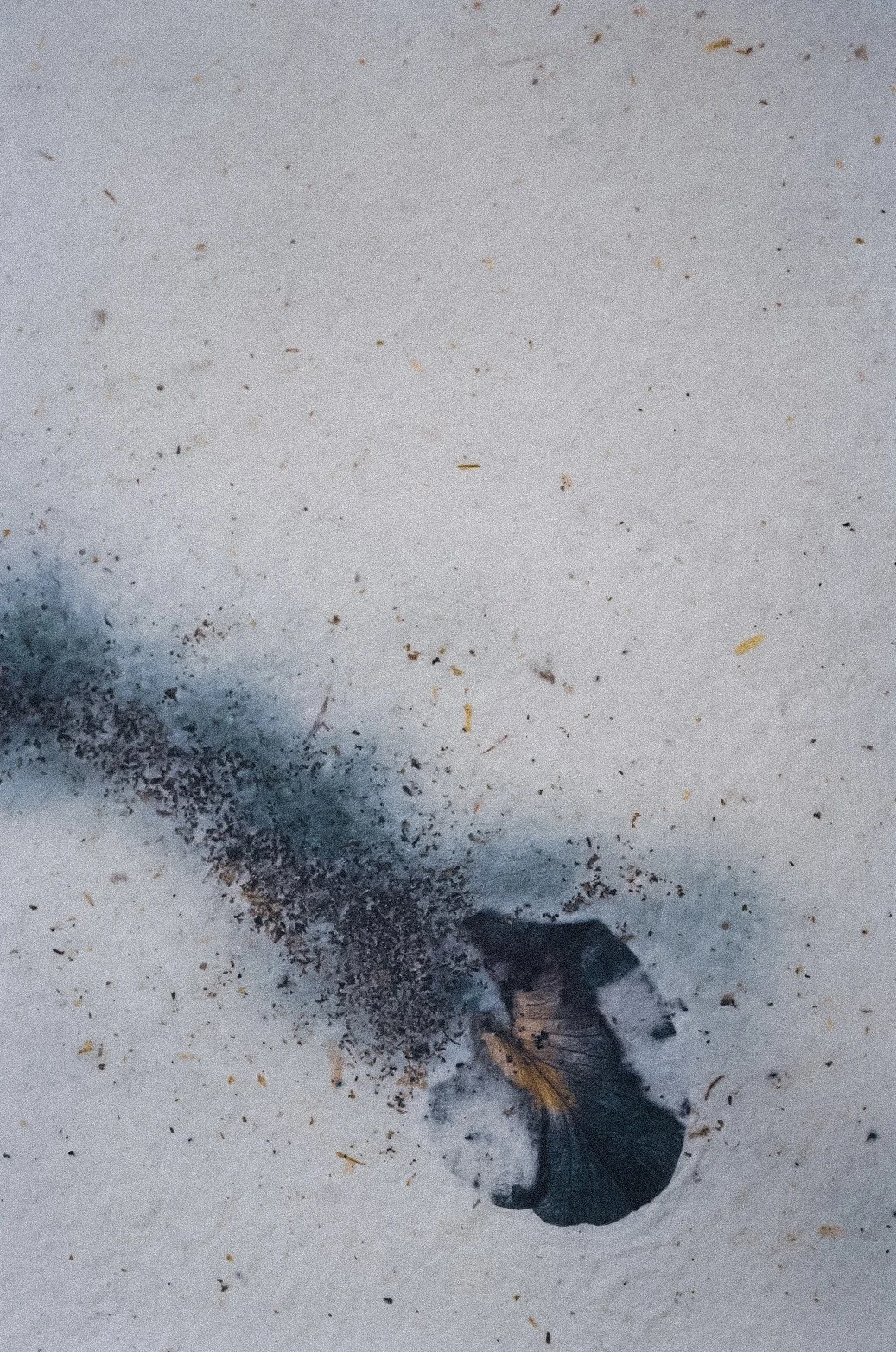
Pressed and ground butterfly pea flowers, bleeding over wet paper pulp.
A fun component of these books are the beaded bookmarks. These transform the book into purses that can simply be strung over the shoulder and be brought on for the ride. These are prototypes and have open doors to potential book/purse iterations in the future. The idea stemmed from Josie herself, as she often turns her books into purses for on the go art making. It was only fitting for our collaboration to include her genius purse ideas.